


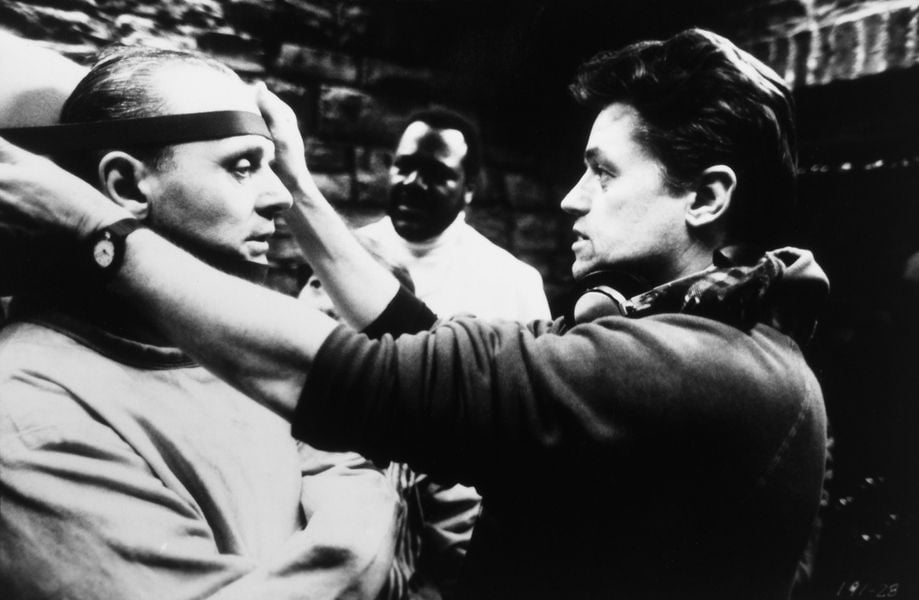
Six definitive films: The ultimate beginner’s guide to Jonathan Demme

“As a kid, a little kid, I loved going to the movies, and now I love making movies.” — Jonathan Demme
Throughout his illustrious career, spanning more than four decades, Jonathan Demme transcended the constricted barriers of filmmaking and ventured boldly into whatever interested him. From exploitation films to thrillers, social commentaries and hilarious comedies, humanist dramas or documentaries steeped in socio-political sensibilities, there was nothing that Demme did not try his hand at and achieved immense success.
Known for his love for luxurious scripts, rich dialogue, and quirky yet perceptive characters, especially strong women, Demme was distinguished for using super close-up shots to highlight the caustic claustrophobia perpetrated by the character in focus. This technique is said to have inspired many, including Paul Thomas Anderson and Wes Anderson. Paul Thomas Anderson, who has always been a huge fan of Demme, stated in an interview that the three filmmakers from whom he derived inspiration were “Jonathan Demme, Jonathan Demme and Jonathan Demme”.
Demme had a profound impact on cinema. Winning an Academy Award for his groundbreaking film The Silence of the Lambs, which despite heavy criticism from the LGBTQ+ community, painted the greatest character study ever attempted in film. Demme showcased his immense prowess in other films namely Rachel Getting Married, Melvin and Howard, Philadelphia etc. The director was never afraid of advocating sensitive topics which included the discrimination meted out to AIDS patients in society as well as the systemic racism that still plagues the globe. Demme was a popular face in documentary filmmaking as well, and proclaimed his adoration for the art by saying that he loved “the idea of documentaries. I love seeing documentaries, and I love making them. Documentaries are incredibly easy to shoot. The ease with which you can hear something’s going on, somebody’s going to be somewhere: That sounds so interesting. Pick up your camera and go.”
Passionate about his work and in love with cinema, Demme has often stated how much he enjoys his work, once saying, “everything I’ve made — it doesn’t mean they’ve all been good — but everything I’ve made so far, big or little, fiction or documentary, has been something that I’ve been really enthusiastic about”. Unfortunately, the filmmaker passed away on April 26, 2017, at 73, due to some health complications. The film industry mourned him deeply, and in her statement, Jodie Foster reminisced his passion, “pure energy”, and creative genius while describing him to be as “dynamic” and “quirky as his comedies and as deep as his dramas”.
We pay homage to the legendary director by taking a look at the six definitive films that would describe his filmography the best.
A six definitive film-guide to Jonathan Demme
Caged Heat, 1974
Jonathan Demme’s directorial debut came in the form of Caged Heat and his being a producer on two low-budget exploitation films by the legendary Roger Corman. After raising funds for the film, Demme wrote and directed it. The film was actually a result of Corman’s constant persuasion as the director felt that his films about women in prison were inadequate, and he requested Demme to uphold nudity and violence as per audience expectations; however, Demme made it a lot less sleazy and added unique elements which made his debut feature a blast.
The film is a testament to Demme’s satirical take on the genre, involving a sadistic female warden; he ingeniously incorporates socio-political consciousness and feminism into the genre. The film revolves around a rebellion stirred up by a band of prison inmates. After Jacqueline Wilson is sentenced to prison for an illegal drug offence, she is appalled by the punitive measures taken by the sadistic warden, including raping drugged prisoners, shock therapy and more. They plan an escape and rebel against the repressive measures.
“I’m gonna knock your pretty little teeth so far into your throat you’re gonna get a picket fence around your asshole.”
Melvin and Howard, 1980
Jonathan Demme was a sucker for lush scripts and wordy dialogues. He showered his actors with love and always brought out the best in them, so much so that Mary Steenburgen got the Best Supporting Actress Oscar while Bo Goldman got one for his screenplay on this picture. In this very lyrical film, Demme exhibits his sympathetic genius by dealing quite delicately with the issues of the middle-class failing to achieve the American Dream that they so ardently wish for. His skilled direction and imaginative thinking brought out the humour in such sensitive topics and helped create an everlasting impact on the audience and has been even cited by Paul Thomas Anderson as one of his favourite films of all time.
The film is based on a reportedly true story of a Utah service station owner Melvin Dummar who is a great guy but a total slacker. He has hard luck in keeping in touch with reality and retaining a job. One night after he helps an old man caught in a motorcycle incident, he laughs off the latter’s delirious claims of being an eccentric millionaire named Howard Hughes. However, after Hughes dies, Melvin receives a will where the deceased millionaire bequeaths upon him one half of his estate — this could either make or break Melvin.
“Honey, they didn’t burn down Rome in one day – you got to keep pluggin’.”
The Silence of the Lambs, 1991
The third film, besides One Flew Over the Cuckoo’s Nest and It Happened One Night, to win Academy Awards in all the top five categories, The Silence of the Lambs also helped Demme bring home his very first Oscar as a director. His nuanced directorial skills helped bring out the absolute best in the actors, and the film oscillated between being a deep psychological study to borderline horror and gore.
The stellar acting performances helped accentuate Demme’s carefully curated characters, especially Anthony Perkins’ scheming cannibal Hannibal Lecter and Jodie Foster being Demme’s quintessential female lead who refuses to be terrorised or bogged down by her surroundings. To height the atmospheric anxiety, Demme insisted on the right kind of music that shall make the viewers feel a plethora of emotions.
Hailing from West Virginia, trainee Clarice Starling wants a fresh start away from her roots and rapid advancement in her career as an FBI agent. She aspires to be headed by the iconic Jack Crawford. Soon she is assigned the task of questioning Hannibal Lecter by Crawford. The task is simple yet perilous. She has to figure out the mind of a serial killer via her interview with Lecter to aid the FBI in apprehending a notorious serial killer named Buffalo Bill who preyed on female victims with a particular viciousness.
“A census taker once tried to test me. I ate his liver with some fava beans and a nice chianti.”
Philadelphia, 1993
Demme empathetically champions the cause of HIV-AIDS patients by highlighting the discrimination meted out to them in Philadelphia. Set during an era when people were gradually coming to term with the health crisis and myths regarding the illness were being debunked, the film is a shining moment in Demme’s career.
Starring Denzel Washington and Tom Hanks, the film paints a moving picture, and the camaraderie shared by the two is commendable. Hanks even won the Academy Award for his brilliant performance. The film’s cast included many extras who were battling AIDS, and shortly after the release of the film, 43 of them died. It bridged the gap between fact and fiction and made this potent piece even more poignant. Demme was sensitive yet vocal in presenting the portrait of how AIDS-affected people were received by society.
The film’s premise sees Andrew Beckett as a homosexual lawyer working for a top-notch corporate firm in Philadelphia. He is an AIDS patient and struggles to conceal his identity and sexuality to retain his position in society. However, a lesion on his head gives him away, and he is soon fired under the pretext of slacking; however, he is convinced that the company fired him due to their prejudices and decided to sue them. He hires a Black lawyer named Joe Miller, who, despite initial apprehension, decides to fight for his cause as he finds common ground in the discrimination — only that Miller faces racism while Beckett was the butt of ridicule for being a homosexual AIDS patient.
“It’s that every now and again – not often, but occasionally – you get to be a part of justice being done. That really is quite a thrill when that happens.”
Rachel Getting Married, 2008
Demme was pleased with Sidney Lumet’s daughter, Jenny, and her script Rachel Getting Married as he saw in her the ignorance towards making her characters likeable. Instead, the characters were human and flawed. Using evocative music in his film, Demme cast his long-time favourite, Anne Hathaway, as the lead. For her distinguished performance, Hathaway won various nominations, including one for Oscars and Golden Globes. The film has been considered Demme’s finest work after The Silence of the Lambs as the film revels in authenticity and spiritedness; following years of documentary filmmaking, Demme’s return to the narrative storytelling realm is welcoming.
Anne Hathaway stars as Kym Buchman, a prodigal daughter whose wild ways have prompted her to be in drug rehab for nine months before her return to sobriety. She is released temporarily to attend her sister Rachel’s wedding. She stays at her family home, and the citation becomes nearly unbearable as people flock in for the wedding, unaware of the circumstances that led to her actions yet judging her for her time at the rehab. As Kym’s return from the rehab becomes mongers gossip and gains precedence over Rachel’s big day, resentment brews in Rachel’s mind and sparks fly.
“All of you people living in this little world of judgment and paranoia and mistrust. I can feel it all the time. It’s like… At the slightest sign of ingratitude or absence of atonement, it’s like the fucking Salem witch trials around here.”
Ricki and the Flash, 2015
Demme’s final dramatic feature film saw him reuniting with his Manchurian Candidate actress Meryl Streep. Streep appears in this film alongside her daughter Mamie Gummer and Kevin Kline. Although Ricki and the Flash is heartwarming, it is somewhat predictable and ominously foreshadows Demme’s waning career. The film was the perfect goodbye to Demme’s celestial career that included his favourite elements like strong female characters with steady backstories, dysfunctional families, and the infusion of music that bright Demme joy beyond measure.
Linda Brummel, also known as Ricki Randazzo, lives her dream of becoming a rockstar yet does so at the cost of abandoning her family. When her ex-husband seeks her help to assist him in helping her estranged daughter Julie through trying times, Ricki returns to Indianapolis. However, her children have not forgiven their mother for her nonchalance years ago and are unwelcoming and hostile. In an excruciatingly painful and angsty story, the mother tries to win their favour and reconcile despite knowing that the scathing wounds of the past cannot be forgotten.
“No, a heart isn’t something that’s like a steak, you know, that spoils. A heart is like a big mac; it just sits and sits and sits. It gets older, but it doesn’t change.”
