


‘Johnny’s Band’: The universal story of rock and roll destruction by Deep Purple

Deep Purple found resurgent success with a new generation in the early 2000s thanks to the inclusion of ‘Smoke on the Water’ in School of Rock, the supremely popular feature film directed by Richard Linklater. While the Hollywood bounce aided their relevance, there’s much more substance to the English band than Ritchie Blackmore’s signature riff suggests.
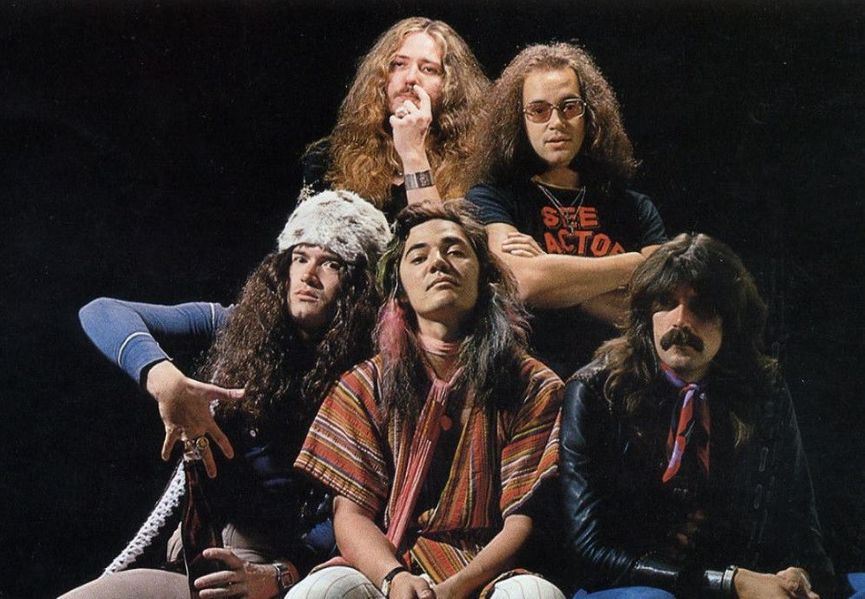
Although they are often overshadowed because of the eminence of peers, Led Zeppelin and Black Sabbath, Deep Purple were an equal part of the triumvirate that brought heavy metal to fruition. Formed in London in 1968, the best iteration of their lineup was fronted by the wailing Ian Gillan and boasted the dextrous lead guitarist Blackmore by his side. Backing them up was bassist Roger Glover and drummer Ian Paice, who formed a dynamic rhythm section. Additionally, keyboardist Jon Lord provided flourishes that added a different dimension to their sound.
‘Black Knight’, ‘Highway Star’ and ‘Smoke on the Water’ were three of the band’s most revered tracks. In a tale as old as time, the classic lineup only lasted four years for various reasons, including internal disputes and excesses. Since then, Deep Purple has boasted a medley of different figures playing under their banner. Despite the departure of long-time guitarist Steve Morse in 2022, they are still going strong today, remaining veterans of the scene.
Their position as experienced travellers in rock sonically manifested in ‘Johnny’s Band’ from 2017’s Infinite. The song tells the “universal story” of a band that takes over the world but then falls apart due to a distinct lack of moderation. Despite a steep decline in record sales, they eventually got back together 20 years later because of their love of the craft. Using the track as a means of demonstrating how familiar this trope is, towards the conclusion, Gillan sings: “But hey, it’s Johnny’s Band / Playing Saturday nights at The Crown / The beards may be long and the money’s long gone / It’s a wonder that they’re still around”.
Steve Morse initially came up with the idea for the song, and at the time, it was more pop-oriented than the funky foot-stomper that it eventually became. However, the band opted to make it more rocking, as not all of them enjoyed the style of Morse’s original. Bassist Roger Glover told TeamRock: “Ian Paice thought it was a bit flippant, but Ian Gillan loved it, and eventually, we decided to do it. We knew what the meter of the song was going to be and realised it needed something really strong over the chorus to make it work.”
When writing the lyrics, Glover cast his mind back on VH1’s documentary series Behind the Music, and claimed every band have the same story. He explained: “They start with nothing, then they get some success, then they get huge success, then drink, and drugs and women destroy them, then they end up suing each other, then 20 years later they get back together again because they realise it was the best time they ever had. ‘Johnny’s Band’ is the story of every band. It’s a universal story. But it’s not about Purple! There’s a reference to ‘Louie Louie’ in the guitar solo that places it firmly in the ’60s.”
Demonstrating their first-hand experience of the kind of fall-outs that are so traditional in rock, in the video for ‘Johnny’s Band’, Deep Purple reference one of the most infamous moments in their history. In the clip, a member of the titular band gets a plate of spaghetti thrown in his face. This was a direct nod to the notorious moment in the late 1980s when Ritchie Blackmore smashed a plate of spaghetti in Ian Gillan’s face due to their tense relationship reaching boiling point. Watch the video below.
