


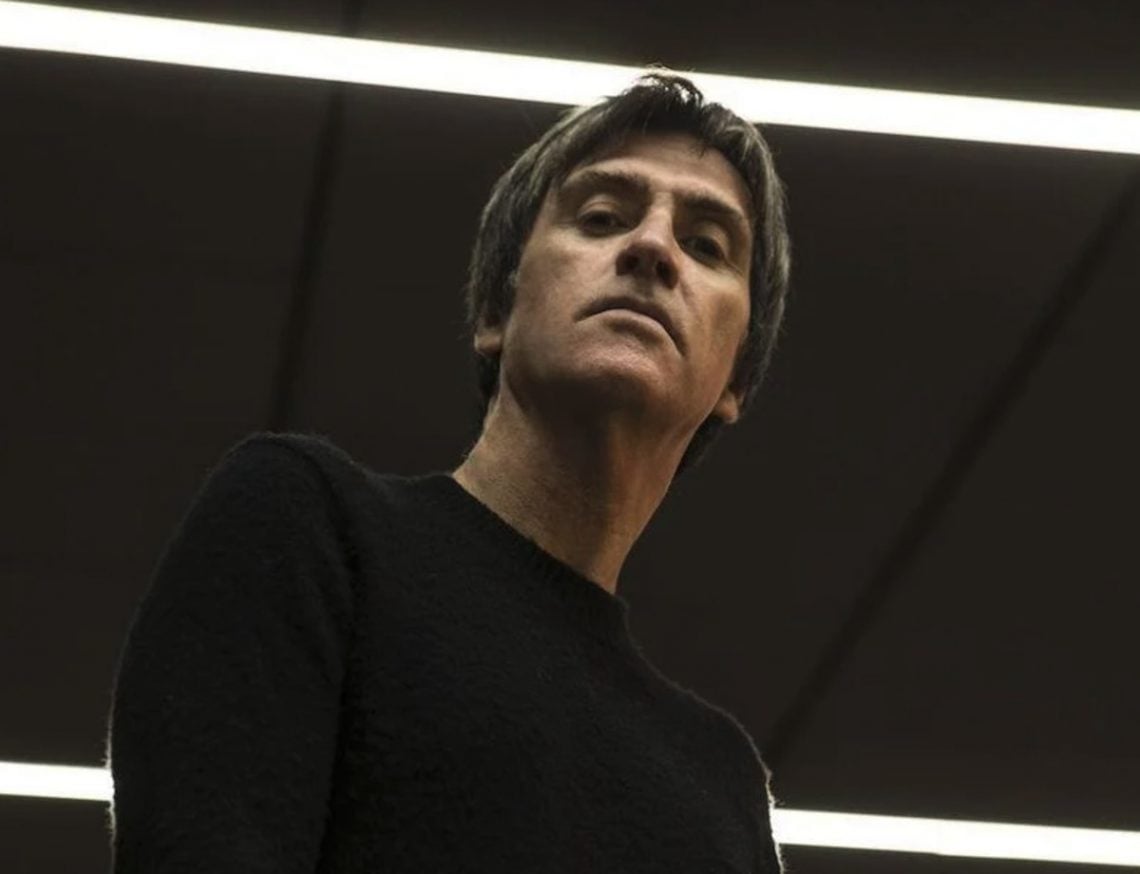
Johnny Marr’s five favourite guitarists of all time

As far as indie guitarists go, no one has made more of a mark on culture than Johnny Marr. The Smiths guitarist effectively established the key facets of the form. Almost singlehandedly, he showed everyone that the noodling of heavy metal in the 1970s and 1980s was, well, pretty dull and that guitar playing did not have to be a form of artistic masturbation. It could be busy but interesting and melodic without being constrained to the genre of pop.
A master of the arpeggio, he gave The Smiths the power and bite they needed to take the world by storm. Arguably his greatest stroke of genius came in the way that he was their lead and rhythm guitarist wrapped up in one, and unsurprisingly, without his work in the quartet the world of alternative rock would be very different today
“Long solos were out, distortion was out really, rockism that was the real (hisses), you don’t wanna do anything rockist”, Marr once explained. “Your sound is almost political, really. I was trying to write just as melodically as I could but not use big rock chugging chord changes. I wanted to make a big sound. It was this constant arpeggioing to fill out the sound.”
Within Marr’s playing, the Manchester native draws on the likes of Bert Jansch, Roger McGuinn of The Byrds and James Williamson of The Stooges, as well as a plethora of other heroes who have all done their bit to make the guitar such a culturally vital instrument. This wide range of influences has afforded his playing the dexterity that has allowed him to perform in a host of outfits, and continue to be at the top of this game nearly 40 years since he first broke through.
Duly, we’ve listed five of Johnny Marr’s favourite guitarists, as we attempt to draw an outline of how he shaped his sound.
Johnny Marr’s five favourite guitarists:
John McGeoch
The late John McGeoch is potentially the only guitarist in indie rock whose work eclipses that of Marr’s in terms of skill and influence. A truly busy guitar player who helped popularise atmospheric arpeggios within the form, his work in Magazine, Siouxsie and the Banshees, The Armoury Show and Public Image Ltd speaks for itself.
Whether it be ‘Spellbound’ or ‘Castles in Spain’, the man’s genius is there for all to see, and Marr has spoken about his work on numerous occasions, once expressing: “Really my generation was all about a guy called John McGeoch, from Siouxsie and the Banshees”.
Elsewhere, discussing the Magazine song, ‘Permafrost’, Marr said: “You know, Permafrost is a great word to describe his guitar sound and then maybe, later, when it gets to the Banshees, you could call it glacial. Not that it was soulless, but it was a long way from the down-home bluesy vibe which is the easy way out. It’s a real sad thing that John McGeoch’s not around to get all the appreciation from musicians and music fans. That’s a really sad thing.”
Pete Townshend
The Who’s guitar hero and creative mastermind, Pete Townshend, also had a defining impact on Johnny Marr crafting his own blistering style, with the former Modest Mouse guitarist waxing lyrical about just how pioneering his work was.
In a conversation with MOJO back in 2015, Marr got on to Pete Townshend when asked where he thinks he ranks among the greatest of all time: “He’s the best of the ’60s guitar players by miles. Definitely my favourite. George Harrison was inventive, but I love the wildness in Townshend. His solos are brilliant – ‘I Can See For Miles’ and ‘Slip Kid’ – and he was always making progress. You can hear him developing his playing. I love that fluid lead playing he was doing in the ’80s, like on Eminence Front. Then there’s his acoustic playing.”
Marr continued to wax lyrical about Townshend: “Listen to the 12-string on ‘Substitute’, ‘I’m Free’ is a great acoustic guitar track. And what he did on ‘Pinball Wizard’ invented a whole thing. On the demos, too, you hear the incredible acoustic guitar. It’s neither the pretty picking nor the proficient strum. His approach to acoustic is fierce and dynamic – completely individual, and you can hear that on Tommy and the Quadrophenia demos.”
He concluded: “One of the things I like about Pete Townshend is that he always seems very busy. When you used to see pictures of him, he always seemed like he was busy in the studio plugging things in; he was busy as a guitar player and he’s busy as a performer. I always found that inspiring. You didn’t get the impression that their music came together from them hanging out for four or five hours waiting for something to happen.”
Bert Jansch
When answering questions from fans in The Observer in February 2022, Mare was asked who his greatest inspiration was, to which he responded: “The biggest influence on me would have to be Bert Jansch. When I was about 14, a friend of mine told me he’d got into this folk group called Pentangle. And I immediately thought: ‘Well, OK, I don’t need to know any more about that'”.
He continued: “Anyway, when I was round at his house, he played me Basket of Light by Pentangle. And I couldn’t believe what I heard, especially from the guitar: it was jazzy, it was bluesy and kind of funky, it went off all over the place. I could see straight away that there are people who are influenced by Bert Jansch that don’t even know it.”
He continued: “Anyone who got into Nick Drake – totally into Bert. Anyone who got into Led Zeppelin’s acoustic stuff, Neil Young, Donovan, therefore the Beatles. No Bert Jansch, no Back to the Old House, no Unhappy Birthday, even my electric stuff. So it runs all the way through what I was doing in the Smiths. All roads lead back to Bert Jansch.”
James Williamson
The rawer, more powerful side of Marr’s playing can be attributed to that of James Williamson, the guitarist who helped The Stooges take it to the next level with 1973’s Raw Power. Another master of the intricate arpeggio, as well as the fuzz pedal, Williamson’s work with the Michigan group is as influential as they come, with Marr once saying: “It gave me a path to follow as a guitar player. It was an opening into a world of rock & roll, sleaze, sexuality, drugs, violence and danger. That’s a hard combination to beat”.
Elsewhere, Marr spoke about the influence of Williamson on him in no uncertain terms: “I’m his biggest fan. He has the technical ability of Jimmy Page without being as studious, and the swagger of Keith Richards without being sloppy. He’s both demonic and intellectual, almost how you would imagine Darth Vader to sound if he was in a band.”
Nile Rodgers
You wouldn’t necessarily think that Nile Rodgers had a defining impact on Johnny Marr with his choppy disco-licks in Chic, but he did, with the former Smiths man once revealing that Rodgers had such an impact on him that he even inspired one of The Smiths’ best-loved cuts.
Marr recalled the moment he first got into Chic: “When I was younger I’d spend a lot of time sitting in my bedroom with my guitar-playing friends, listening to Neil Young and Bert Jansch, skinnin’ up and being serious, and my sister would be in the next bedroom listening to dance music and getting ready to go out with her friends, and they just sounded like they were having a better time – and they looked better, too! They’d say to me, ‘what are you listening to this miserable crap for?’ After that I started getting turned on to Chic, The Fatback Band, The Ohio Players and War. If you listen to The Smiths’ ‘The Boy With The Thorn In His Side’, the rhythm part from verse two onwards – that chick-a-chick part – it’s pure Nile Rodgers”.
