


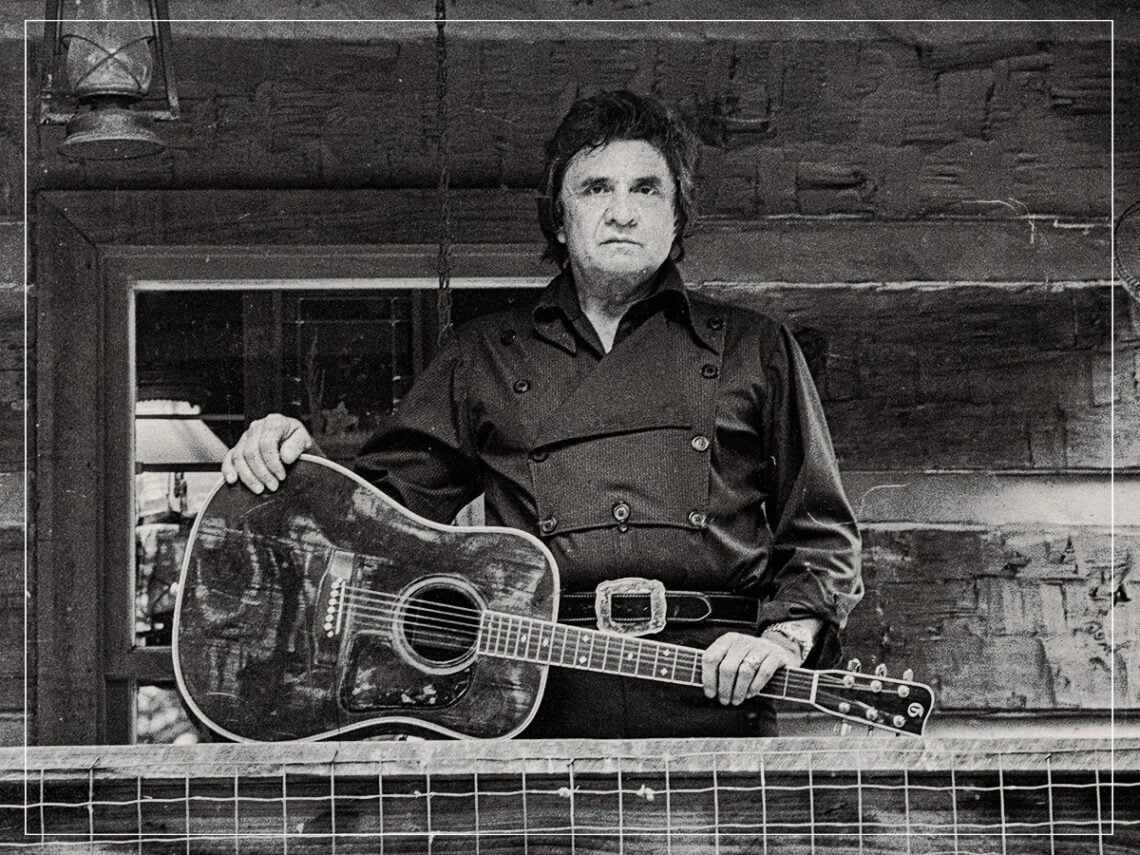
“How presumptuous”: When Johnny Cash leapt to the defence of heavy metal music

Faith and Christianity were constant themes throughout the life and music of Johnny Cash. The grandson of a circuit preacher, ‘the man in black’ was raised under staunch southern Baptist ideals, and his pious nature stuck with him throughout much of his life. At his core, though, Cash was an artist. So, while many preachers across America were keen to denounce rock and roll music as ‘the devil’s music’, the songwriter never subscribed to those ideas. In fact, he was quick to defend the music being attacked by religious leaders.
Going back to the earliest origins of rock and roll, the style attracted regular criticism from religious groups across the world, particularly those in America. During the 1950s, conservative attitudes toward rock meant that many Christians were actively opposed to the music and the effects it was having on youth culture. Those early attitudes towards rock only increased during the late 1960s and early 1970s, when heavy metal music began to take hold on the nation’s youth.
Spearheaded by hard rock outfits like Led Zeppelin, Deep Purple, and Black Sabbath, heavy metal was always more abrasive and dark than mainstream rock. What’s more, the genre often incorporated influences and imagery of the occult and even Satanism. Expectedly, therefore, the rise of heavy metal led to strong opposition from conservative and Christian leaders across the United States. In fact, the genre caused such a panic in the country that the United States Senate had to get involved.
In 1985, at the peak of metal’s influence over mainstream rock music, the Senate bowed down to the aims of the Parents Music Resource Center, a committee meant to give parents stronger control over the music that their children can access. Given that the vast majority of songs the PMRC initially highlighted were metal songs – including works by Judas Priest, Mötley Crüe, Twisted Sister, Def Leppard, Black Sabbath, and W.A.S.P. among others – it was clear that heavy metal was the predominant target of the committee.
At the time, a defence for heavy metal came in a rather unusual form. Despite his beginnings in country music, folk, and gospel, Johnny Cash certainly did not see heavy metal as a threat to society or his faith. “How presumptuous people are my age to think that they’re finally going to do something toward raisin’ their kids right by censoring three minutes of what they hear in a day’s dialogue,” he declared around the time of the PMRC’s hearing in the Senate.
“How presumptuous people are my age to think that they’re finally going to do something toward raisin’ their kids right by censoring three minutes of what they hear in a day’s dialogue.”
Johnny Cash
Not only did Johnny Cash jump to the defence of heavy metal, but he also seemed to be genuinely supportive of the style and its artists. Reportedly, this soft spot largely came from Cash’s kids, who were metal fans. Iron Maiden vocalist Brian Dickinson once recalled Cash asking him for an autograph, sharing, “‘He said, ‘Hey, uh, listen. I’m really embarrassed about this. You couldn’t sign this for my daughter? She’s a big fan.’”
Years later, Cash would once again cross paths with heavy metal via the influence of Rick Rubin. An ardent supporter of hard rock and heavy metal, Rubin has worked with the likes of Metallica, Slayer, and Danzig, to name a few. During the 1990s, he began working alongside Johnny Cash, providing the ageing icon with a musical renaissance. Some of Cash’s most notable works from this period include cover versions of metal-adjacent offerings, including ‘Thirteen’ by Danzig.
While others were calling for a ban on the style due to its abrasive nature and the apparent offence caused to God, Cash recognised the power that metal had both as a music style and in the way that it related to its fans, including his own children. He rightly defended the genre during the 1980s and even incorporated its influence into his own work the following decade, speaking to his endlessly broad appeal throughout the musical landscape.
