


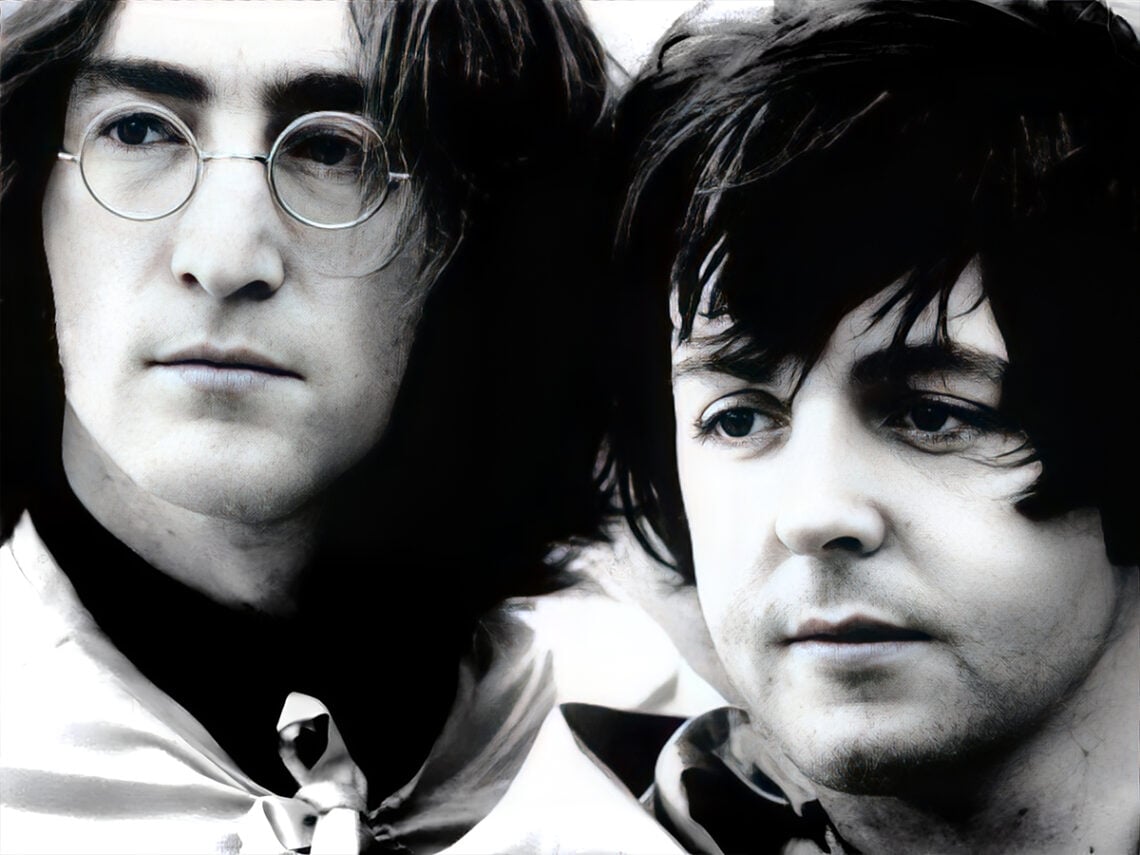
When John Lennon recruited George Harrison for his bitter song about Paul McCartney

As expected for the world’s most famous band, the acrimonious fallout between The Beatles after their split unfolded under intense public scrutiny. In the immediate aftermath, John Lennon and Paul McCartney’s interactions were limited to legal disputes and pointed musical jabs aimed at each other. While this public feud provided tantalising fodder for the music press, it was undoubtedly a far less palatable experience for those close to the former songwriting partners.
The duo, who had risen to their heights in arms, locked together like two pop cavaliers desperately defending themselves against the hordes of mundanity, were now turning their pistols at one another without even making the ten-pace count.
In Lennon’s defence, it was his former creative partner who lit the gunpowder first, a decision that sparked the sorry affair and left the notion of a Beatles reunion mortally wounded. The problems began with Ram – Paul McCartney’s second studio album – when he included a couple of thinly veiled digs at Lennon during the track ‘Too Many People’. McCartney sings, “Too many people preaching practices,” and, later in the song, he adds: “You took your lucky break and broke it in two”. It was a suggestion that Lennon was not only lucky to be partnered with McCartney and create the band but that he had also moved into becoming everything he had audibly distrusted: a false pop prophet.
While the references in ‘Too Many People’ were clear for all to see, Lennon also believed that McCartney took shots at him elsewhere in the album. Songs such as ‘Dear Boy’, ‘3 Legs’, and ‘The Back Seat Of My Car’ were cited as potentially barbed tunes launched in the direction of his former friend. Additionally, the record’s back cover featured an image of two beetles having sexual intercourse, which also raised eyebrows.
Speaking to Playboy in 1984 about his allusions to Lennon throughout Ram, McCartney said: “There was one tiny reference to John in the whole thing. He’d been doing a lot of preaching, and it got up my nose a little bit. In one song, I wrote, ‘Too many people preaching practices.'” However, at the time, with no communication between the two men, things were left untreated, and Lennon was insulted by the record at large.
Lennon, with the fire raging inside him, headed into the studio to unleash his inner fury. Determined to exact revenge, he put pen to paper and recruited his old mate George Harrison for good measure in what would prove to be the most cutting of slide guitar contributions. Lennon was also mightily impressed with Harrison’s performance, later noting: “That’s the best he’s ever fucking played in his life! He’d go on forever if you’d let him”.

There might be a good reason for it, too. Though Harrison and McCartney would reconcile before the former’s death in 2001, the two men were perhaps the most obvious foes within the ranks of the Fab Four. Harrison and McCartney had routinely butted heads during the latter years of the group as Harrison’s songwriting talent grew and McCartney seemed unwilling to acknowledge it. It would lead to many disputes including one moment Harrison actually left the band. As the group broke up, it would seem as though McCartney found himself a little isolated, and with an opportunity to work with Lennon and take a little potshot at Paul along the way, the guitarist jumped on the track.
The track in question, of course, is ‘How Do You Sleep’. A number filled with venom left no questions about the intentions to attack his former bandmate, unlike McCartney’s more subtle effort. Lennon mentions the ‘Paul Is Dead’ theory on the track when he sings: “Those freaks was right when they said you was dead”, but his most damning line comes later when he adds: “The only thing you done was yesterday, And since you’ve gone you’re just another day”.
Explaining the song to Crawdaddy, Lennon said: “I heard Paul’s messages in Ram – yes there are dear reader! Too many people going where? Missed our lucky what? What was our first mistake? Can’t be wrong? Huh! I mean Yoko Ono, me, and other friends can’t all be hearing things”.
Adding: “So to have some fun, I must thank Allen Klein publicly for the line ‘just another day’. A real poet! Some people don’t see the funny side of it. Too bad. What am I supposed to do, make you laugh? It’s what you might call an ‘angry letter’, sung – get it?”.
However, Lennon would later backtrack on the cruel intentions behind ‘How Do You Sleep’, claiming that the spiteful effort said more about his character than it did about McCartney. Ever the self-reflective artist, Lennon suggested that the song was more focused on his inability to find closure from the band: “It’s not about Paul, it’s about me. I’m really attacking myself,” he said in the Imagine film.
Thankfully, the pair would patch things up shortly after the release, and Lennon would soon once again call Paul his “best friend”. It may have been that the track itself acted as a catalyst for their reunion. Like all brothers who fight, sometimes “one for one” can settle things squarely. Despite all the heartache and despair that they caused each other throughout their relationship, the love between the two survived.

Never Miss A Beat
The Far Out Beatles Newsletter
All the latest stories about The Beatles from the independent voice of culture.
Straight to your inbox.