


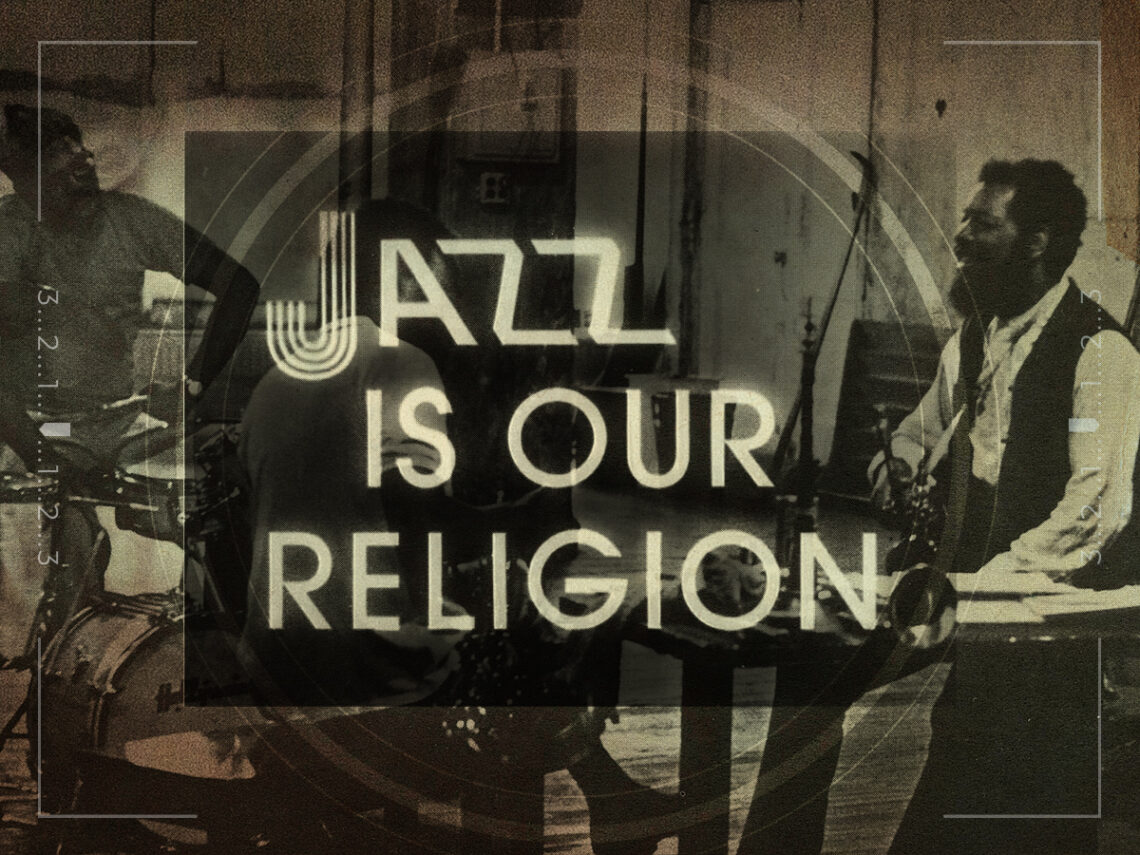
‘Jazz Is Our Religion’: John Jeremy’s poetic ode to jazz liberation

“Jazz is my religion, and it alone do I dig,” wrote the poet Ted Joans back in 1964, during a particularly profound period for the enigmatic style of the genre. Soundtracking the era of civil rights and Black liberation, jazz formed an utterly essential aspect of America’s cultural fabric, yet it largely remained in the underground. In the eyes of many mainstream audiences, its relevancy had waned by the mid-20th century, what with the emergence of styles like rock, R&B, and soul. Luckily, filmmaker John Jeremy was on hand to remind the world of its revolutionary potential.
One of the most important documentarians in cinematic history, Jeremy emerged during the early 1970s, making his debut with the stunning exploration of American blues music, Blues Like Showers of Rain. The film, composed entirely of photographs set to the voices and music of some of America’s most influential and important blues musicians, offers an unparalleled insight into a musical world which mainstream culture was, at that time, rapidly at risk of forgetting. Jazz Is Our Religion followed two years later, and it remains one of the greatest music documentaries to ever grace the silver screen.
Using Ted Joans’ iconic poem as a basis for the entire story of jazz expression and liberation, Jeremy created a rich tapestry of the history, with a particular focus on its importance during the era of political activism and the civil rights movement. Visually, the bulk of the film is built around the stunning black-and-white photography of Val Wilmer, which is an unrivalled, unflinching eye-opener about the innermost reaches of the jazz movement at that time.
Featuring a deluge of defining names, including the likes of Dizzy Gillespie, Art Blakely, Rashied Ali, and Bill Evans, to name only a few, Jeremy’s documentary features a range of voices and a diverse sonic output. But the inherent message of these diverse artists is almost identical. Jazz is not merely a musical scene; it is a vital form of expression, emotion, and activism for communities that have faced historic oppression and subjugation.
Some of the film’s most harrowing, memorable moments come when images of Black people being lynched by smiling mobs of white folks are set to the improvisational rhythm of jazz. What stands out most about these atrocities is their apparent simplicity.
Pictures accompanied by audio is about as structurally simple as cinema can be, yet the filmmaker manages to pack so much emotion and information into those seemingly simple moments. Jazz Is Our Religion is not a complex film, but its simplicity is what makes it such a compelling message.
Following the documentary’s debut at the 1972 London Film Festival, it has been largely, and unjustly, forgotten about. Jeremy himself went on to make a myriad of other groundbreaking films, including the Billie Holiday doc The Long Night of Lady Day, and Django Legacy, but that 50-minute work from 1972 still remains arguably his greatest. Never before, or since, has the spirit and story of jazz music been laid so bare, with an unwavering adoration of the music and a deep-rooted respect for its social history.
Still, like many of the artists included in the documentary, the film never got the plaudits it so greatly deserved. It never makes the cut for any list of the world’s greatest documentaries, even though it has a colossal claim among the greatest factual films ever produced. Even more unfairly, it’s never been reissued on Blu-ray, DVD, or even VHS. Yet, for those willing to seek it out, the film still offers an unparalleled, poetic look into the history and importance of America’s most enduring musical movement.
