


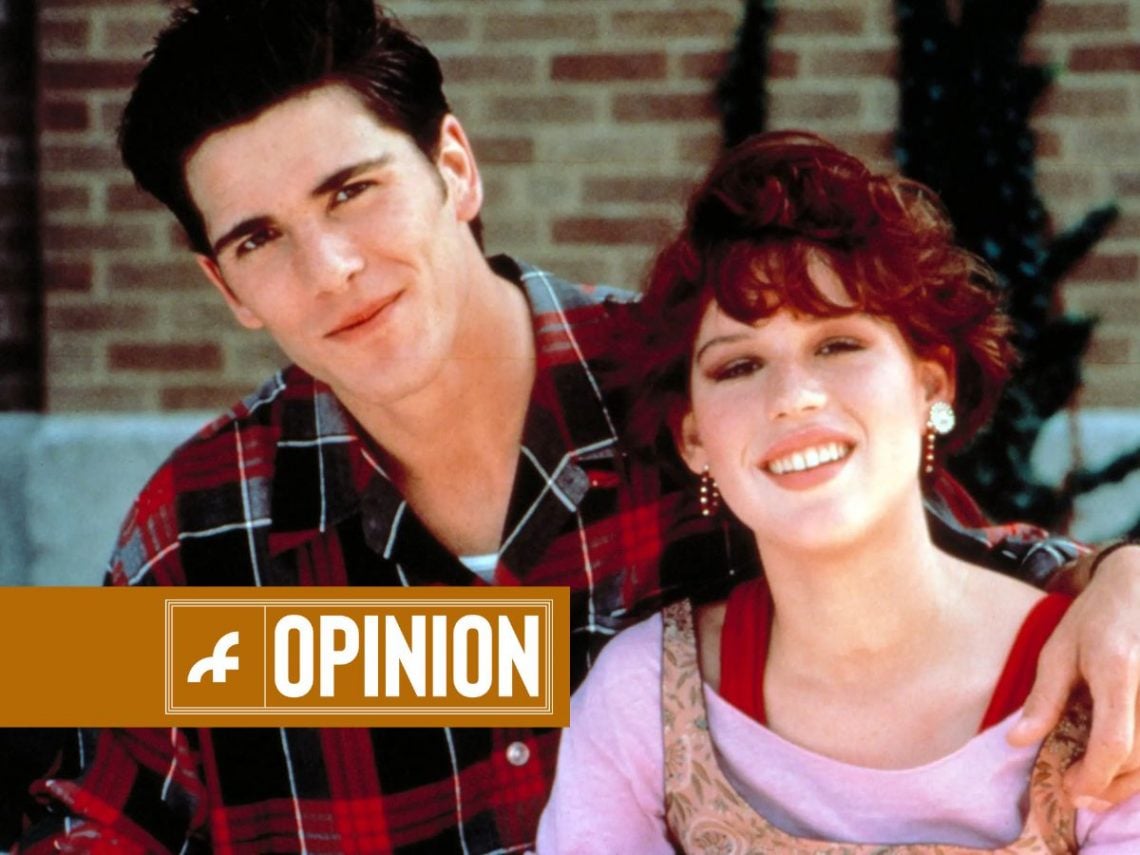
Hear Me Out: John Hughes’ coming-of-age films have aged terribly

Coming-of-age cinema flourished during the 1980s with the release of writer-director John Hughes‘ string of classic teen flicks, beginning with 1984’s Sixteen Candles. The Breakfast Club quickly followed, then Pretty in Pink (written, not directed, by Hughes) and Ferris Bueller’s Day Off. The films have since become beloved favourites across generations, acclaimed for their spotlighting of relatable adolescent issues, such as fraught relationships with parents, social hierarchies and first love.
The 1980s followed a period of radical progression for women’s rights. With the release of Hughes’ films, young teenage girls were the protagonists of mainstream teen cinema for the first time. With that, the frequent casting of Molly Ringwald, who could be considered unconventionally attractive in the sense that she did not represent the ‘popular blonde’ archetype, gave Hughes’ teen movies an air of relatability. In Sixteen Candles and Pretty in Pink, Ringwald plays an outsider, misunderstood by her peers and family, desperate to fit in with the popular kids.
Although the set-up of these teen movies seemed innovative for the time, with many young people, especially girls, seeing themselves in the underrepresented characters, it’s safe to say there’s a lot wrong with Hughes’ work that certainly wouldn’t slide today. Of course, the movies were a product of their time. The ’80s came after the introduction of second-wave feminism, but much progress still needed to be made. Traditionalism still lingered in American society, as demonstrated by the presidency of Ronald Reagan from 1981 to 1989. Hughes’ characters reflect the conservative ideals that were upheld by the Reagan era, frequently indulging in normalised sexism, homophobia and racism.
Sixteen Candles contains one of the most disturbing plotlines in teen cinema history – one that goes unpunished and uncriticised within the film. At a party, the ‘heartthrob’ character, Jake, gives nerdy Ted ‘permission’ to sleep with his intoxicated girlfriend, Caroline, who has passed out. He snaps a Polaroid to provide his friends with evidence of his conquest and, the following day, asks Caroline if she enjoyed their night. “You know, I have this weird feeling I did,” she replies. The implication of rape is brushed off as though the pair just watched a fun movie together after a few too many drinks. Ted does not face any consequences for his actions, suggesting that this is behaviour male viewers can easily get away with. Sexual assault cases such as these are all too common, and it’s hard not to wince whilst watching this storyline unfold in Sixteen Candles, knowing that such a severe issue is treated as the punchline of a (very unfunny) joke.
Furthermore, Hughes’ characters are overwhelmingly white, and on the rare occasion that a person of colour is present, they are portrayed stereotypically and offensively. We can look back at Sixteen Candles again to find one of Hughes’ most shocking acts of racism. Not only is the name of the Asian character – Long Duk Dong – terrible enough, but his entire character relies on being the butt of every joke. Referred to as “the Chinaman” and portrayed as stupid and clueless, his characterisation reinforces harmful stereotypes, which inevitably has a negative real-life effect. According to Martin Wong, the co-founder of Giant Robot, “Every single Asian dude who went to high school or junior high during the era of John Hughes movies was called ‘Donger.'”
Then there’s The Breakfast Club, which, similar to Sixteen Candles, did plenty of harm in sending the message that to be popular and ‘win the guy’, you must conform to certain ideals of femininity. In the former, Allison, an almost goth, ‘loser’ type, only finds romance when she ditches her ‘unattractive’ attire in favour of a pink, frilly outfit and makeup. Yet, despite the rampant stereotyping and harmful messages that compromise Hughes’ teen flicks, he also includes plenty of dialogue that feels sensitive, honest, and painfully relatable to teenage audiences. As Ringwald wrote in an article for the New Yorker: “It’s hard for me to understand how John was able to write with so much sensitivity and also have such a glaring blind spot”. In that respect, it is understandable why Hughes’ films were so popular and their obvious flaws so blatantly overlooked and excused.
There are so many other examples of Hughes’ rampant misogyny, homophobia and racism that it would take too long to list them all, which begs the question – should we still look back fondly at Hughes’ teen movies? These films certainly contain strong elements of nostalgia and depict a time so far removed from our own that it is natural for viewers to gravitate back towards them. However, films such as Sixteen Candles and The Breakfast Club actively promote racist attitudes, sexual assault, and problematic attitudes towards femininity and social hierarchy, which can be dangerous when consumed uncritically by young, impressionable viewers.
Reflecting on her involvement in the films, Ringwald wrote, “Erasing history is a dangerous road when it comes to art—change is essential, but so, too, is remembering the past, in all of its transgression and barbarism, so that we may properly gauge how far we have come, and also how far we still need to go.” Although this is true, with the advent of recent, inclusive coming-of-age films, such as Tomboy, Pariah, Moonlight, The Florida Project, and Mustang, is there any need to introduce new audiences to the work of John Hughes?
