


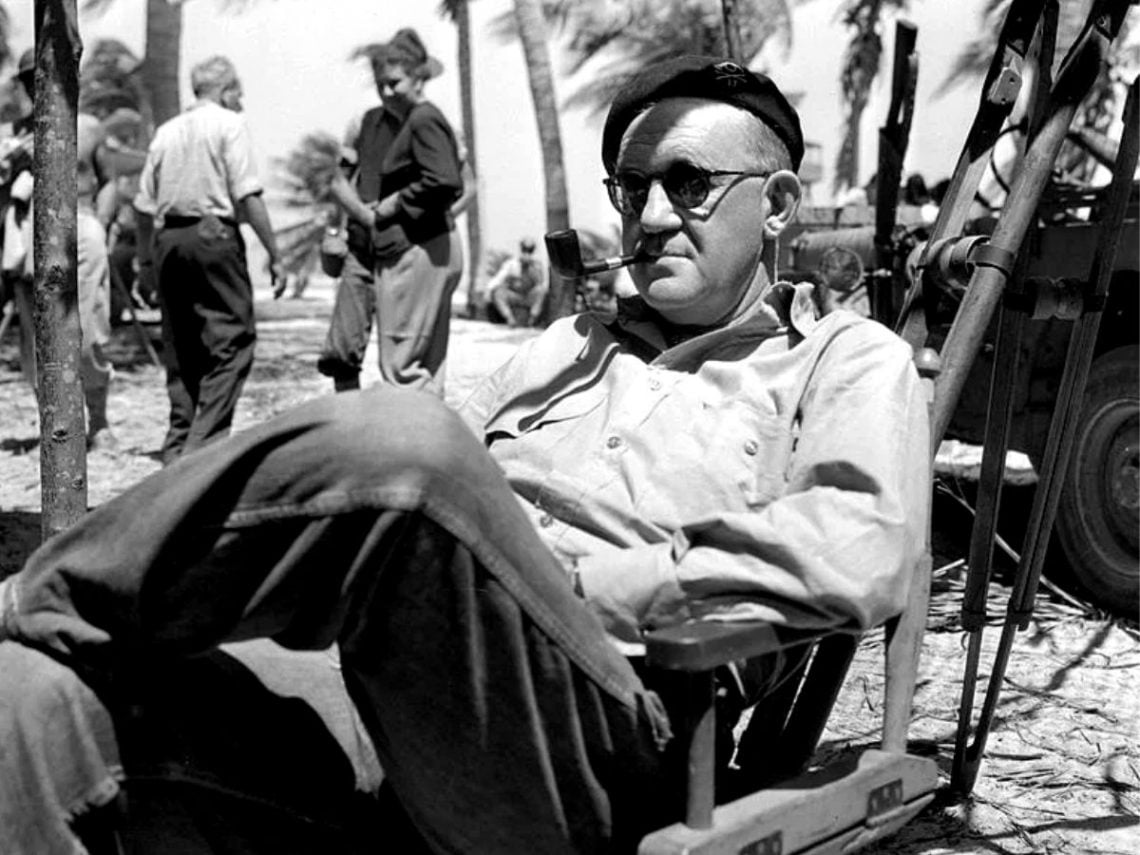
The movie that humiliated John Ford: “A disgrace, a rotten blasted shame”

Even the most powerful and proven filmmakers of Hollywood’s ‘Golden Age’ could find themselves left at the whim of a studio happy to make sweeping changes to their work they didn’t sign off on, and John Ford was no different.
It wouldn’t be the craziest thing to assume a director who snagged a record-setting four Academy Awards for ‘Best Director’ and curated a body of work befitting the legendary status he holds in cinema history would be handed complete creative autonomy over every aspect of their work, but even the industry’s most vaunted figures have people who operate above their paygrade.
Ford was the architect of a myriad of classics spanning multiple genres that numbered The Grapes of Wrath, The Quiet Man, The Searchers, Stagecoach, and The Man Who Shot Liberty Valance to offer up just a soupcon of his back catalogue, with his contemporaries and multiple generations to follow celebrating him as a major influence and inspiration.
Of course, he was also one half of an iconic actor/director partnership alongside frequent collaborator John Wayne, but not even the combination of Ford and ‘The Duke’ was enough to stop one of their films from being butchered by United Artists after its theatrical run.
It might have notched six Oscar nominations, including ‘Best Picture’, but in the 1940s, The Long Voyage Home was a box office disaster that ended up losing almost a quarter of a million dollars for the studio. The story saw Wayne and an ensemble cast sailing from the West Indies to America on a British cargo ship, only for tensions to rise when they pick up a shipment of dynamite along the way.
In an attempt to turn the money-losing misfire into something more palatable and presentable for a small screen audience, the scissors were taken out, and The Long Voyage Home was subjected to cuts that Ford didn’t approve, as he made perfectly clear to Roger Ebert.
“A disgrace, a rotten blasted shame,” he ranted about what had befallen his seafaring drama. “I’m humiliated by this print. They’ve cut it up for television, and in the process someone has lifted three connecting sequences bodily out of the film. What a crime! The people who watch this on television must think I’m out of my mind.”
Ford compared The Long Voyage Home being re-edited without his input as akin to “having the best pages blotted out of your MA thesis,” so it goes without saying that he was suitably pissed off. It may not be comparable to the director’s finest work, but he was evidently invested in the material when he felt compelled to let rip at the meddling executives who took it upon themselves to bastardise his original vision.
