


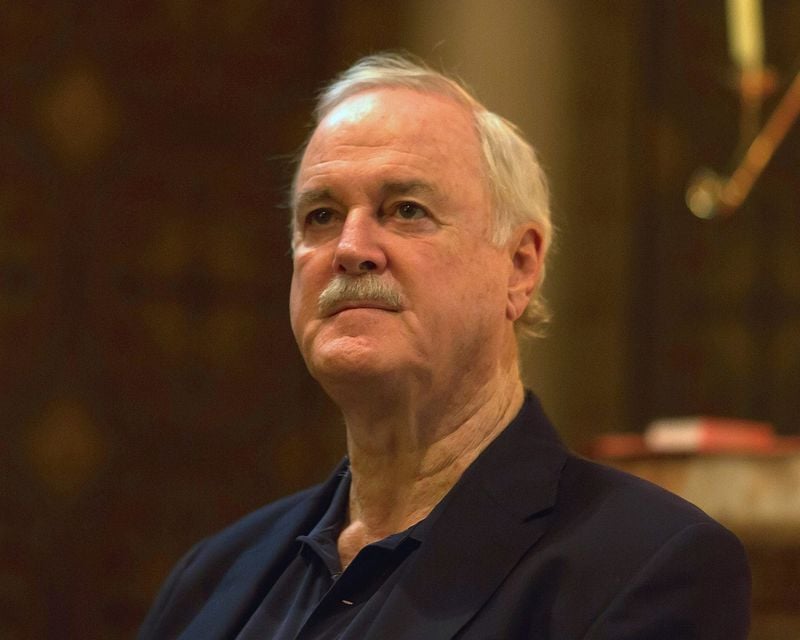
John Cleese names the only genius of his generation: “I was learning technique”

John Cleese helped reshape British comedy in the 1970s alongside fellow Monty Python members Graham Chapman, Michael Palin, Eric Idle, Terry Jones, and Terry Gilliam. Formed in 1969, the group ruthlessly satirised British society, often veering into surreal and absurdist territory. Though their television show Monty Python’s Flying Circus only lasted for four series, it had an outsized impact on international comedy, inspiring everyone from Rowan Atkinson to Robin Williams.
Cleese got his start in comedy while studying law at Cambridge, where he became part of the sketch comedy group the Cambridge Footlights and met his future writing partner Graham Chapman. Over time, the group became known globally for its alumni, which include Eric Idle, Hugh Laurie, Sue Perkins, and David Mitchell. From there, Cleese went on to work as a writer on The Frost Report, a satirical news programme hosted by comedian and journalist David Frost.
Like many comedians of his era, Cleese learned by example, taking advantage of the explosion of talent that emerged in the UK in the early ‘60s. In an interview with The New Yorker in 2020, the comedian reflected on the writers and performers who had influenced him most. Frost was on the list, given his role in introducing Cleese to television, but it was Peter Cook who the Fawlty Towers creator singled out.
“He was a wonderful sketch writer and performer,” he said, revealing that he used to listen to the comedian’s sketches over and over again on vinyl records and write them up from memory until he had memorised them word-for-word. “I was learning technique rather than creativity,” he explained.
Although Peter Cook’s legacy has been somewhat eclipsed by those he inspired – Monty Python in particular – his influence on British comedy cannot be overstated. He, too, was a product of the Cambridge Footlights, though he preceded Cleese by a couple of years, and he appeared primarily on stage early in his career, where he developed a partnership with comedian Dudley Moore.
He went on to purchase and reshape the magazine Private Eye in 1962, turning it from a series of broad jokes into the preeminent source of political satire. He and Moore rose to prominence with their sketch comedy television show Not Only…But Also in the mid-’60s and continued to collaborate until the late 1970s. Known for his deadpan delivery, absurdist monologues, and ability to turn swearing into an art form, Cook was a towering figure in British satire and influenced generations of comedians.
Cleese later befriended his idol and the two even collaborated in 1980 on a television special entitled Cook and Co. However, Cook was plagued with a troubled personal life and eventually died of alcoholism in his late 50s.
For Cleese, no one played a more outsized role in the comedy landscape. “The person of my generation that everyone thought was a genius was Peter Cook,” he said, a sentiment that was backed up in 2005 when 300 comedians named him as the greatest comedian of all time (per The Guardian). Cleese, incidentally, landed in second place.
