


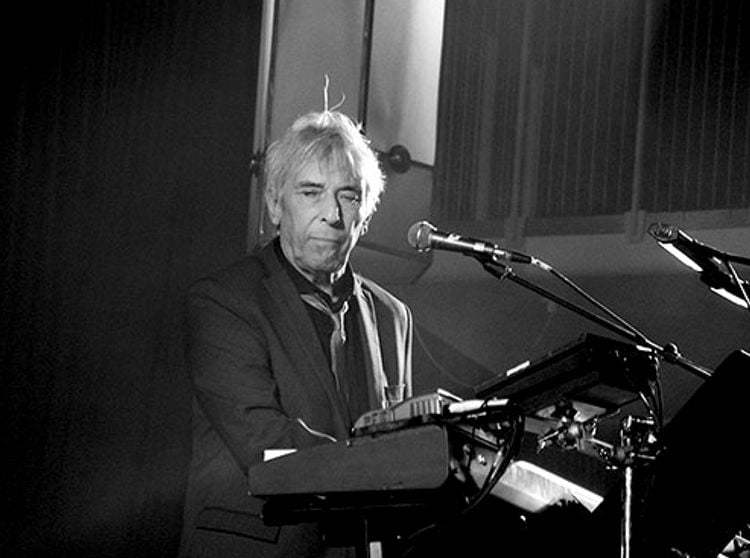
John Cale’s favourite film of all time

John Cale has one of the best reputations in the music industry. After studying music at Goldsmiths College, he moved to New York in 1963 and became heavily involved in the burgeoning downtown music scene. It was there that he would form The Velvet Underground with Lou Reed, Sterling Morrison and Angus MacLise.
However, Cale would depart the band in 1968 and go on to have an envious solo career, releasing as many as 16 full-length studio albums. Cale is also considered an excellent producer and has worked on a number of high-profile artists’ records, including the debut efforts of both Patti Smith and The Stooges.
When discussing his favourite film of all time, Cale gave an unequivocal answer without debate. He said, “The Lady from Shanghai starring Orson Welles, Rita Hayworth and Everett Sloane as the grifting lawyer, [which has] closing scenes with trick mirrors and a shoot-out between lovers and con artists.”
The film is a 1947 film noir picture directed by Welles (although he is uncredited as such). Welles also stars in the movie alongside his estranged wife, Rita Hayworth, which was based on the novel If I Die Before I Wake by Sherwood King. The film did not necessarily wow critics at the time of its release, but it has since been reappraised for its set design and cinematography.
Cale added of his love for The Lady from Shanghai, “As a huge fan of Citizen Kane [and] The War of the Worlds – basically anything Welles puts his stamp on – this is the one that grabbed me the most. His characters are always flawed, broken and held together by humour and a healthy dose of self-loathing. It’s the ending that screeches the loudest in this one.”
As for Cale’s favourite play, he names Tom Stoppard’s Rosencrantz and Guildenstern Are Dead as his top choice. He says it is about “two bumbling comedic characters borrowed from Shakespeare. Everything and everyone ties themselves up in perpetual knots. It may be the one and only time I laughed out loud at the theatre.”
The play arrived in 1966 and is an absurdist, existential tragicomedy in the style of many Samuel Beckett plays. Stoppard takes two of Hamlet’s friends from Shakespeare’s play and gives them their own limelight. Much of the action of the play takes place “in the wings” of Hamlet, and the two express their confusion as to what is going on on stage in the original Shakespeare production.
