


Johann Sebastian Bark: turning tree rings into music

Most of us would wince at the mere idea of our precious record player needle touching a surface that isn’t vinyl. You know the feeling: you let go of the arm a little preemptively, and your heart drops with it, anticipating the painful sound of thin metal scratching against your turntable mat, scrambling to pick it up as quickly as possible. Now, imagine if, instead of falling onto a soft, plush, protective surface, that needle dropped onto the much harder, much rougher surface of a tree trunk.
Barthomoläus Traubeck attempted to emulate what this might sound like—beyond ear-splitting scratching—with his 2013 album Years. A collection of seven piano tracks generated by the details of different Austrian tree rings, the album turned trees into composers. Traubeck’s process wasn’t quite as simple as chopping a tree down and slicing a piece as thin as a 12” record, though.
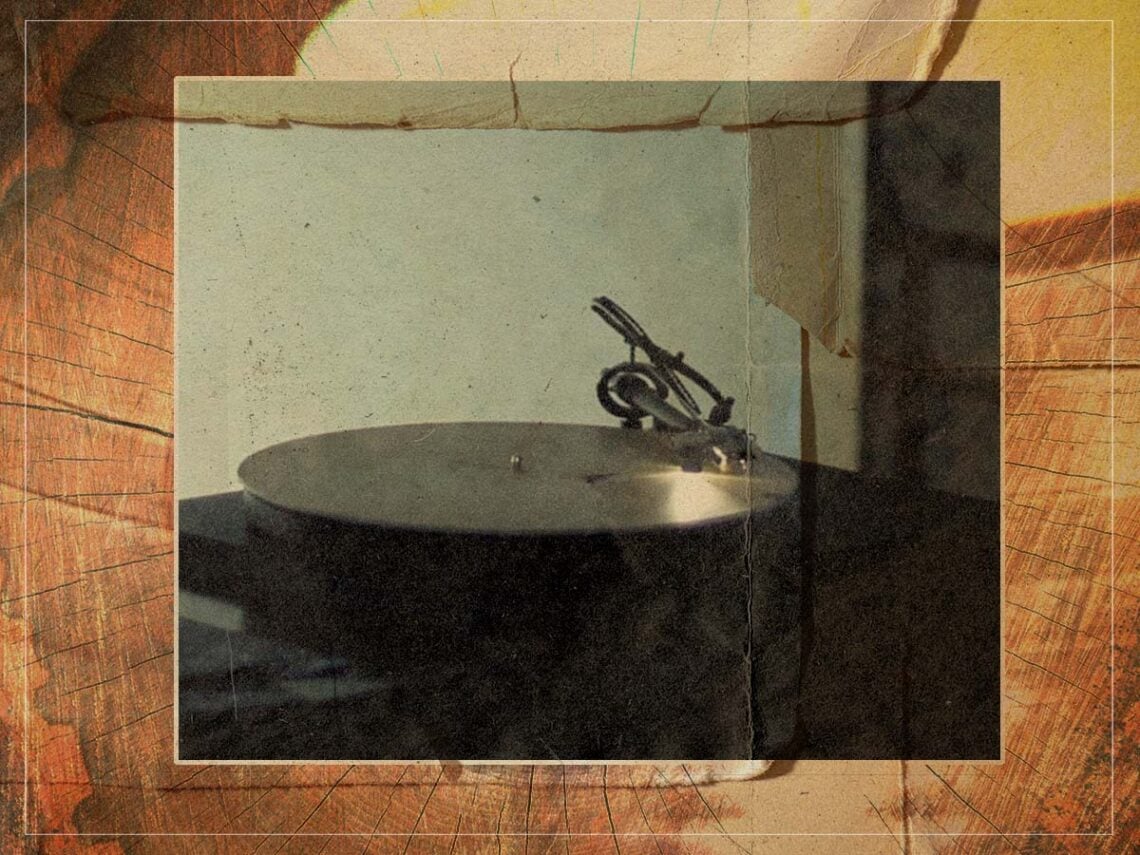
Instead, he created a record player to gather information from the tree rings, such as age and thickness, and turn it into music. “It uses a modified high-speed camera mounted on the tonearm of a record player to read out the rings and patterns on a cross-cut disc of wood,” he explained during a conversation with The National News, “The movement of the rings is then translated to piano compositions by a computer in real-time.”
The process is further explained in the Bandcamp listing for the record. “The foundation for the music is certainly found in the defined ruleset of programming and hardware setup,” a summary notes, “But the data acquired from every tree interprets this ruleset very differently.”
The result of this technological experimentation was a strange collection of sounds. Each track is made up entirely of piano chords—many striking and discordant—but each composition contains a different personality, a different feeling, and a different tree brought to us through sound. For example, Opener ‘Picea (Spruce)’ starts with tentative, high keys that remain fairly calm yet melancholic throughout the runtime.
Meanwhile, ‘Quercus (Oak)’ is discordant and frantic, as if someone is hitting keys across the piano at random. The track has a more chaotic, anxious feeling than its predecessors. Closer ‘Fagus (Beech)’ is a mix of the two, delicate playing mixed with incongruous notes. But each offering is beautiful in its own way, particularly if you’re into strange piano music.
More than the sonic end product, though, this project combines music-making with the natural world, bringing trees—the very things that sustain our lives—into the compositional process. It’s an impressive technical feat on Traubeck’s behalf to create a record player that can turn tree trunks into twinkling pianos, but it’s also a feat in innovation.
Of course, there are elements of nature in other, more common methods of songwriting—wooden instruments and sampled sounds. However, few artists have incorporated the natural world into their compositional process quite so directly, despite our close connection with nature. Years isn’t just the work of Traubeck; it’s the sound and history of seven Austrian trees.
If you’re curious to hear the compositions produced by those growth rings, don’t run into your garden with a saw and ruin your turntable with a tree trunk slab. Unfortunately, not all record players are quite as technologically advanced as Traubeck’s creation — most are limited to vinyl playback rather than bark. Fortunately, Traubeck released his compositions for the world to hear.
Years by Bartholomäus Traubeck