


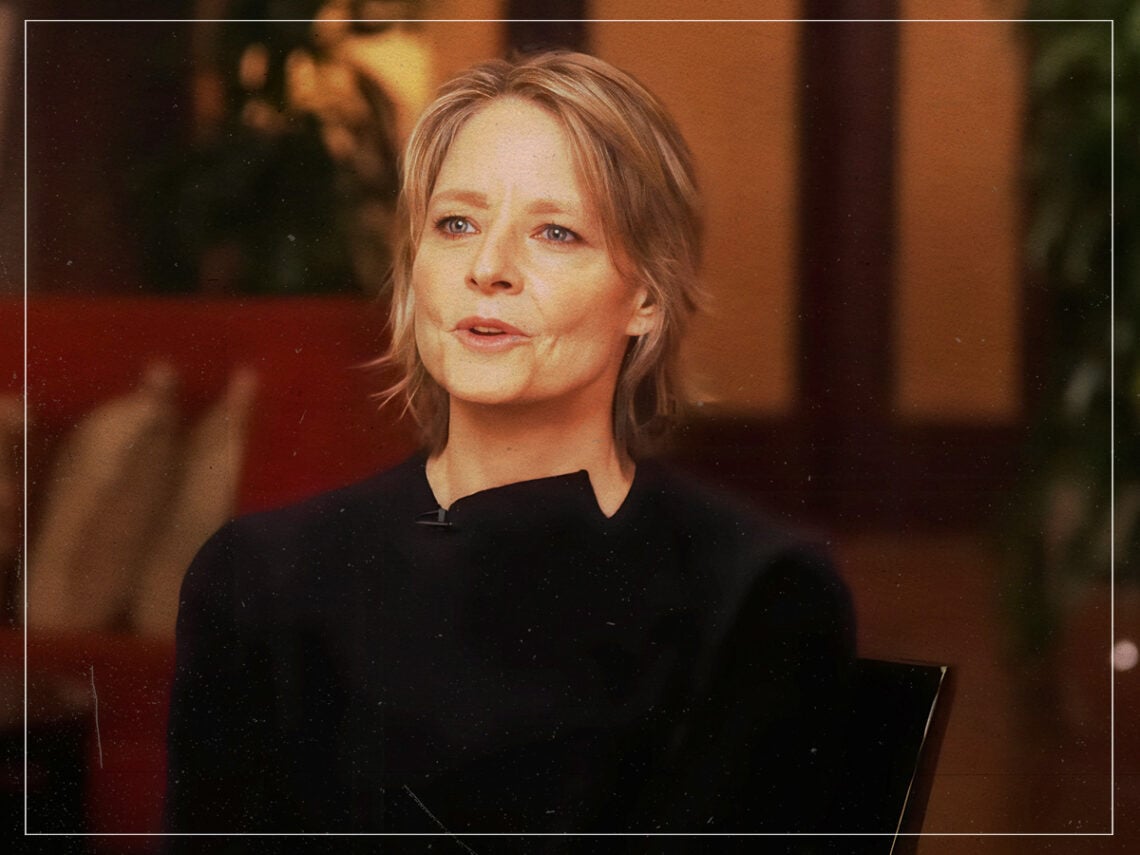
The one actor Jodie Foster would always turn to in an emergency

Few actors achieve notable success behind the camera, but Jodie Foster has defied that trend. Beginning her career as a child star in the 1970s—typically a precursor to turbulent times, as countless cases have shown—Foster managed to sidestep this narrative. Although she started as a Disney child star, collaborating repeatedly with Martin Scorsese during her early years provided an invaluable foundation for her career trajectory.
Since those early moments, Foster has continued to soak up the essence of cinema by working with other esteemed auteurs such as Jonathan Demme on 1991’s The Silence of the Lambs, David Fincher on 2002’s Panic Room, and Spike Lee on 2006’s Inside Man. Working with these figures has not only helped her to evolve her acting talents but also achieve a clearer holistic view of what makes a truly great film. Experiences such as these have been far more valuable than anything a film school could hope to teach.
Despite being a household name and having starred in family classics such as Freaky Friday and Bugsy Malone, Foster is aligned with cinema that pushes boundaries. Whether it be Taxi Driver or Little Man Tate, her filmography is stuffed with films that make the audience think, often by exploring uncomfortable themes.
This is why Foster was more than willing to explore subjects that weren’t for everybody when it came to her third stint behind the camera, 2011’s The Beaver. Kyle Killen’s 2008 script, which follows Walter Black, an executive of a toy company who has a mental breakdown and starts using a beaver hand puppet to talk to people and work through his issues, topped the ‘Black List’ for years and waited to be picked up. Reportedly, there were some famous suitors, such as Steve Carell and Jim Carrey, but eventually, Summit Entertainment picked it up, and Foster signed on to direct.
As expected with such an odd script investigating mental health, The Beaver was a box office bomb but received positive reviews of Foster’s filmmaking. While her performance and that of the late Anton Yelchin were praised too, one thing that might have gone against the film was the presence of its star, Mel Gibson. Following his antisemitic outburst in 2006 and the 2010 domestic violence-related restraining order that his partner Oksana Grigorieva brought against him, even the mention of his name made people wince.
However, against the odds, Gibson would make a resurgence. It was kicked off by his performance in 2010’s Edge of Darkness and continued by his playing Walter in The Beaver. It culminated with his Academy Award-winning movie, Hacksaw Ridge, in 2016.
When discussing The Beaver, Foster explained why she cast Gibson, another actor who made a success out of filmmaking, who she worked with on the 1994 comedy Maverick. Speaking to Time Out Doha in 2011, she admitted that “there’s nothing I can do” about people’s opinions about him and whether they choose to separate the artist from the art. However, she maintained that alongside his exceptional performance, he was the one actor she could always rely on personally. It paints him in a much different light than the one we’re used to.
“There’s isn’t anybody – anybody – who isn’t blown away by this performance,” Foster says. “I’ve known the guy professionally for more than 15 years. He’s the one I’d turn to if I needed to have my appendix out at three in the morning. Mel is loyal, trustworthy, a doll. It doesn’t mean he’s a saint. There’s a lot brewing under there.”
I think in a roundabout way, Foster was trying to say that no one’s perfect. While Mel Gibson might well be there for her when she needs him, his string of scandals have tainted his public image for good. One instance might be enough for forgiveness, but as many as he’s had are, quite frankly, beyond the pale. To be fair to her as a director, though, his personal life certainly added a tangible essence to Walter in The Beaver.
