

The 10 best horror movies directed by female filmmakers
Read More


Despite rising to prevalence in the early part of the 21st century before sinking back into relative obscurity a decade or so later, gothic tales of vampires have always held an ethereal presence in popular culture, ready to strike the minute dusk has settled on the latest Hollywood trend.
With violent and romantic carnal desires, vampires speak to a heightened version of humanity, with such filmmakers as Tony Scott, Guillermo del Toro, Jim Jarmusch and Ana Lily Amirpour realising this in their respective modern classics that work to elevate the niche sub-genre of cinema. Even in their majesty, occupying vast manor houses and more, there’s something pitifully sad about the life of the undead bloodsuckers.
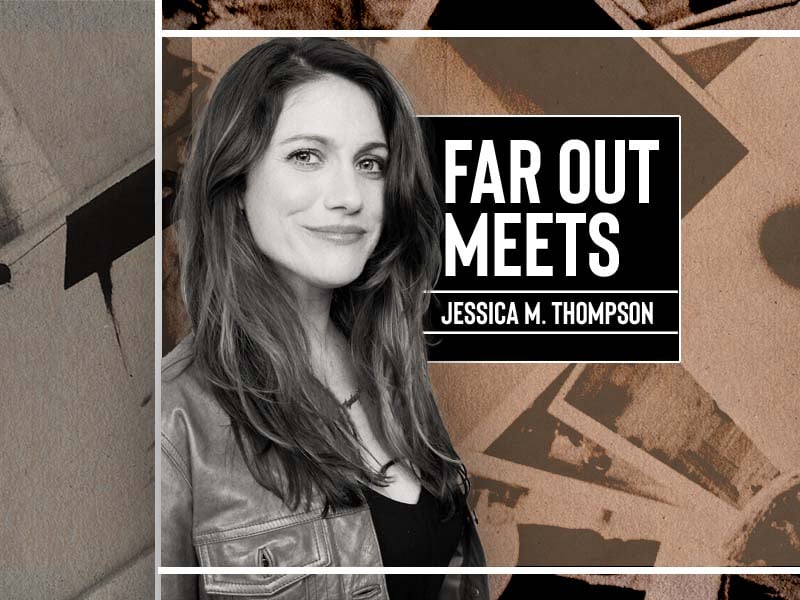
Passionately absorbed in the films of such creatures, the Australian filmmaker Jessica M. Thompson is taking to her first studio movie with a tale about romance and family ties, inspired by the story of The Bride of Dracula. Releasing her first film, The Light of the Moon, in 2017, which took home the audience award for Narrative Feature at SXSW, Thompson has ditched her wealth of experience as an editor to pursue a career behind the camera.
Creating a wonderfully authentic tale, Thompson has crafted a movie that fits perfectly within the sub-genre whilst adding a sufficiently modern twist, featuring such flourishing actors as Nathalie Emmanuel, Thomas Doherty and Stephanie Corneliussen.
Far Out: This is your first major feature film in the director’s chair; how have you found making that transition from being an editor to a filmmaker?
Thompson: “I always wanted to be a film director, so going into editing was kind of a strategic move of mine. I saw that a lot of my favourite directors had editing backgrounds, like the Coen Brothers and even Akira Kurosawa. Absolutely it helps with directing, it helps you figure out your coverage, you’re kind of editing the movie while you’re shooting it, which I think makes life easier for everybody. I felt pretty passionate about my first script, and we made it by the skin of our teeth for $100,000. The producers maxed out our credit cards, and all the things you’re not meant to do, but it seemed to seem to be well received. And then, after that film won stuff at South by Southwest, it took off, which is exactly what you want as an independent filmmaker.”
So, how have you found that step-up from independent to studio filmmaking?
“It’s great. Sony sent me the script in January of 2020, just before the world went crazy, and I was really intrigued by this origin story of a bride of Dracula; I hadn’t seen that before, especially in a modern setting. So when they sent it to me, I was pretty excited because I wanted to get into the genre space, I didn’t want to get pigeonholed into just doing dramas or ‘dramedy’.”
What is it about vampire stories that entices you so much?
“Yeah, I’m kind of a little bit obsessive, I love all the renditions of vampires throughout history. Some are pretty poor, like Twilight, but I really love The Hunger, and Cronos by Guillermo del Toro is often overlooked but it’s a beautiful film, and a lot of the moodier films like A Girl Walks Home Alone at Night. Humans seem to be obsessed with vampires throughout time, and I love all the new interpretations of them. There’s something about these creatures that are like the more beautiful, more strong version of ourselves.
“I’m glad that I get to put my own mark on that really established genre, but I feel like, because it’s from that female perspective, from a bride of Dracula, that it’s not the typical way into that story. I’m a big fan of Bram Stoker, though it was really interesting to revisit the text and see so many things in it that we’ve changed. For instance, I stuck to his idea that vampires can walk around during the day, which, as a modern audience, we find hard to accept, but that’s actually the original version of things. But also, I re-read the text and realised how sexist Bram Stoker is. Anyone who spoke out of turn or was arguing for female rights he would call a ‘new woman’, so there are a few nods to that throughout the film.”
What did you want to achieve with your take on the vampire movie, were there any features you wished to subvert?
“Yeah, also subvert the modern definition of a ‘wedding film’ that’s become a bit of a trope in rom-coms and things like that. Making a romance horror mashup isn’t often done, so I wanted to push the envelope with that and blend in those two genres. But I didn’t want to knock viewers over the head that it was a vampire film job until it was! I wanted to appeal to both Bram Stoker’s hardcore fans, there are over 90 easter eggs in the film for them and I hope that they enjoy all of those, but I also wanted to reach a more modern younger audience and not be stuck to the stuff old text.”
The locations in the movie are particularly special, with the doll-house-looking mansion being a spectacular setting for the movie. Whereabouts did you find it?
“So that castle is a real castle in Hungary, it’s about an hour away from Budapest. The exterior that we used, that’s a real castle, built in the 18th century by the great, great-grandson of Countess Elizabeth Báthory who’s the blood queen, she used to bathe in the blood of virgins, which was like, ‘Oh, this is great, the perfect castle to film in’. So we used some of the rooms but then the big grand hall we built that, because the entranceway for that castle, that manor house, wasn’t big enough to do all the things we needed to do. We shot Hungary for England, but you know, it was fun getting to figure out how to find a Tudor castle and how to add those English elements to a Hungarian gothic world.”
On vampire films, I was curious about what you love about your particular favourites
“Steering away from Coppola’s Dracula. I love it, but it’s not at all to my taste. Cronos by Guillermo del Toro, his first film, and what I love about it is that it’s just got so much heart. I just find it really moving. Also, another overlooked one is Tony Scott’s The Hunger with David Bowie, which a lot of people also haven’t seen. It’s beautiful. I love this kind of world where these rich vampires live in New York and teach piano to children. It’s the more off-the-beaten-path ones that are the ones that I like, I really do love Let the Right One in, the original Swedish version. I love this idea of two young adolescent children, trying to communicate, who want that human connection in a really cold, dark landscape. It’s really beautiful.”
Looking at those kinds of films, you’ve got three male directors, Del Toro, Scott and Tomas Alfredson. How do you think female filmmakers, in particular, can pioneer change in the horror genre?
“We’ve had that male perspective for so long that you want something fresh, you want something unique. You look at Julia Ducournau, who did Raw, which I absolutely thought was fantastic, and Jennifer Kent, who did The Babadook, an exploration of motherhood, of PTSD and postpartum depression. It’s a fresh perspective, and it’s one that is obviously working. Audiences are so smart and savvy these days, they don’t want just to rehash the old ways. I definitely think that if we make more room for women, and LGBTQ+ people, I think you’re just going to get more unique storytelling.
“I’m glad that these doors are opening, it’s a little bit scary to be paving the way. I wish that there were more people that could hold my hand before me. But also, we need more of it, even though we’re naming all these incredible female filmmakers, they’re still like a small little piece of the horror pie. So I hope that it just keeps opening more and more doors.”
A lot of these modern female-led horror movies like The Babadook and Raw seem a lot more innovative and actually more original than a lot of mainstream, male-directed ones too.
“Exactly, and they usually get smaller budgets. With The Babadook, which was made for two million dollars, look what she was able to achieve with such a small budget, now she has gone on to direct much bigger things. I sometimes think when you’re given those restrictions it makes you be more creative, as well. Who doesn’t want a unique perspective on something? The easiest way to do it is to get people to do it, who haven’t done it before.”
What about yourself in terms of the future, are you hoping to stick in the horror space?
“I’m kind of genre-agnostic. I’m a bit more of, not to compare, like a Steven Spielberg in that he loves to dabble in all the genres. So yeah, I’ve got a sci-fi that I’m hoping to get off the ground. I’ve also got a psychosexual drama set in Colombia.
“With that being said, I would definitely revisit horror, if the right idea comes that I feel is meant for the horror space. But I definitely love the genre realm, because I love that you’re able to explore social commentary without hitting you over the head with it. Even The Invitation, it’s about smashing the patriarchy, it’s about a woman overcoming trauma. So you’re able to do that without it being so heavy-handed, which I really love about genre.”
The film definitely ties things up in a very satisfying way, I did love the ending, it leaves things open to a sequel.
“It’s definitely open. I think we’re gonna see what the audience wants. I’ve never been someone who wants to make films in a vacuum, I want the audience to tell me what they want. If the audiences respond the way we hope they will, then, of course, there’s definitely room for a number two. That’s what I think we’re teasing at the end, but it’s also a complete film in itself. It’s not like we’re forcing the sequel or anything like that, but I wanted to set up this idea that the story continues.”
