


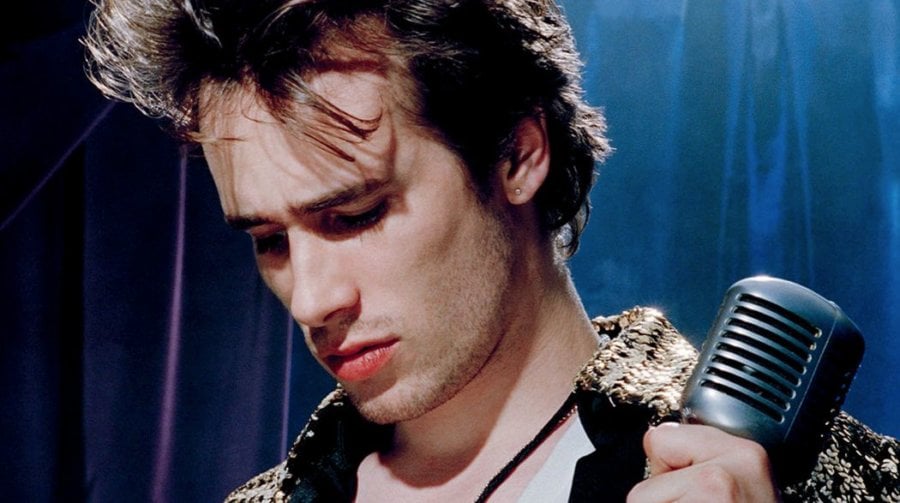
Hear Jeff Buckley’s soaring isolated vocals on ‘Hallelujah’

Jeff Buckey’s version of the Leonard Cohen song ‘Hallelujah’ just goes to show that some songs outlive their creators. Recorded in 1994, a decade after it was originally written, ‘Hallelujah’ is just about as timeless and eternal as a song can be — not to mention a testament to Buckley’s astonishing vocal dexterity. In this isolated recording, the young musician’s talent in that regard sits front and centre.
‘Hallelujah‘ was written and recorded by Leonard Cohen for his 1984 album Various Positions. Appearing alongside tracks like ‘Dance Me To The End Of Love’, it struck many as a little Old Testament, although not for Bob Dylan, who covered the track live on several occasions and once said that Cohen didn’t write songs so much as he wrote prayers. Leonard once asked Dylan how long it took him to write his own exploration of the divine, ‘I and I’, taken from his born-again album Infidels. “Fifteen minutes,” came Dylan’s reply. He then asked how long it had taken Cohen to write ‘Hallelujah’: “Ten years,” he said.
One of Cohen’s most unusual compositions, ‘Hallelujah’ would find new life in the hands of former Velvet Underground member John Cale, who simplified Cohen’s original arrangement, transforming it into the melodic piano ballad that Jeff Buckley would later use as the basis for his ethereal guitar version. This isolated recording of Buckley’s vocal track reminds us that his voice was one of the most essential aspects of his music. Like his father, the cult singer-songwriter Tim Buckley, Jeff’s voice had an unusual elasticity, allowing him to cover no less than four octaves. He makes great use of his highly influential falsetto on the title track from Grace, where he can be heard landing a high G easily.
Buckley’s rendition of ‘Hallelujah’ would give Cohen’s composition yet another bout of success. The songwriter would later highlight the irony of this during a conversation with Jian Ghomeshi on Q TV: “I was happy that the song was being used, of course,” he said about the track’s enduring popularity. “There were certain ironic and amusing sidebars because the record that it came from, which was called Various Positions, that record sony wouldn’t put out – they didn’t think it was good enough. And it had songs like ‘Dance Me To The End Of Love’, ‘Hallelujah’, ‘If It Be Your Will’. But it wasn’t considered good enough for the American market and it wasn’t put out, so there was a mild sense of revenge.”
