

Doctor’s Orders: Travis’ Dougie Payne prescribes 9 of his favourite records
Read More


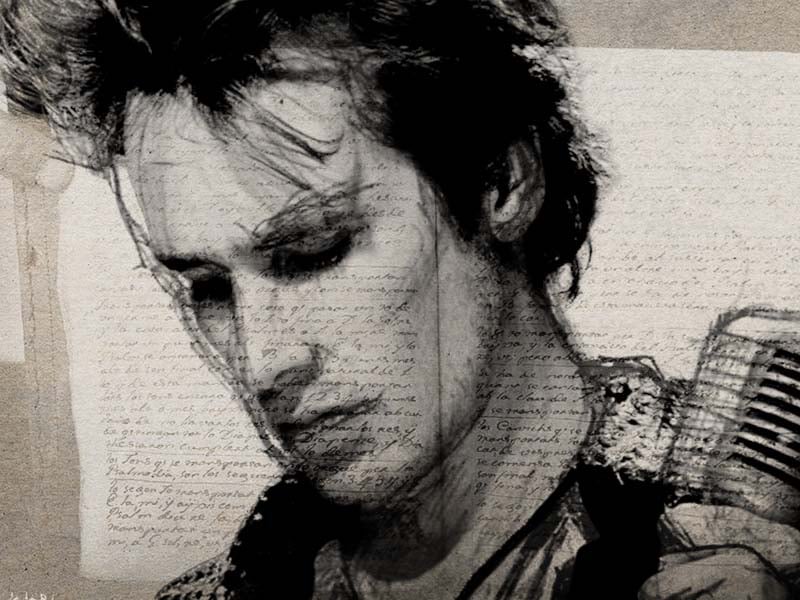
“Music belongs in a place with hearts beating, and brains dreaming, and people falling in love.” – Jeff Buckley (1966-1997).
Jeff Buckley has a voice that could haunt a vacant house. With stunning bravura, he flits between bellows that could stir honey into tea from a thousand paces and the sort of hush that wouldn’t even blow the pappus seeds off a dandelion, and there is no noticeable middle ground between the two states either, they bleed into each other like the seamless melt of ice into cider. This naturalistic tap into pure emotion is a force to behold and a near impossible feat; with it, he inspired a generation to pursue things rather differently.
He did this all armed with only a guitar, an unfettered exposé of vulnerability, and an unashamed sense of profundity. This was rammed down the throats of those who caught him on his spring solo tour of the UK in 1994. In an era when the mainstream seemed to be launching itself towards more of a swaggering pint-swilling direction, Buckley held a beacon that proclaimed wine sipping will always have its place too, and this was manna from heaven for those who were picked last in PE, so to speak.
With the Britpop war waging and the mainstream seemingly racing along for the ride, it had bleeding-heart outsiders losing faith in what they were doing faster than a couple on Grand Designs amid the first harsh winter in the caravan. But Buckley, his electric guitar and not a jot of anything else came along to the UK shores and helped to restore the stock of introspection. The face of music changed thereafter.
Dougie Payne of Travis was lucky enough to be among the 40-strong crowd at the Vic Bar, Glasgow School of Arts in March 1994. He told us, “I saw him on that tour, in the Vic Bar, on a stage that was just six inches high in the corner of the room. It was unbelievable. It is still the most intense live show I have ever seen. His voice was just remarkable. You were just open-mouthed. It’s funny because there was about 40 or 50 people there. And it was [Travis], two out of Franz Ferdinand, one out of Mogwai, three out of Belle and Sebastien. Everybody was there.” This created somewhat of an awe-struck revolution like the Sex Pistols gig in Manchester that everyone lies about being at, except this time it was for sad people.
Word spread to one of the saddest people of all, the king of the creeps, and the last bastion of hope for the outsiders: Thom Yorke. He was losing faith amid the dreaded Britpop war too. This was compounded by the fact that the production of Radiohead’s latest record had all the snap and electricity of a day-old popadom and an Amish lightbulb. The dreaded questions of artistic direction awaited. Thankfully, Buckley would provide the answers. After all, we are dealing with the Grace star who said, “If you feel blocked, do no turn to others, but look inside, in silence, for the enemy of your progress.”
Perhaps the enemy for Yorke and co was a lack of fortified conviction when everything else seemed to be moving away from reverence faster than the wake after a clown’s funeral. Buckley would soon provide a surge of inspiration. As Yorke’s friend Payne explains: “When [Radiohead] were recording Fake Plastic Trees, they were having trouble with it, and they couldn’t get it to work. So, they went out to see Jeff Buckley play on the tour when it was just him and his electric guitar.”
After the mind-wallop of the show, “Radiohead went back to the studio and Thom completely changed the way that he was singing and used that falsetto. You can kind of see the comparisons now. And that says a lot for how inspiring the show was.” Payne adds: “I was very touched because after that, Thom did one of those Q&As with a magazine and he was asked what his most valuable possession was, and he said, ‘My voice’, and I loved that because it’s such a vulnerable thing to say. And it’s also a guy realising that he has this magic thing that can just touch people.”
Whether it was the message it was extolling or the sound it was singing, this notion of the voice being the zenith of all bestowments was a championing moment for exposed vulnerability being presented as strength. Buckley’s brilliance produced a cornucopia of moody music unleashed. What started with him merely taking to the stage with a pint of Guinness and a Telecaster, resulted in Radiohead going back to the studio and trying “an acoustic version of ‘Fake Plastic Trees’. Thom sat down and played it in three takes, then just burst into tears afterwards. And that’s what we used for the record,” Colin Greenwood recalled in an Uncut interview.
“I only went along because my friend Robbie was a big Tim Buckley fan,” Payne said of his own Promethean moment in front of the Svengali of introspection who graced the UK that fateful spring. “He took me along and he went on to form Life Without Buildings. So, everyone there formed a band.” Brian Eno said a similar thing about how the Velvet Underground influenced a generation in the 1970s despite the fact their first record “sold only 30,000 copies in its first five years. Yet, that was an enormously important record for so many people. I think everyone who bought one of those 30,000 copies started a band!”
Buckley’s humble tour was the boot-quaking paradigm of that for a handful of vital people in the 1990s and it proved equally important. Love it or loath it (either is valid), you can’t ignore that Fake Plastic Trees proved so pivotal there is a moment of diegesis in the landscape of music signposted by everything that came before it, and everything that came after. And seemingly Buckley wove it into place with the same mystic fingers of fate that seemed to be behind his own beauteous music.
Much is said of that mysticism and the tragedy which followed. This combination often leads people to romanticise it in a nettlesome way that frames Buckley as a troubled star who dipped into darkness. In truth, he was an illuminating force and for all his flame flickered out tragically soon, he upholds the notion that the light that shines twice as bright lasts half as long. The grace he left in his wake will never be lamentable because it really was a beacon. As Bob Dylan said, “The highest purpose of art is to inspire. What else can you do? What else can you do for anyone but inspire them?”
