


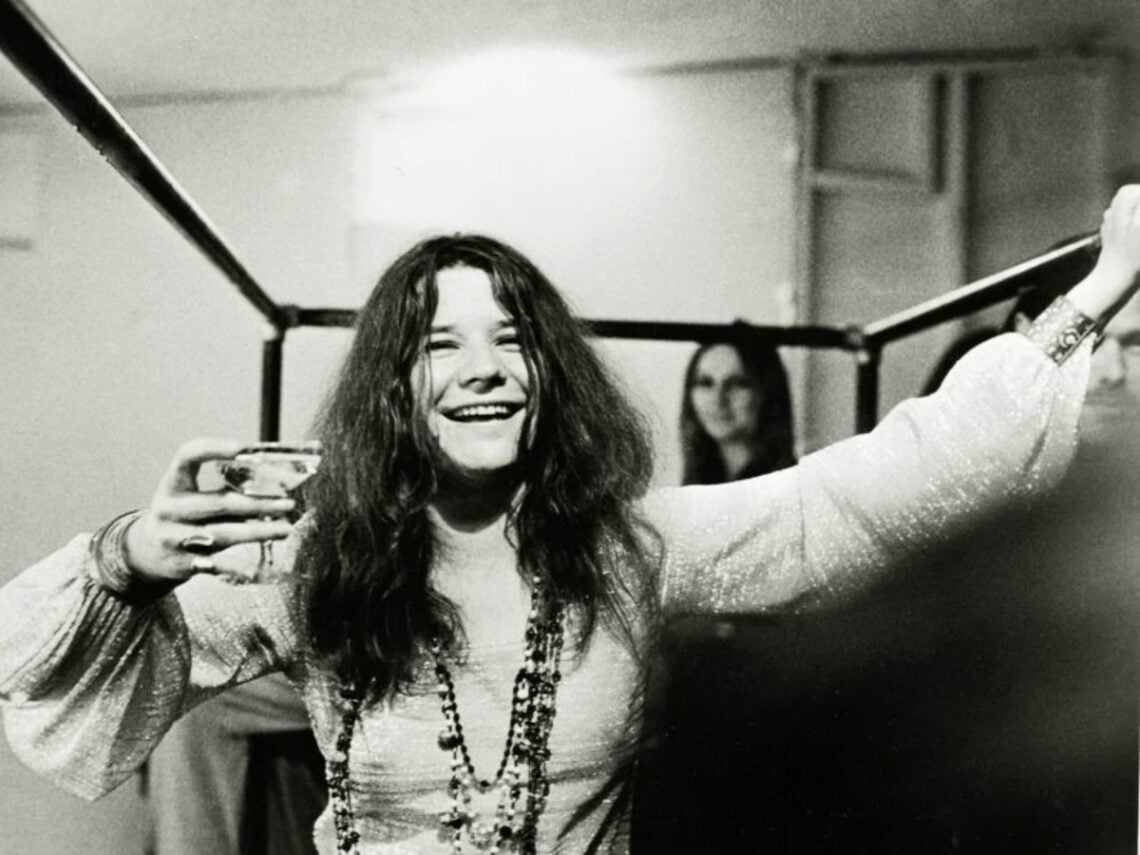
Janis Joplin’s long journey from the University of Texas to counterculture fame

In 1963, there were a lot of things you’d expect a young white girl from Texas to be. An aficionado on the finer moments of blues history was not necessarily one of them. But Janis Joplin was never one for convention.
“I’m one of those regular weird people,” she would famously quip. But for a long while, it didn’t look like she’d be ‘famously’ doing anything. “I knew Janis eight years ago,” the Grateful Dead’s Jerry Garcia would recall in 1971, “and she was singing her heart out in the funkiest places you could imagine, with abscesses on her arms, dumpy and strung out, head all fucked up, wearing the plainest, most nondescript clothes you’ve ever seen. She was really singing, and nobody was even listening.”
Before leaving her native Texas for San Francisco and the counter-culture movement that was bubbling away, her reputation on her university campus was for being a free-spirited musician. But far from one destined for fame. She was a wildly creative soul who walked about campus emboldened by the possibilities of the decade and a firm belief in herself. Or as campus newspaper, The Daily Texan, put it, “She Dares to Be Different.”
The article continued on a young, pre-fame Joplin continued, “She goes barefooted when she feels like it, wears Levis to class because they’re more comfortable, and carries her autoharp with her everywhere she goes so that in case she gets the urge to break into song, it will be handy. Her name is Janis Joplin.” Quite the esteem heaped upon such young shoulders but Joplin took it – like she did everything else that was thrown at her – in her stride.
At the university, Joplin continued to portray an image of the rebellious troubadour. She strode around, embodying the image of an energised young artist. Although she had grown up in relative middle class comfort, with her father an engineer at Texaco, after the bullying she faced in her school days, she had cut herself adrift from her Port Arthur upbringing.

Now, as a student and firm outside, she was cosying up to discomfort. She found solace in an assortment of inspired art. Half blues singer, half beat poet, she recorded her first song ‘What Good Can Drinkin’ Do’ on tape in December 1962 at the home of a fellow student. It would be an inspirational moment for the young singer and begin a career that, although far too short, would provide some glittering moments that continue to be eulogised.
But for a while, that fate looked precarious. She was playing to disinterested rooms and found herself disillusioned. Eventually, Joplin left Texas in January 1963 to “just to get away,” she said, before adding: “Because my head was in a much different place”. Despite the dispassion she had faced beyond one favourable Daily Texan profile, she still lusted after the lifestyle of the freewheeling artist.

Joplin began hitchhiking with her friend Chet Helms in a bid to reach North Beach, San Francisco, the new hub of the ludicrously hip. When she arrived, she soon immersed herself in the ‘beat culture’ and became enamoured with the creative hive that was seemingly buzzing with opportunity.
One such opportunity afforded to Joplin and many other singers of the time was coffee shops. These smoky hangouts were the refuge of the scene and provided not only a place to meet but a place to share songs. What with it being the ‘60s, that meant everybody was encouraged to share their expression, trading tacks like a joint to be toked on.
Joplin began to find a home in coffee spots during 1963. As the clip below evidences, while her crowds might have been small and the settings notably intimate, she finally had a rapt audience and she regaled them with her passion for the blues.
Picking obscurities and folkloric ditties, Joplin wowed the Coffee Gallery crowd with not just her knowledge but her powerful delivery. She had a voice that could stir honey into the patrons tea and a firecracker spirit that defied the need for central heating.
“This a song a lot of blues singers sing,” she says following a rousing rendition of ‘Daddy, Daddy, Daddy’. Introducing the San Franciscan crowd to another obscure number and upping their musical education. “The version I do was recorded by Lonnie Johnson back in the ’20s. He’s an old-time blues singer who never achieved much prominence but he’s still very good,” before launching into the charming performance of ‘Careless Love’.
The sad ending for Janis Joplin is made even sadder with the knowledge of her authenticity and commitment to her work. While she would often make allusions to living fast and dying yong, that notion belies the studious and sincere way she approached her craft beyond drama and drunken showmanship. Joplin felt every single note of what she sang and she made sure she learned how to commit from the masters.
As she would put it herself, “If I hold back, I’m no good. I’m no good. I’d rather be good sometimes than hold back all the time.” She believed in the power of music at its rawest, roughshod realest. That was clear as soon as she landed in San Francisco and began to fashion her act.
It wouldn’t be long before she was taking that same fire from the small coffee shops on to huge stages and wowing crowds with her impassioned performances and honest reflections. Sadly, it would all come to an all-too-quick end as Joplin died following a heroin overdose in October 1970. But over half a century on, her passion still roars on, and somewhere in its beguiling welter is the sense of an artist overcoming their overlooked beginnings.
She might be a one-off “regular weird” person, but what made her so beloved was her utterly riveting resonance, whether she was silencing coffee shops or prompting pandemonium at Monterey Pop Festival.
- ‘Leaving’ This Morning (K.C. Blues)’
- ‘Daddy, Daddy, Daddy’
- ‘Careless Love’
- ‘Bourgeois Blues’
- ‘Black Mountain Blues’
- ‘Gospel Ship’
- ‘Stealin”
