


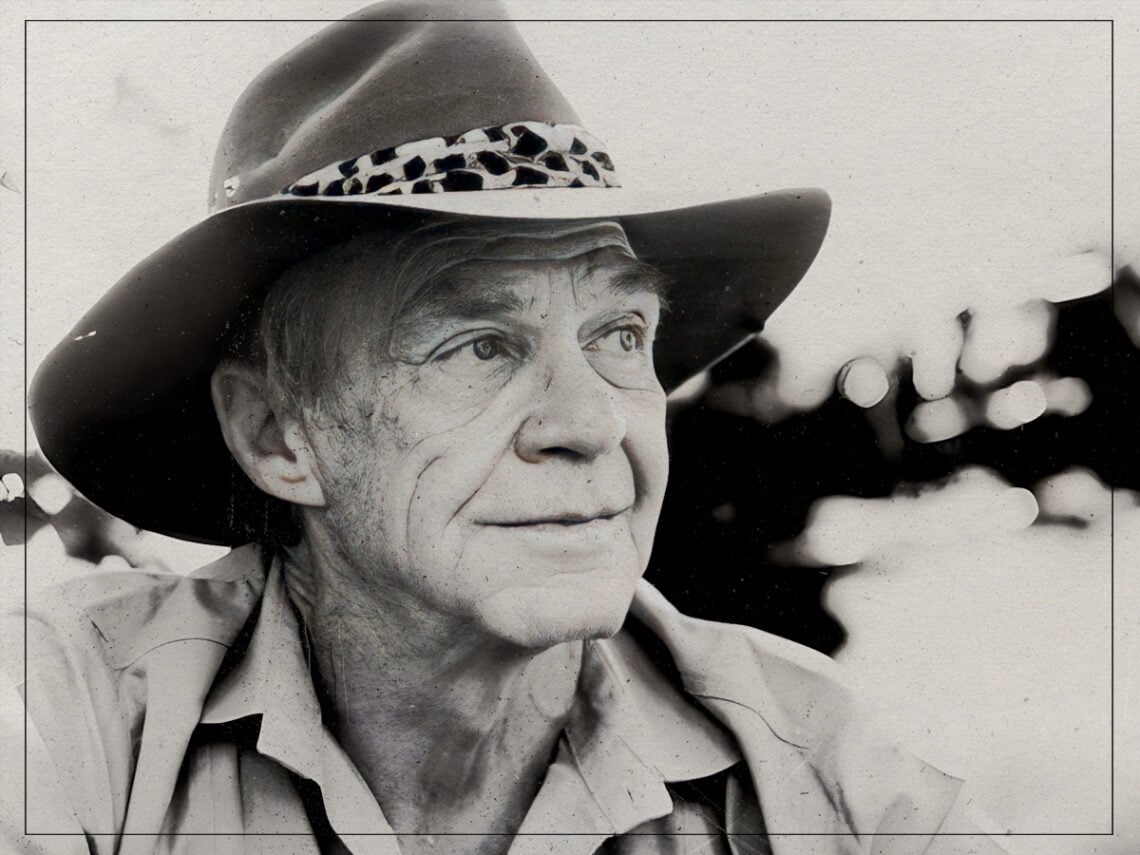
Jamie Uys: South Africa’s most quintessential filmmaker

Comedy tends to be a more universal language than most, which played a significant part in Jamie Uys becoming regarded as one of the most important and influential filmmakers in South African cinema, who brought local stories to a wider audience than ever before.
Not that a lucrative and era-defining foray into celluloid was his dream from the very beginning, with the mathematics teacher – who was also married to a fellow mathematics teacher – making his directorial debut with 1951’s Afrikaans-language Daar doer in die bosveld, which signalled his ambitions after he served as writer, director, producer, editor, cinematographer, and star.
It wasn’t until the following decade that he began gaining real traction, though, but Uys’ signature style quickly became evident. By the end of the 1960s, he’d showcased plenty of versatility by helming All the Way to Paris, Dingaka, and Lost in the Desert, which follows international diplomats embarking on a walking race to the French capital, a tribesman avenging the murder of his daughter, and a survival story following a young boy’s plane crashing in the desert respectively.
Never one to be pigeonholed, Uys’ filmography encompassed narrative features, documentaries, shorts, and educational films while maintaining his desire to shine a spotlight on socioeconomic conditions and race relations. This often came through the means of scathing satire, which quickly became the genre that gave him his biggest and most notable successes.
That being said, 1974’s doc Beautiful People explored the unique plant and animal life of southern Africa, while 1977’s Funny People was a progenitor of sorts to many modern sketch comedies by planting unaware subjects in the midst of staged pranks. It was comedic, without a doubt, but it was broad and catered to appeal to a mass audience more than it was insightful.
However, that balance was perfectly struck in 1980 when The Gods Must Be Crazy hit cinemas. An international co-production between South Africa and Botswana, it follows the misadventures of a tribal leader who decides to embark upon a spiritual journey when a Coca-Cola bottle falls from a plane and is interpreted by the tribe as a literal gift from the gods.
It shattered local box office records on its way to becoming the highest-grossing hit in South African cinema history, a record that was only extended when it secured an international release, captivated audiences all over the world, and topped out with more than $85million in the coffers. There were criticisms that it made light of the apartheid era, but Uys was in firm disagreement.
“The thing about this film is that everybody’s funny, whether white, black or brown,” he said of any potential backlash being pointed towards the first instalment in what eventually became a five-film series. “When you make a comedy, you like to see the funny side of the human condition, and you don’t see their colour.”
Not that Uys ever intended to make message movies, explaining that doing so would be “bad for business” when it was more important for the audience to insert “their own messages” based on the actions that unfolded within. They were reflective of the culture they were created in during the period where they were made, and the filmmaker wanted viewers to derive their own interpretations as a result.
His films may have been products of South Africa. However, as Uys illustrated to the Los Angeles Times, the reason why they were embraced so universally is not only because of the icons who influenced him but also because of the way the characters they created spoke to people everywhere, regardless of their own background.
“People sometimes ask me what directors influenced me. It wasn’t the directors; we didn’t think about them. It was Harold Lloyd and Buster Keaton and Laurel and Hardy and, of course, Charlie Chaplin,” he offered. “They were characters you cared about, and if you laughed at them, it was because you felt sorry for them, you sympathised with them. Oh, didn’t Chaplin try to tug your heartstrings with the little guy.”
Uys passed away from a heart attack in January 1996 at the age of 74, but his status as a towering figure in South African cinema will continue to endure.
