


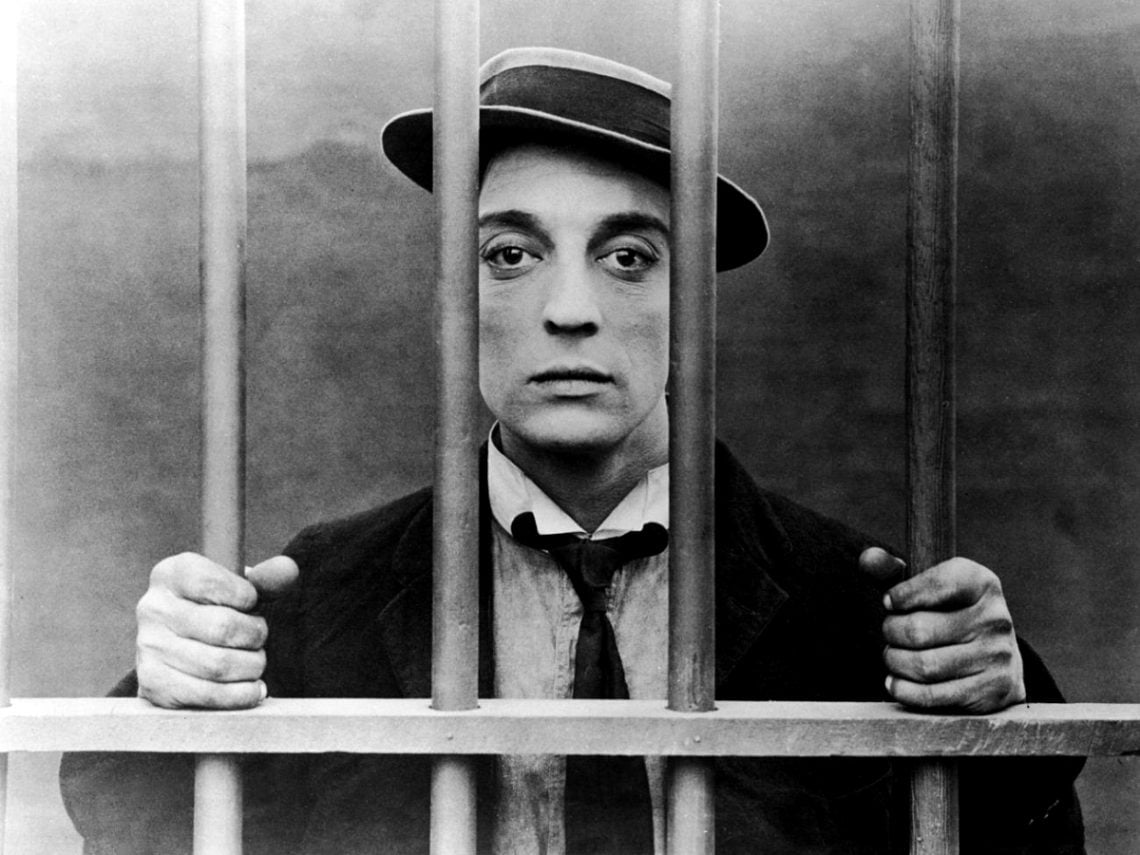
James Mason helped save the legacy of Buster Keaton

Buster Keaton was an extraordinary talent known for being one of cinema’s most successful silent-era stars. In fact, Orson Welles wnt as far as to declare the actor-director as “the greatest of all the clowns in the history of the cinema… a supreme artist, and I think one of the most beautiful people who was ever photographed.”
Keaton’s influence has extended far and wide. His stoic presentation, despite inner despair, has bled into some of contemporary cinema’s finest performances. Furthermore, his pratfalls and slapstick routines were unforgettable, even inspiring stunt performers such as Johnny Knoxville, who cites Keaton as a significant influence over his Jackass stunts.
Despite Keaton’s monumental impact on cinema, his work was almost lost for good. Despite his success in the 1920s, the actor’s career declined after signing with MGM, which stifled his artistic leverage. The Great Depression financially affected Keaton, the sole financial provider for his parents and siblings, as did his miserable marriage. He fell into alcoholism, and his wife Natalie divorced him in 1932. MGM fired Keaton, and the actor filed for bankruptcy. His once lavish life throwing extravagant parties in his Italian-style Los Angeles villa was no more.
Luckily, Keaton eventually regained control of his life, remarried in 1940 and revived his career. He once stated: “I think I have had the happiest and luckiest of lives. Maybe this is because I never expected as much as I got. And when the knocks came, I felt it was no surprise. I had always known life was like that, full of uppercuts for the deserving and the undeserving alike.”
During Keaton’s golden era, he helped to plan and design large parts of his house and grounds, situated on a three-and-one-half acre property behind the Beverly Hills Hotel. Nearby lived Charlie Chaplin, Tom Mix, Rudolph Valentino, Mary Pickford, and Douglas Fairbanks Sr. Keaton once recalled: “We used to have weekend poker parties where a man would win or lose $50,000 in an evening and either way, didn’t worry about it. He could always make another picture.”
The house contained a ‘Play Room’ which could be converted into a movie theatre, complete with a projector, perfect for showing guests unfinished films. Although Keaton loved the villa, when he divorced Natalie, she took his fortune and property. She sold the house two months after their separation, which various owners purchased over the next few years.
However, in 1948, Pamela Mason, the wife of British actor James Mason, became enamoured by the property. The pair managed to push down the asking price from $250,000 to $82,000, moving in the following year. Upon refurbishing the house, the Masons found something that would completely change cinema history.
According to filmmaker Jim Jarmusch, when Keaton’s career was disintegrating, “the studio said, ‘look, all of your films… we are reclaiming the silver out of the copies of these films.’ […] So all of these masterpieces that Buster Keaton created were gone. And they were gone. And he lived his life until the 1950s, drinking more and just accepting that all of this work that he had done will never ever be seen.”
He continued: “[Mason] took down a wall in part of a screening room in this house, and in a walled-up projection room were pristine prints of Buster Keaton’s films. So, thanks to James Mason, we have Buster Keaton’s beautiful films.”
Inside the stash was a collection of films whose “combined value at the time was worth more than that of the estate.” A pristine copy of The General and Parlor, Bedroom and Bath, which was shot in the property, were some of the many gems found inside.
