


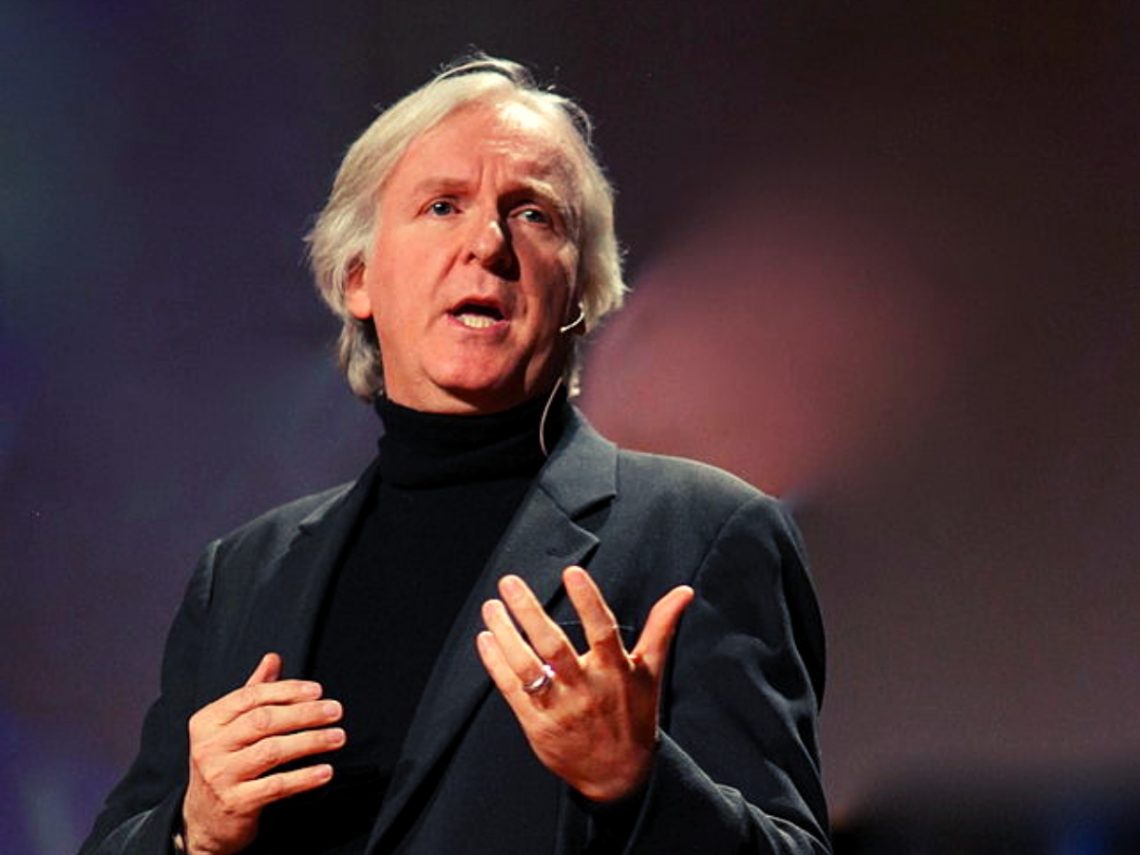
The moment James Cameron was convinced he’d derailed his entire career: “We’re fucked”

James Cameron has always been known for pushing Hollywood technology forward. This is the man who envisioned a sentient water alien taking the form of a human face and a liquid-metal Terminator in his screenplays—then worried about how his team would achieve such effects after he was already committed to the idea.
To date, Cameron has always managed to pull off his visual feats by investing heavily in pioneering effects and taking the time to perfect them. However, he’s not infallible, and he was once convinced his career was about to go down the drain because one of his wild ideas simply couldn’t be executed convincingly.
After Titanic was released in 1997 and became the highest-grossing movie of all time, Cameron’s world was his oyster. Many naysayers had predicted that the $200million Leonardo DiCaprio/Kate Winslet epic romance-meets-disaster movie would be Cameron’s folly, but they couldn’t have been more wrong. It put him in a stronger position than he’d ever been in before—which is why it surprised people that it took him 12 years to release another film.
In truth, though, Cameron would argue that nobody should have been surprised – after all, he announced that Avatar would be his next project before Titanic even came out. In 1996, he told a bemused Chicago Tribune that he devised the idea after a prophetic dream at 19 years old and had written an 80-page treatment in 1994. This tale would use computer-generated actors, cost $100m, and include six live-action actors “who appear to be real but do not exist in the physical world”.
Naturally, in 1996, few people in Hollywood or the press could comprehend what Cameron was talking about. He insisted that Avatar would be released in 1999, though, but when that release window came and went, he was forced to admit that the CGI technology available at the time wasn’t fit for purpose. He shelved Avatar until the tech had evolved to a point when he felt it could handle his vision – and in October 2005, he showed Fox executives a proof of concept clip he cooked up with Digital Domain. This cost the studio $10m but achieved the desired effect: Avatar was a go-picture.
Over the next four years, Cameron’s passion project would cost Fox $237m for the production and $150m for marketing. One unconvinced executive reportedly told the filmmaker, “I don’t know if we’re crazier for letting you do this—or if you’re crazier for thinking you can do this.”

In truth, given that the movie featured 40% live-action footage and a massive 60% computer-generated imagery, it was always going to be a Herculean task for Cameron and Weta Digital, who signed on to pull off the unprecedented job of creating the world of Pandora and the Na’vi. It involved a never-before-seen level of research and development, as the last thing Cameron wanted was for his 12-foot-tall blue aliens – created with a mix of CGI and motion-capture performances – to fall into “uncanny valley” territory. This refers to the phenomenon of a CGI character being almost photo-real but with glassy eyes or strange facial movements that don’t register to viewers as “human”.
“What a lot of people have called the ‘dead-eye syndrome’ – that sort of lack of emotional affect in CG characters – we had to punch past that,” Cameron told Oregon Live in 2010. “We had to get to a system that had zero loss of the original emotion of the actor’s performance in the final CG version of the character.” Cameron revealed that he impressed upon his crew that if they didn’t pole vault past this uncanny valley problem, “We’re wasting a lot of 20th Century Fox’s money”.
The process was far from smooth sailing, though – and at one point, Cameron thought his latest $200m gamble was going to derail his entire career. “There was a moment where we’d been working on it for about two and a half years with every possible best technique we could imagine, including a lot of stuff that we had to create,” he explained. “And I saw the first CG stuff, and I wanted to put a pistol in my mouth. I thought, ‘This is what it’s gonna look like? We’re fucked.'”
Cameron didn’t panic, though. He and his team committed to ten weeks of “hard work and refinement,” and by the end of it, they had a finished scene. He recalled sitting in the cutting room all alone, staring at a stunningly lifelike close-up of Neytiri, a giant cat-like alien played by future Oscar winner Zoe Saldaña. Suddenly, it hit him: “She’s alive. This is a real person.”
At that point, he knew Avatar wasn’t just a crazy pipe dream. Instead, this was a movie he could pull off. However, he chuckled, “The challenge, of course, was that we still had to do about 2,200 shots!”
