


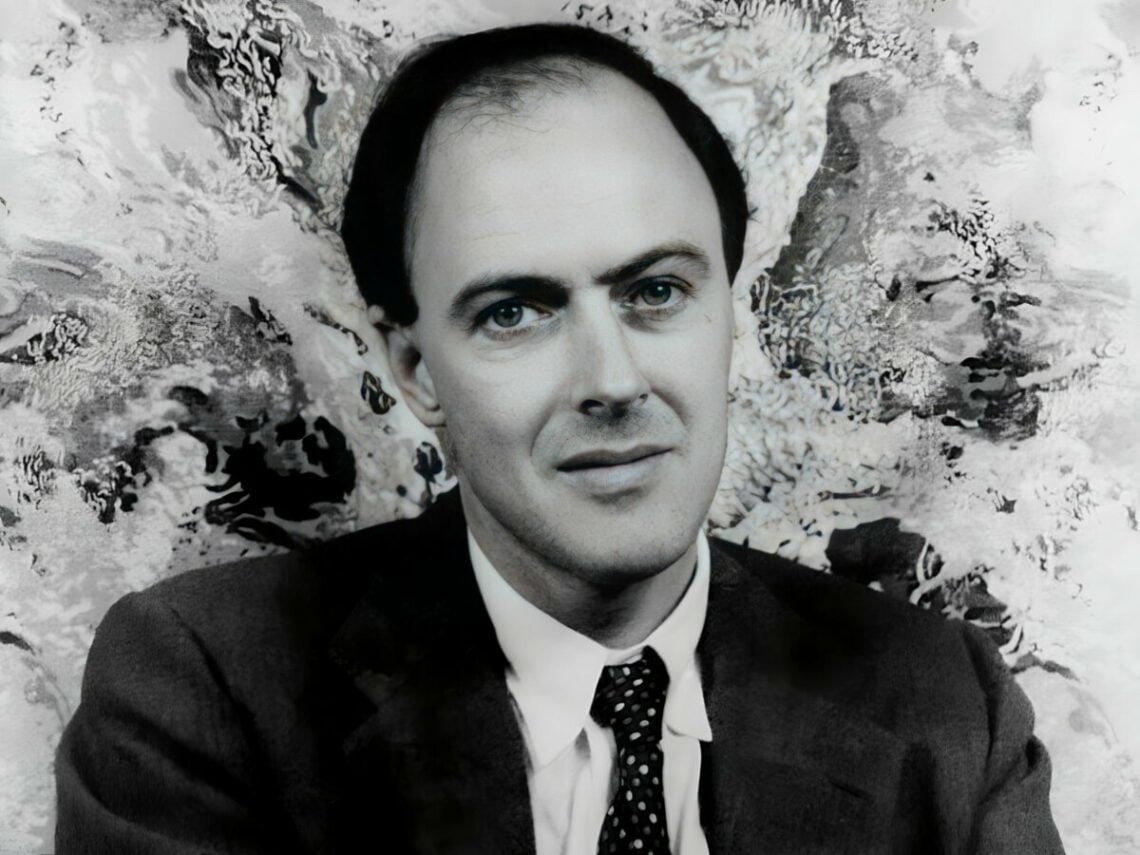
Which James Bond movie script was written by Roald Dahl?

Roald Dahl might be best known as a prolific children’s novelist whose works have been adapted for the screen by a whole host of directors, from Danny DeVito to Wes Anderson. Decades before the publication of his most celebrated works, though, he worked as a diplomat with British Navy intelligence officer Ian Fleming, who would go on to create the world’s most famous fictional spy, James Bond.
Fleming and Dahl remained in contact, and two decades after their collaboration in Washington DC during the Second World War, their friendship laid the groundwork for a movie adaptation of the final Fleming novel published during his lifetime. The year was 1966, and 007 was ready for his fifth on-screen adventure based on one of Fleming’s stories.
When the script of film noir specialist Sydney Boehm was thrown out, producers Harry Saltzman and Cubby Broccoli went back to their go-to screenwriter Richard Malbaum, who’d written all of the first four Bond films. But Malbaum was taking a break from writing, leaving Eon Productions in a desperate situation.
With the Fleming connection in mind, Saltzman and Broccoli reached out to Dahl. They were going out on a limb, as the children’s writer had only one feature-length screenwriting credit to his name at that point, for the 1964 thriller 36 Hours.
So, what was Dahl adapting?
Dahl was unhappy with the Fleming novel he’d been given, You Only Live Twice. Despite being a best-seller, the man tasked with turning it into a film script didn’t rate it. “It was Ian Fleming’s worst book, with no plot in it which would even make a movie.”
But Broccoli gave him carte blanche when briefing him on the screenplay. “You know, it will have to be completely invented,” the producer told Dahl. “You can use the Japanese scenes and the names of the characters, but we need an entirely new plot.” The new scriptwriter duly obliged while adhering to Broccoli’s “three women” formula for the movie. “If I remember rightly, the first gets killed, the second gets killed and the third gets a fond embrace during the closing sequence,” Dahl later explained.
You Only Live Twice opened to a critical panning, with particular derision reserved for the script. It seemed that the Bond series had become a parody of itself, and Dahl’s narrative inventions only added to the caricature. The film also proved to be Connery’s last consecutive appearance as James Bond, although he’d later return for 1971’s Diamonds Are Forever.
And Roald Dahl would get several more goes at screenwriting, including for the very next adaptation of a Fleming story to hit cinemas after You Only Live Twice. Chitty Chitty Bang Bang perhaps played more to the storyteller’s strengths, though it wasn’t without controversy of its own.
Fleming himself had already passed away before either movie was released. Maybe for the best.
