


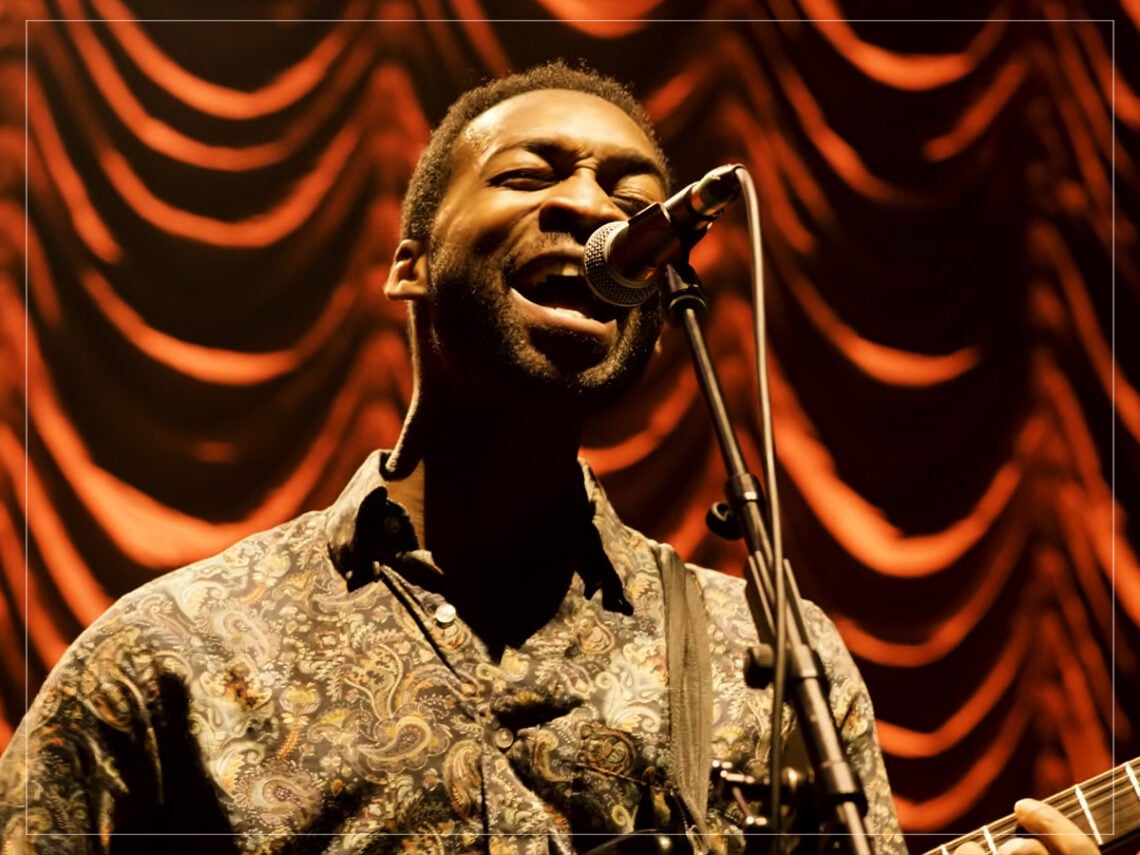
“Puppy love songs”: Jalen Ngonda’s 21st century soul and why the 1960s never went out of style

Names like Melvin Franklin, Otis Redding, and Marvin Gaye made the 1960s a veritable heyday for soul music, with the likes of Stax and Motown typifying the sound, spirit, and resistance of that decade. Many generations on from soul’s golden age, though, its influence is still felt on modern music.
In essence, soul music was born from a blending of gospel, jazz, and 1950s R&B, but that definition provides a rather reductive, almost formulaic view of the sound. As its name would suggest, soul music’s core appeal has always been in its emotional weight and its ability to speak directly to its audience. During the 1960s, the likes of Aretha Franklin, Sam Cooke, and Nina Simone used soul as a means of reflecting and supporting the civil rights movement, and the emotional nature of that music has not aged in the decades since.
Whether manifesting itself in the soul-infused rock and roll that sparked during that same era, the northern soul revolution, which captured the attention of industrial England, or the expansive landscape of neo-soul, the root of that emotional music still prevails to this day.
Soul music, like no other genre, has a unique ability to capture an intense emotion under the guise of a three-minute pop song, which is among the reasons why Jalen Ngonda is among the most exciting artists of recent times.
Born in Maryland and based in the UK, Ngonda’s output is irrefutably indebted to the Motown soul that dominated the pop charts of the 1960s. Housed on Daptone Records, an essential resource for all 21st-century soul obsessives, and with two incredible studio albums under his belt, the songwriter has managed, to some extent, to reintroduce soul music to mass audiences in the UK, but according to the man himself, his approach is far from being rooted in modernity.
During a recent interview with DIY, Ngonda expanded upon his core influences, all of which are owed to “having grown up with music from the ‘60s and ‘70s”. He shared, “All of those Motown songs, British invasion songs and pop songs are all just puppy love songs. I listen to that stuff, and I just try to come up with the rhymes that work.”
Therein lies the answer to why the 1960s, and soul music more generally, have never truly gone out of style: those early records, recorded over 60 years ago, still form the blueprint for pop songwriting. Motown’s output, for instance, was typically denoted by a carefully perfected formula for creating hit records, with the emotional weight added by the label’s roster of incredible artists and performers.

For all the changes that we have witnessed in the music industry over the past half-century, that pop formula coupled with an emotive performance style has never truly lost its appeal, a fact proven by Jalen Ngonda’s incredible output over the past three or four years. He isn’t reinventing the musical wheel, but rather reminding the world that soul music remains the gold standard of emotive songwriting with the potential to appeal to anybody with a human heart.
Ngonda is far from being the only modern-day artist to be rooted in the sounds of the 1960s, of course; Brooke Combe, for instance, is similarly indebted to the inspiration of Motown’s pop golden age, and if you track the soul output of the past 20 or 30 years, you will invariably find that most artists were taking inspiration from the same sources. His recent explosion in notoriety, though, is a fitting reminder that great music never goes out of style.
