


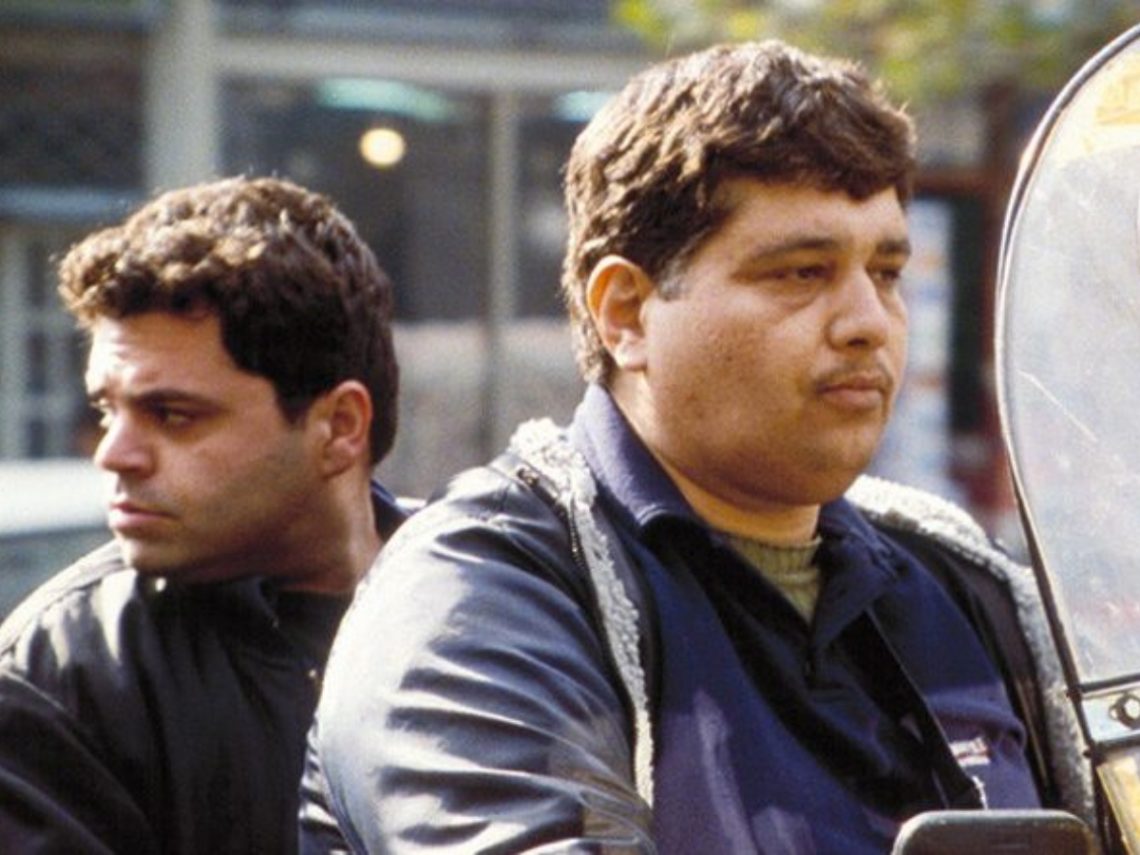
‘Crimson Gold’: When Jafar Panahi cast a paranoid schizophrenic as the lead

Iranian filmmaker Jafar Panahi is widely recognised as one of the major voices of dissent within the country’s cinematic landscape. Known for his masterpieces such as The White Balloon and This Is Not a Film, Panahi has been routinely silenced by the authoritarian Iranian government, but he has remained dedicated to his craft.
One of the leading figures of the Iranian New Wave, Panahi’s work often features a very specific form of social realism, which also plays with the boundaries of the cinematic medium. Last year, he released his latest work – No Bears – which was quickly cited by many critics as one of the greatest films of 2022.
One of the most interesting films of Panahi’s career is his 2003 drama Crimson Gold, a powerful drama which revolves around a disillusioned pizza delivery man named Hossein. Due to the nature of his job, Hossein confronts the tragic reality of the grotesque wealth inequality in Tehran and the rigid class divisions in Iranian society.
Exploring the relationship between poverty and crime, Crimson Gold holds a mirror to the fundamental prejudices that are generated by capitalist systems. While Panahi’s direction is masterful, and the script is written by none other than Abbas Kiarostami, Crimson Gold’s conflicted brilliance can be chalked up to the strangely magical performance of the lead – Hossein Emadeddin.
Many have called Crimson Gold an exploitation film because Ermadeddin wasn’t really an actor before starring in Panahi’s project. He worked as a real pizza delivery man, diagnosed with paranoid schizophrenia, and Panahi used that element to add a layer of complexity to the film’s realist framework.
In an interview with WSWS, Panahi explained: “There is a saying that we think insane people are more fortunate because they don’t really see what’s happening around them. But if you really see what’s going on around you, it’s going to make you suffer deeply. And that’s Hossein’s situation; he hardly talks, but he sees much, and when he sees something, he really sees deeply into it. And he is ill, and he suffers both physically and emotionally.”
He even argued that his films aren’t political: “That’s why I don’t make political movies. Because if I were a political filmmaker, then I would have to work for political parties and I would have to go along with their beliefs of what’s wrong and what’s right. But what I say is that art is much higher than politics. Art looks like politics from a higher end. You never say what’s wrong or right. We just show the problems.”
Crimson Gold is an unsettlingly unique example in his filmography. While Emadeddin’s story is an important one to tell, the fact that Panahi used someone with real mental health issues as a vehicle for something as demanding as a film is definitely problematic. Since the film’s release, very little has been reported about Emadeddin. Crimson Gold has become the complicated centre of a disturbed man’s unwanted legacy.
