


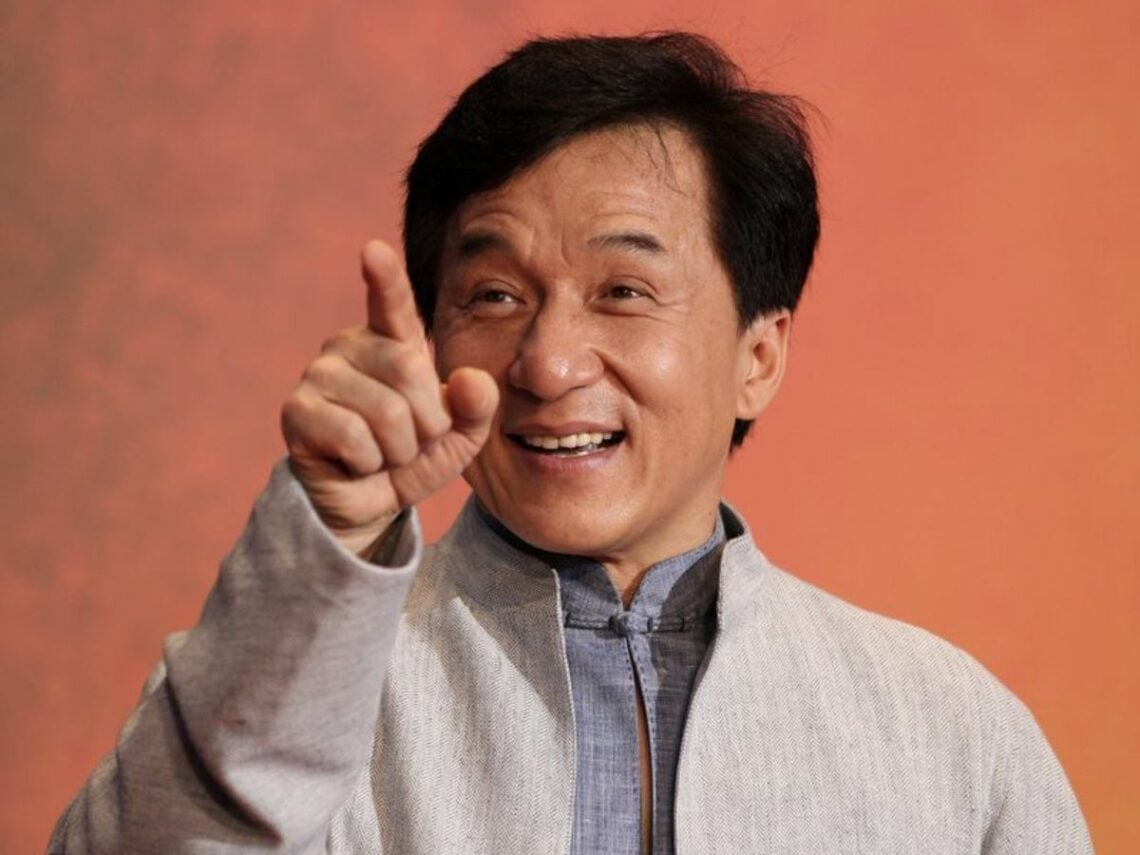
70 years of Jackie Chan: The crossover icon who changed action cinema forever

Prior to the ascent of Jackie Chan, the only legend of martial arts cinema to become a crossover cultural icon was Bruce Lee, which is rare company to be in. Fitting, though, considering the former made some of his earliest appearances alongside the latter in Fists of Fury and Enter the Dragon as a background actor and stunt performer.
However, despite both of them being regarded as two of the most iconic and influential martial artists in the history of celluloid, their legacies are entirely different. Lee was defined largely by the mythology that grew around him following his early passing at the age of only 32 when he was on the cusp of becoming a megastar, whereas Chan has spent decades pushing the boundaries of what’s physically possible within the context of the action genre, establishing himself as the ultimate jack of all trades in the process.
Under the tutelage of the inimitable Sammo Hung, Chan honed his craft and began gaining attention as one of Hong Kong’s most promising newcomers. He was fully aware that he couldn’t spend his entire career doing nothing but dispatching bad guys, so he decided to channel his love of classic silent comedy and slapstick to inject his self-choreographed sequences with a light-hearted sense of humour.
A combination of physical agility, lightning-quick reflexes, comic timing, and innovation built his brand, with the Jackie Chan Stunt Team being established in the 1970s. Along with his collaborators – and regularly at the expense of his health, safety, and wellbeing – the collective continued to up the ante and combined hard-hitting action with fleet-footed comic stylings to carve out a distinct aesthetic that would transform its founder into one of the most popular action stars of all time.
He wasn’t an invulnerable one-man army, with his performances making a point of displaying vulnerability, pathos, and pain to make him something of an everyman hero, albeit one who could pull off death-defying feats the majority of the population wouldn’t even dream of. Edgar Wright once said, “No matter how many people try and rip off Jackie Chan movies, there’s something they can’t rip off which is Jackie Chan himself,” summing up his enduring appeal to a tee.
Although Hong Kong’s action scene was in rude health both before and after Chan’s breakthrough, it was Rush Hour that made Hollywood sit up and take notice. His first major American hit, he became an international superstar without doing anything different other than delivering his dialogue in English, but the after-effects created a ripple that can still be seen reverberating today.
Quentin Tarantino credited him as an influence on Kill Bill, Matthew Vaughn’s Kingsman franchise openly read his playbook of combining brutal brawls with comedic flourishes, the Marvel Cinematic Universe’s Shang-Chi and the Legend of the Ten Rings, Netflix’s Extraction, Chad Stahelski’s John Wick, and David Leitch’s Atomic Blonde all incorporate techniques and quirks from Chan’s back catalogue into their fight scenes, and the recurring theme is that nobody has ever been shy in admitting it.
The Shanghai Film Festival even hosts the annual Jackie Chan Action Movie Awards to reward the best and brightest the medium has to offer. He was awarded an OBE in 1999, and he’s got a star on the Hollywood Walk of Fame. Those sorts of accolades don’t come around very often for actors who spent their lives kicking people in the face, but that’s the monumental impact he’s had on the genre.
That’s to say nothing of his multitude of other talents, either, with Chan once setting a world record for the most individual credits on a motion picture. As well as holding the title of ‘Most Stunts Performed by a Living Actor’, he was also recognised for his ridiculous work ethic on blockbuster CZ12, where he served as the film’s director, lead actor, writer, producer, executive producer, cinematographer, art director, stunt coordinator, unit production manager, gaffer, composer, stunt performer, singer of the theme tune, and member of the props department.
Actors pulling double duty is one thing, but more than a dozen different roles is something else. It’s merely another feather in the cap for a pioneering star who reinvented the very notion of what mainstream action cinema could be, with multiple generations – and many more still to come – indebted to what he brought to the table.
