


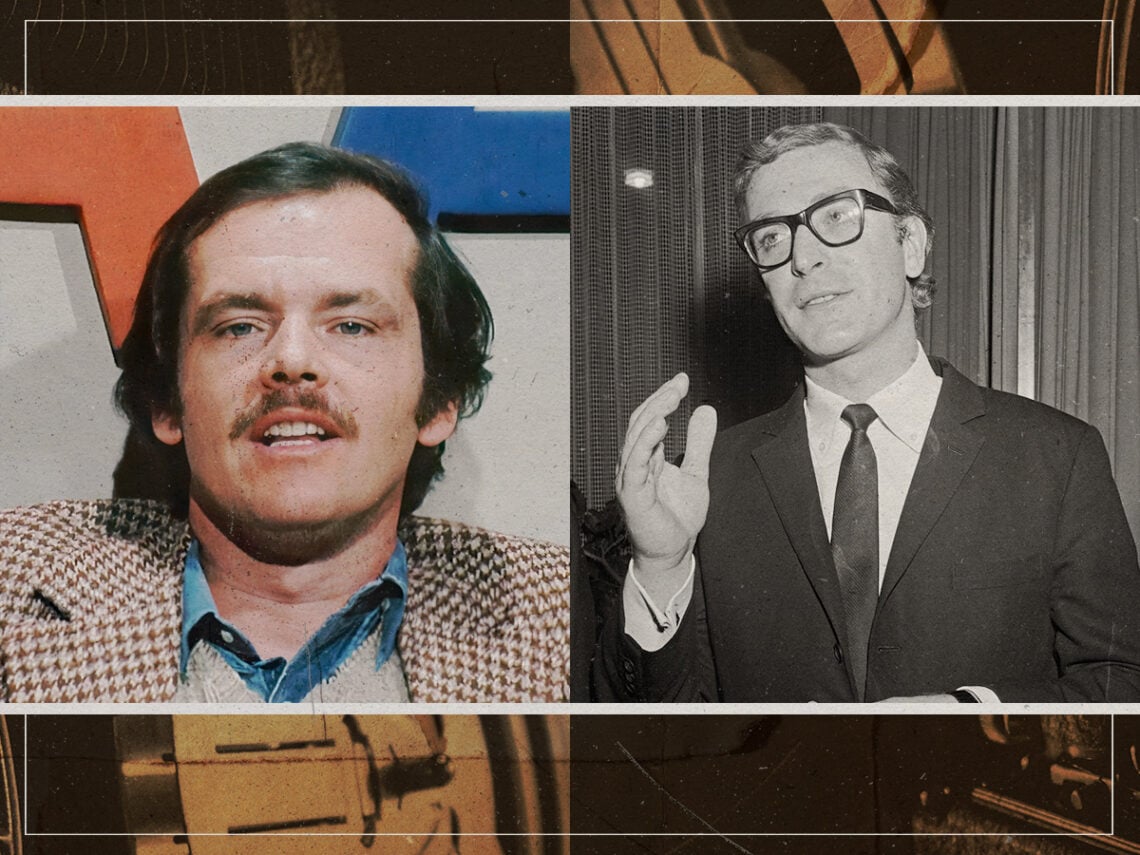
“I never wanted to leave”: how Jack Nicholson and Jane Horrocks guaranteed Michael Caine’s lasting legacy

Once he’d been bitten by the acting bug as a child, Michael Caine never wanted to do anything else with his life. Fortunately, he didn’t, but things may not have worked out that way were it not for a couple of timely interventions from a couple of unexpected opposites.
After making his screen debut in the 1950s, Caine began gradually working his way up the ladder, with Zulu serving as his breakthrough role in 1963. From there, he went from strength to strength, seamlessly evolving from one of British cinema’s most promising talents into an international superstar.
He landed his first Academy Award nomination for ‘Best Actor’ in Alfie two years later, the same year he made his Hollywood debut in crime caper Gambit. The Italian Job, Sleuth, Get Carter, The Man Who Would Be King, and A Bridge Too Far ensured the hits kept on coming before the lean years crippled his self-confidence.
It might be unfair to call it a midlife crisis when Caine won his first Oscar for Hannah and Her Sisters, sparred with Steve Martin in Dirty Rotten Scoundrels, and saw the bright side of Jaws: The Revenge, but by the mid-1990s, he’d reached his lowest professional ebb, to such a degree that he was beginning to think he’d reached the natural end of his lifespan as a valuable commodity.
The plum parts had either dried up or weren’t being offered his way, he was slumming it as the villain in a Razzie-winning Steven Seagal movie, and reprising the iconic role of Harry Palmer had the opposite effect to the one it created three decades previously, with Caine contemplating abandoning acting altogether in favour of pursuing what was beginning to look like a lucrative secondary career in the restaurant business.
When asked by The Telegraph how he wanted to be remembered, Caine only had one answer. “For the fact I remained an actor all my life, and I never went into anything else,” he responded. “I never left; I never wanted to leave.” However, he almost did, and that second wind may not have happened were it not for Jack Nicholson and Jane Horrocks.
The former shook Caine out of his stupor and personally enlisted him as the second-billed attraction of the 1996 crime thriller Blood & Wine, which was his first major leading role to receive a wide theatrical release in four years. It reinvigorated his latent passion and enthusiasm, but Horrocks also had an integral part to play.
Once Blood & Wine had stirred his creative juices, Caine was back up and running. “Then I did Little Voice and a whole series of movies I really enjoyed,” he reflected. “I won Academy Awards, Baftas, and Golden Globes all over the place. Little Voice got me going again.”
That led him onto The Cider House Rules, a second Oscar, The Quiet American, and his ubiquitous presence as an esteemed veteran and gravitas-wielding character actor extraordinaire. Caine wants to be remembered as somebody who gave their life to acting and nothing else, but if it wasn’t for Jack and Jane, his lasting legacy wouldn’t be what it is today.

Never Miss A Tale
The Far Out Michael Caine Newsletter
All the latest stories about Michael Caine from the independent voice of culture.
Straight to your inbox.