


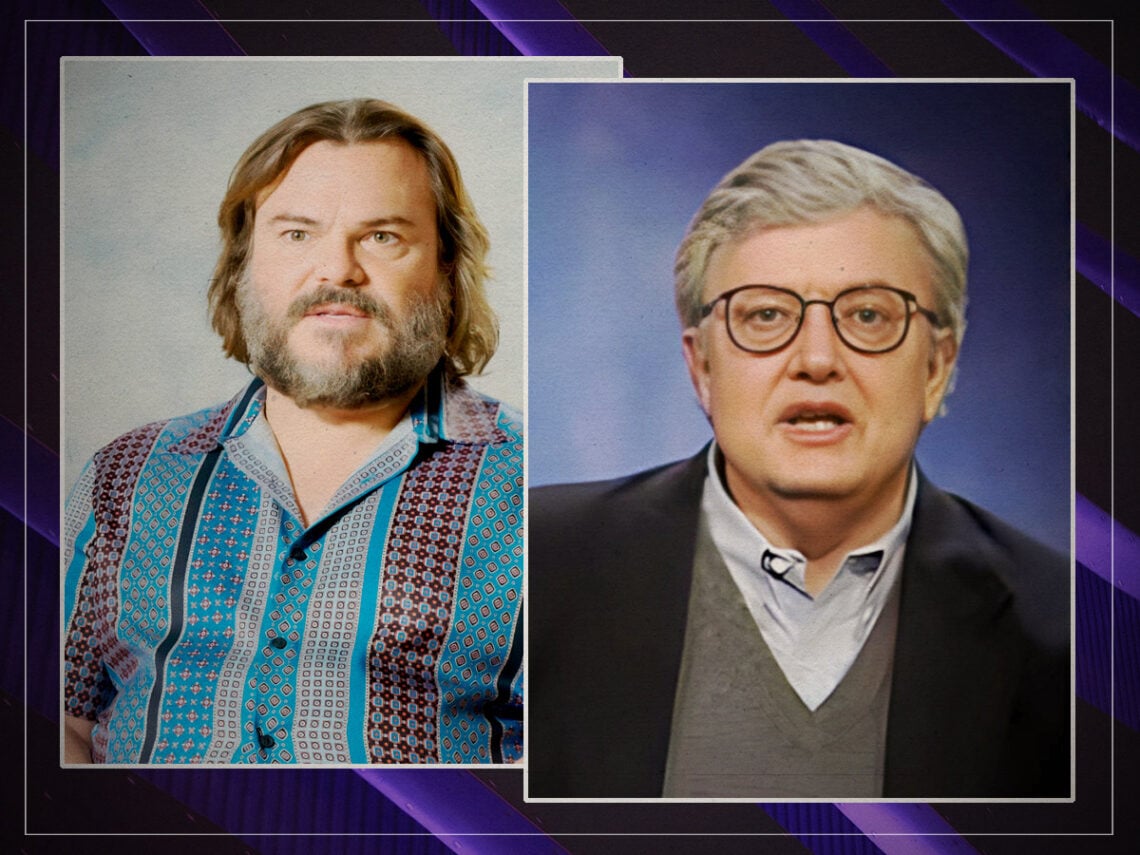
‘Saving Silverman’: The Jack Black movie Roger Ebert hated with a passion

Movie stars aren’t typically made overnight, something Jack Black discovered after it took him a long time to make his way towards the upper rungs of the industry ladder. In fact, it took him a lot longer than most people realise, with his acting career kicking off as far back as the early 1980s.
It wasn’t until Stephen Frears’ High Fidelity landed at the turn of the millennium that the exuberant funnyman finally landed his breakthrough, which came a full 16 years after he made his screen debut in a 1984 episode of the popular TV series The Fall Guy.
Between those two points, Black had amassed plenty of credits in a diverse range of projects, an eclectic filmography that encompassed Tim Robbins’ Bob Roberts, Sylvester Stallone’s Demolition Man, Kevin Costner’s Waterworld, Tim Burton’s Mars Attacks!, Jim Carrey’s The Cable Guy and Will Smith’s Enemy of the State, but he was never given anything more than a supporting role.
Common sense indicates that any performer fortunate enough to deliver a star-making performance should seek to strike immediately while the iron is at its hottest. Unfortunately for Black, his first post-High Fidelity appearance in a feature wasn’t just a terrible film, but it made an instant enemy of one of the most prominent critics in the business.
Released in November 2001, director and regular Adam Sandler collaborator Dennis Dugan’s Saving Silverman stars Black and Steve Zahn as a pair of bumbling friends who start to believe the third member of their close-knit group (played by Jason Biggs) is going to be pressured into marrying a woman he doesn’t love. Naturally, they decide the best way to sabotage the impending nuptials is to reunite him with the high school love who got away, which necessitates a kidnapping.
Saving Silverman did at least manage to recoup its budget in ticket sales to avoid the ignominy of becoming a box office bomb, but Ebert wasn’t exactly exaggerating when he denounced the movie for being “so bad in so many different ways,” and he didn’t hold back in tearing the picture to shreds.
He admittedly insisted that people should go out of their way to see it, if only for its status as “an example of the lowest slopes of the bell-shaped curve,” describing it as “the kind of movie that gives even its defenders fits of desperation.” Ebert’s hatred of Saving Silverman was so intense that he even called out one of his fellow critics for daring to give it a positive review.
“Here’s a critical rule of thumb,” he explained of such blasphemous praise of something he hated so passionately. “You know you’re in trouble when you’re reduced to praising a movie for its absence of fart jokes.” Needless to say, he wasn’t a fan.
