


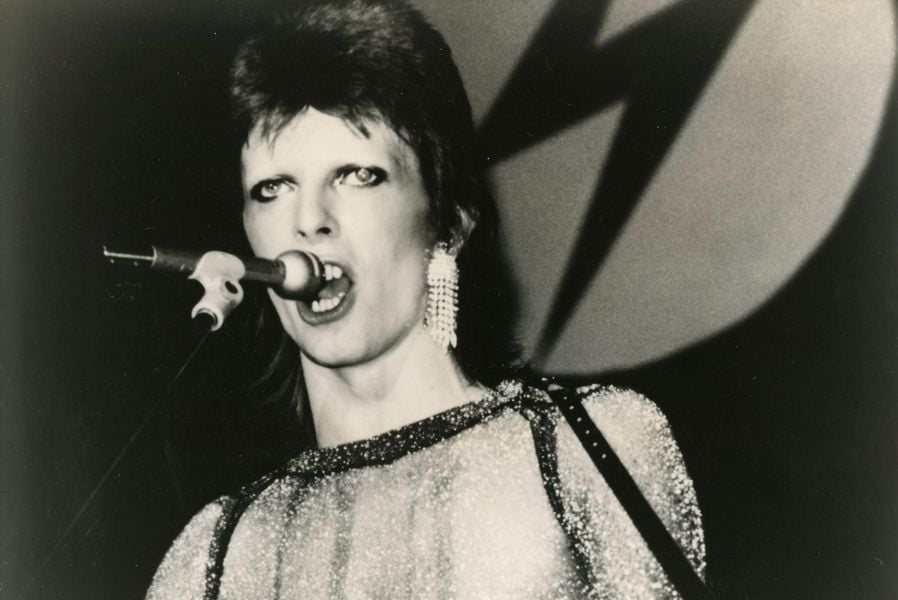
Listen to the bombastic isolated vocals for David Bowie song ‘Suffragette City’

‘Suffragette City’ appears on David Bowie’s legendary fifth album, The Rise and Fall of Ziggy Stardust and the Spiders from Mars, which was released to critical acclaim in 1972.
The iconic track is widely considered to be one of Bowie’s greatest; however, the musician almost gave the song away to Mott the Hoople. He offered the song to the English rockers on the condition that they ditched their plan to break up. Although the band rejected the track, they instead accepted ‘All the Young Dudes’, which Bowie penned for the band to help get them out of their financial crisis.
‘Suffragette City’ was recorded in the same session as ‘Rock ‘n’ Roll Suicide’ and ‘Starman’ and can be classified as falling into the glam rock genre. The song features a prominent piano riff running through the song that was inspired by Little Richard, as well as showcasing one of Bowie’s earliest uses of an ARP synthesizer. The instrument was used to mimic a saxophone in order to get a larger sound, and the finished result, played by Mick Ronson, accompanies Bowie’s guitar riff.
Another key moment in the song is the use of the phrase “Aw, droogie, don’t crash here,” which is inspired by Anthony Burgess’s novel A Clockwork Orange. The book is written using slang words called Nadsat, and the word “droog” is what the main character, Alex, calls his friends. Stanley Kubrick’s film adaptation, which came out the year before the release of The Rise and Fall of Ziggy Stardust, hugely influenced Bowie.
The song also features the memorable line, “Wham Bam Thank-you Ma’am”, which Bowie lifted from the track of the same name by Charles Mingus, which appeared on his 1961 album Oh Yeah. Apparently, the phrase was commonly used by Mingus’ drummer, Max Roach, when he was “unable to express his inner feelings”.
In a live performance of the track in 1972, Bowie controversially got between Ronson’s legs and began to play his guitar with his teeth, which looked as though the star was performing oral sex on his bandmate. The moment was captured by photographer Mick Rock, and Bowie convinced his manager to pay for a whole page in Melody Maker to showcase the infamous image.
With so much buzz around the track, listening to Bowie’s isolated vocals strips back the track to the basics, illuminating just how beautifully powerful Bowie’s voice really is on the song.
