


‘Isle of Flowers’: Jorge Furtado’s tragicomic anthropological documentary

Brazilian cinema has a proud history of producing politically radical and aesthetically innovative masterpieces which have contributed to serious disruptions in social discourse. While the country’s great auteurs developed their own ideas of various genres like comedy, action and drama, many talented Brazilian directors were also attracted to documentary filmmaking. Within the corpus of the latter, Jorge Furtado’s 1989 gem – Isle of Flowers – will never fail to stand out.
Regarded by many as one of the most important cinematic achievements of the 20th century, Isle of Flowers is a dizzying report about our anthropological roots and their consequences. Following the trajectory of a tomato from the plantations to consumption, Furtado lays out an all-encompassing framework which exposes the structural injustices of contemporary social structures. Incisively tragicomic in nature, the director’s commentary provides explosive momentum to the narrative.
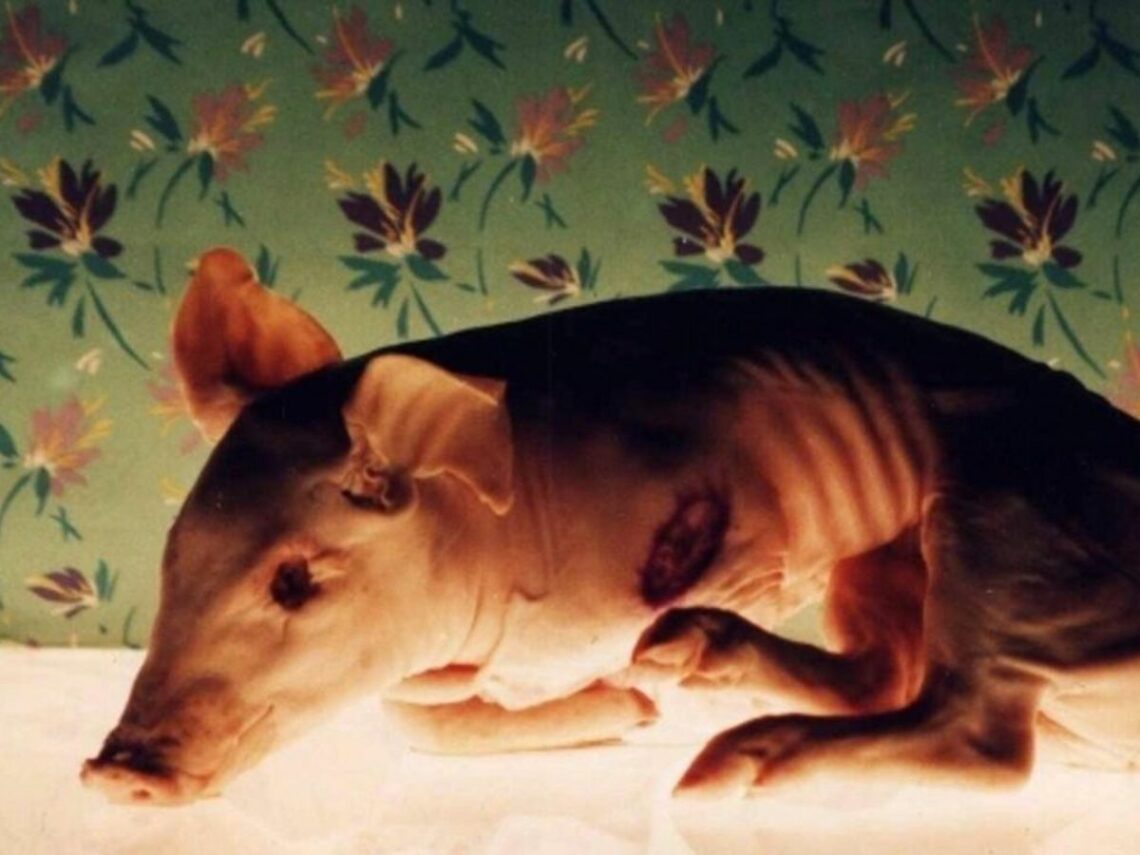
Inspired by Kurt Vonnegut’s unique sense of humour and the cinematic experiments of Alain Resnais, Furtado’s radical film is a rare example where the text and the imagery combine to create something that is much greater than the sum of their parts. We begin our journey at the tomato field of Mr. Suzuki, slowly understanding the infinite nuances of the world we inhabit while the narrator works through tangential observations about Japan, the Holocaust, whales, pigs and the foundations of our economic system.
Isle of Flowers tracks the tomato as it is sold at the supermarket, bought by a perfume saleswoman, and ultimately discarded as garbage. However, its life doesn’t end there, as it is transported to Porto Alegre’s landfill – cruelly dubbed the “Isle of Flowers”. There, the organic material in the garbage is filtered out to be fed to pigs. The fruits and vegetables that the pigs reject are solely reserved for the marginalised people who are “allowed” to collect them.
This relentlessly miserable chain of exploitation is addressed in the narrator’s commentary, as he poetically points out the limitations of “freedom” in a capitalist framework. The narrator observes: “What places human beings behind pigs in the priority of choosing food is that they do not have money or an owner. Being free is the state of one that has freedom, freedom is a word the human dream feeds off, but no one can explain or failed to understand.”
In the opening disclaimer of Isle of Flowers, Furtado inserts an ominous warning – that the existence of God and the cruelty that is omnipresent on the Isle of Flowers are incompatible. Its satirical obsession with the constant motion of resources and currency mirrors the philosophical examinations that Robert Bresson conducted in his seminal film L’Argent. While Bresson’s thesis was artistically ambiguous, Furtado grounds his questions with painful realism.
The winner of multiple prestigious accolades, such as the Silver Bear, Furtado’s pseudo-documentary has immortalised itself in the history of cinema. At a time when increasing economic inequality is leading to global crises, Isle of Flowers is an essential cinematic protest.
Watch the documentary below.
