


‘Islands of Fire’: Vittorio De Seta’s stunning portrait of nature

Volcanoes have intrigued the human imagination for centuries, immortalised in our cultural records through fascinating accounts about renowned places such as Mount Vesuvius. Throughout film history, many great filmmakers have also been interested in the cinematic potential of volcanoes which has resulted in both arthouse efforts and blockbusters. However, nobody quite captured this particular force of nature like Vittorio De Seta did.
Born in Palermo, De Seta made his way to cinema after becoming a war prisoner during the Second World War and studying architecture in Rome. Gaining a solid reputation in the industry due to his stunning short films, De Seta’s works started garnering attention because of their unique visual style as well as their subject matter. Focusing on pastoral vignettes coloured by poverty, the Italian auteur championed the lives of those sections of society that didn’t necessarily have a voice.
De Seta’s cinema made an impact outside his country as well, influencing several notable filmmakers like Martin Scorsese, who described De Seta as “an anthropologist who speaks with the voice of a poet”. While contemplating the importance of the Italian director’s filmography, Scorsese added: “I was sharing his curiosity and his amazement, and I was sadly realising, as he must have, that the vitality of an unspoiled culture was being filmed for the very last time.”
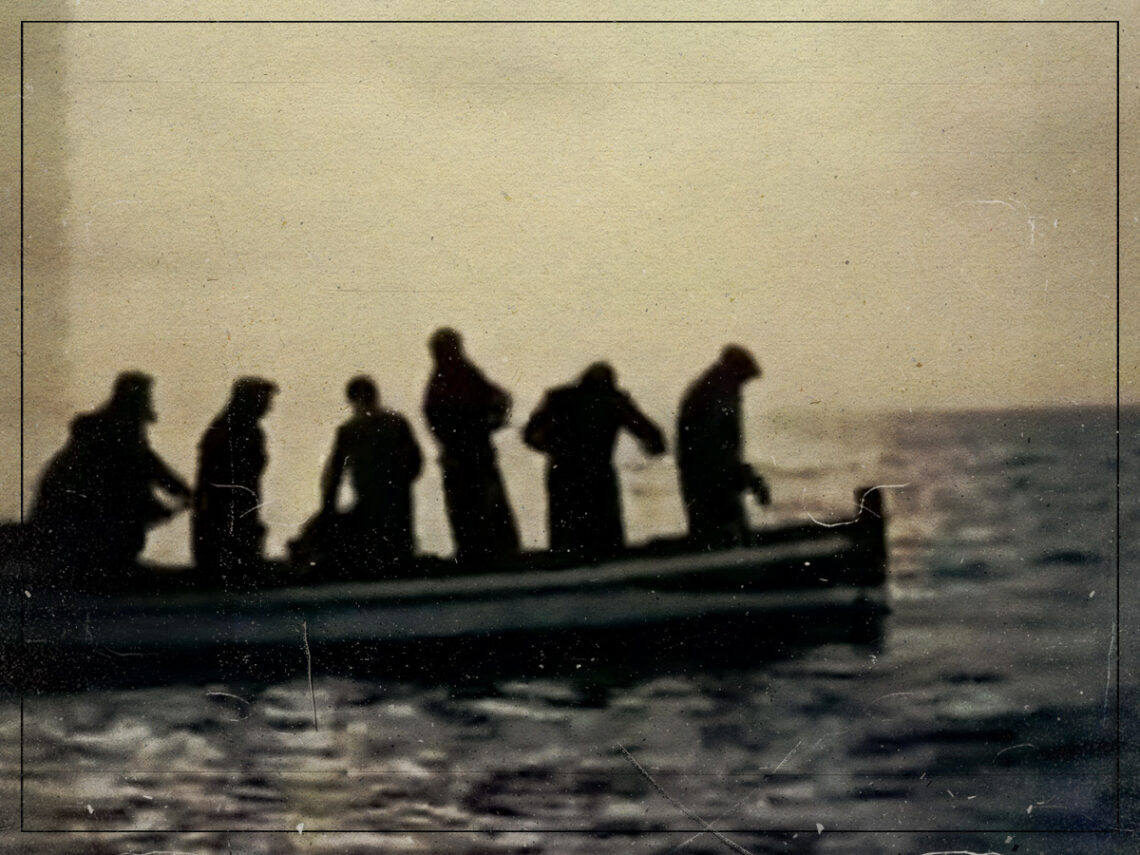
Throughout his career, De Seta made many shorts, but one that continues to dominate conversations about his work is Islands of Fire. Formulating a pretty close approximation of the permanently elusive cinematic sublime, this short revolves around Stromboli – a volcanic region of islands in the north of Sicily. Purely elemental in nature, De Seta uses the medium to absorb the volatile energy of the wind, the water, and the fire.
When we think about the great films made about volcanoes in the past, our mind instantly wanders to efforts like Werner Herzog’s La Soufrière, where he risked his life waiting for an active volcano to erupt. Roberto Rossellini made the famous Stromboli, a neorealist Ingrid Bergman vehicle about the eponymous island. However, one brief look at De Seta’s work immediately shows how different Islands of Fire is from the rest of this oeuvre.
His images are so distinct that it feels like he pulled them straight out of his mind, tinged with colours that only seem real in our dreams. Edited in a rhythmic manner to match the dynamism of nature, Islands of Fire manages to portray the precarious nature of human existence in the face of nature’s unimaginable might. Filled with visions of fire emerging from the earth to meet the overwhelming motion of the water that surrounds us, De Seta just needs a few minutes to effectively remind us of our insignificance.
Watch the film below.
