


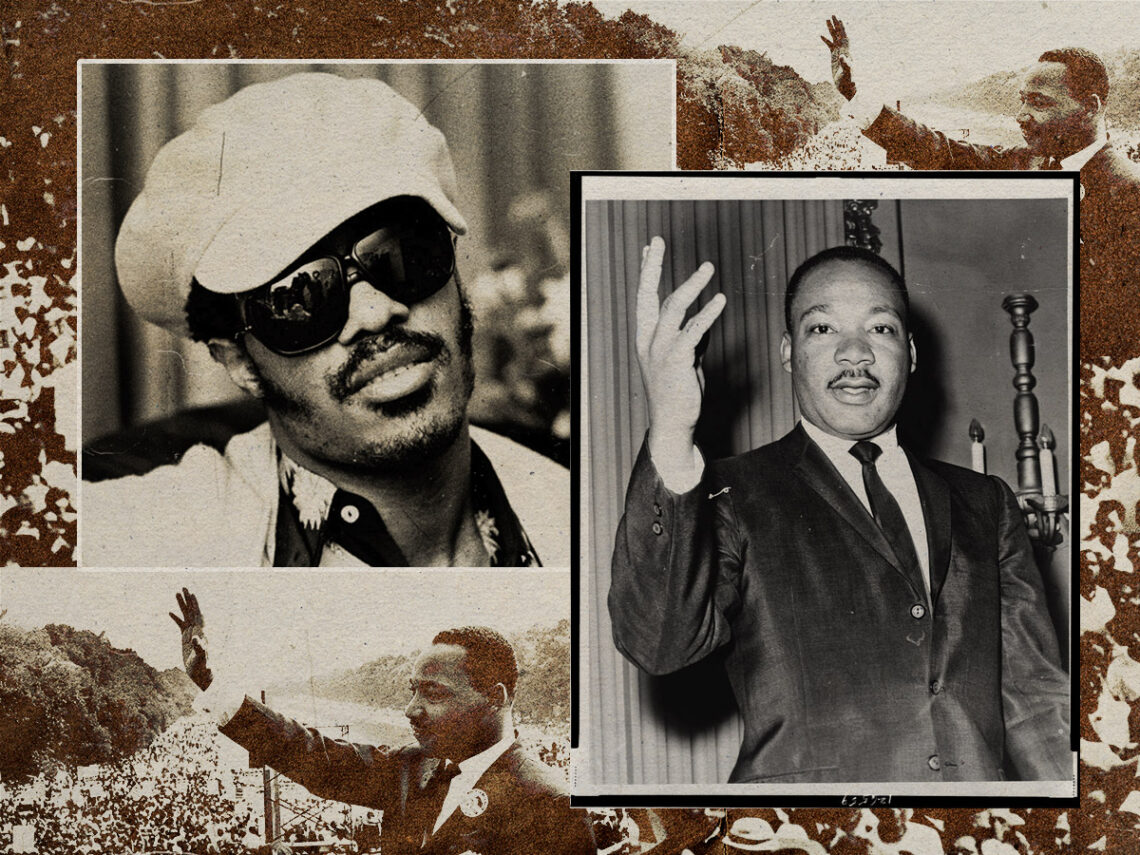
Is Stevie Wonder responsible for Martin Luther King Day?

My family have a borderline unhealthy obsession with the music of Stevie Wonder. As I write this, it is in fact my mum’s birthday, so tonight, in between the Chinese takeaway and the lighting of the candles on the caterpillar cake, there will inevitably be a blast of the man’s rendition of ‘Happy Birthday’.
But alas, despite our very best booze-induced singing, it turns out our intentions are a little misguided. Wonder’s ‘Happy Birthday’ may seem like a reinvented ode to the old tune, but it is actually far less universal than you think. Instead of celebrating anniversaries of births the world over, it was aimed at one particular man and a campaign to have his life’s work forevermore recognised in history for how he changed society.
It was all for Martin Luther King. The man who spearheaded the civil rights movement and ultimately laid his life on the line for the cause should rightly be celebrated as one of the most pivotal figures to have ever walked the Earth, and it was Wonder who was at the forefront of that charge to make the American government hear that rallying cry.
Beginning his campaign for an official recognition of King by the state in 1980, with the release of the song, Wonder must have thought he made his intentions patently clear through the line “For in peace our hearts will sing / Thanks to Martin Luther King”. But as ‘Happy Birthday’ rocketed close to the top of the charts and people started repurposing it for their own personal celebrations, the message was somewhat lost. Naturally, more drastic action was needed.
How did Stevie Wonder contribute to Martin Luther King Day?
Wonder was on a mission to have King recognised via a national American holiday to take place on the third Monday of every year, but this would take some convincing of the major powers that be. Although ‘Happy Birthday’ had been an undisputed commercial success, it didn’t quite convey the right message, so it was time to get out on the streets.
That took place in the beginning of 1981, four months after the song had been released, when a 25,000-strong crowd descended upon the Washington Monument and demanded that a holiday be established, with Wonder proudly proclaiming at the event: “I am not a politician. I am not a leader. I am a human being given the honour and gift of song, and with it, I give the best possible”.
It took some time to work through, but two years later, Ronald Reagan’s administration began the process of initiating the holiday, and in 1986, Martin Luther King Day was celebrated for the first time. Next year, when its 40th official anniversary rolls around, there will be even more cause for jubilance than usual, not just in recognising what the occasion has always meant, but also how far it has come in the space of four decades.
So, the next time you decide to break convention from the usual droning birthday song and decide to give Wonder a spin, maybe it’s worth reconsidering your choices. Sure, it’s a classic tune, but we wouldn’t want to discredit the memory of the man who changed the world, and the musician who fought to acknowledge him. Yes, we all cringe when blowing out the candles, but the right song is all in aid of a better cause.
