


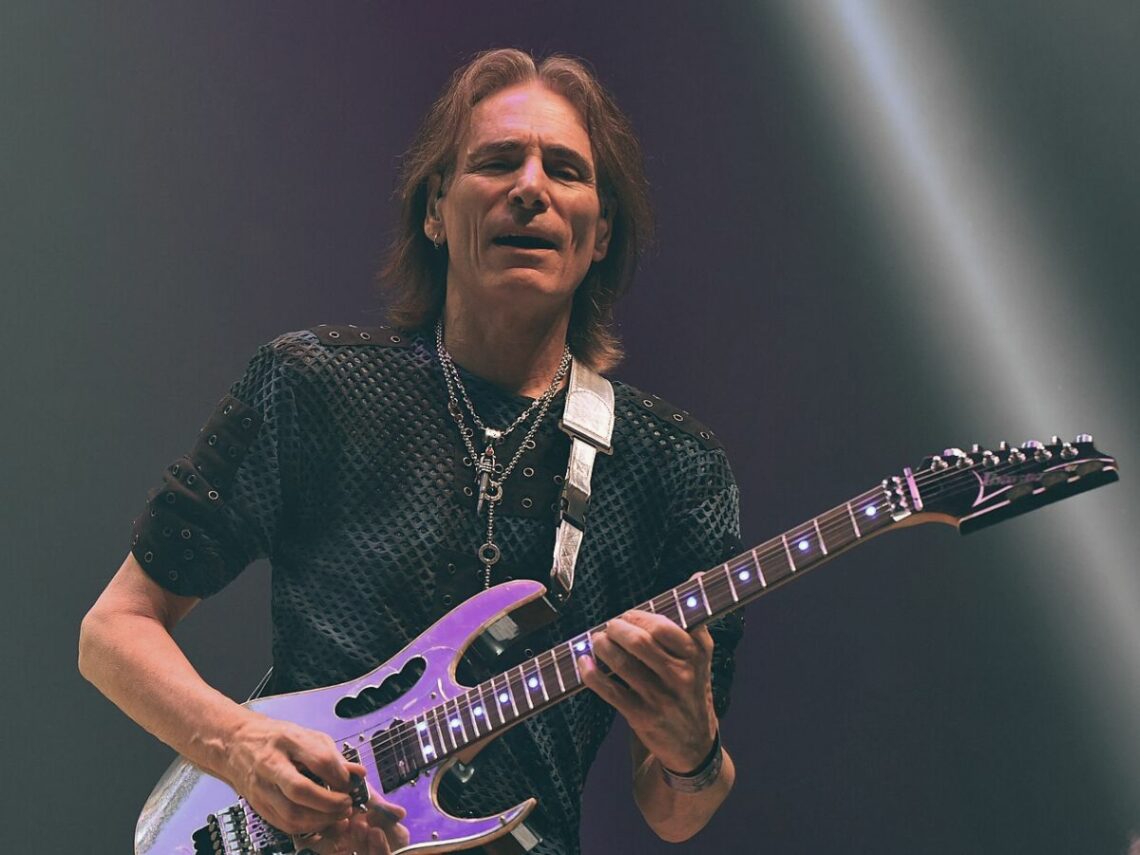
Is Steve Vai’s ‘Tender Surrender’ the greatest instrumental song ever written?

When the Sex Pistols originally released tracks such as ‘Anarchy in the UK’ and ‘God Save The Queen’, they were nothing short of shocking. Sure, profound language and aggressive themes already existed in music, but never before had songs that conveyed as much gone mainstream, and the reaction they got from the public made them difficult to ignore. This offers a great example of the power of words within music.
Words still have a prevalent place in music, too. When you think about genres such as hip-hop, this is a style that takes advantage of being able to say a great deal in a short time. Words are crucial to this, and thanks to artists such as Danny Brown, Kendrick Lamar and Little Simz, we are given topics and themes to ponder over and question for hours after a song is finished.
While words are still a vital part of music, there is also the argument that maybe they’re a little played out. The Sex Pistols were so shocking because they didn’t speak like that in the mainstream media. These days, everyone speaks like that. Thanks to social media and the freedom that it gives us when talking about subject matters, you’re only ever a quick scroll away from someone announcing the country is fucked, or the monarchy should be disbanded. With that in mind, have we now become numb to these words? Do they actually mean anything anymore?
When you listen to a lot of modern punk music, it feels less like you are listening to the soundtrack to a revolution and are instead being force-fed buzzwords. Songs are less like embodiments of rage and instead reflect SEO marketing strategies. The same could apply to proclamations of love, happiness, sadness, depression, and loss, as before any musician has had time to put their feelings into words, there are bloggers blogging and influencers cramming the most devastating heartbreak of their life in an algorithm friendly 60-second video.
Words in music were used to shock us. Words in music were supposed to give us insight into our own minds and take our emotions to the surface in a beautiful way. That happiness we felt, that sadness, that in-between, was finally seen and projected out into the world, letting us know we weren’t alone. Do they still do this in a day and age where words surround us? It’s tough to say.
If you are a fan of words and the emotions they bring and reading the above strikes fear into your heart, worry not. If instrumental music becomes more popular and starts to be featured a lot more in the music we consume, you can rest easy knowing that it can still make us feel a great deal of emotion.
If you need proof of this, look no further than Steve Vai’s ‘Tender Surrender’. Commonly referred to as a masterclass in the six-string, this instrumental track is more than just Vai playing the guitar expertly. It is a layered piece of music, symphony-like in its conception and arguably one of the best pieces of music ever written.
Some instrumental music can become somewhat repetitive at times. Riffs get overplayed, rhythms can become pretentious and drawn out, and generally speaking, remaining engaged with a track can be challenging. That’s not the case with Steve Vai; he shows versatility in ‘Tender Surrender’, which can be displayed through music alone, as the song is broken down into three major parts.
The first is one of peace. By using a range of octaves, he plays music that is easy to get on board with, sweet-sounding and restful. If the song stayed in this pocket for its entirety, it would still be considered a great track, but Vai progresses it. Like acts in a movie, when we enter part two, it’s almost as if the song is reaching conflict.
The guitar stays clean, with no distortion added, but Vai moves away from playing chords and instead starts doing some light soloing. It ups the tempo and the anti as if he is debating whether to unleash the beast or not. As he continues soloing, it gets quicker and heavier until it finally all kicks off.
The solo portion of the song is laced with distortion as the listener is plunged into chaos. Vai is an expert guitar player who shreds for about 90 seconds, using plucking and tapping techniques, slowing things down and speeding them up in a haphazard manner. He also uses the whammy bar to make his guitar sound completely alien, like something out of this world entirely. It all climaxes before easing out of the solo, repeating some of the chords from the introduction.
Instrumental songs don’t need to be repetitive or bland; they can be cinematic and emotive in their composition. They display emotion in a way that words never could, and that feels fresh in a day and age when words don’t stretch as far as they used to. Instrumentals could well be the new way forward.
