


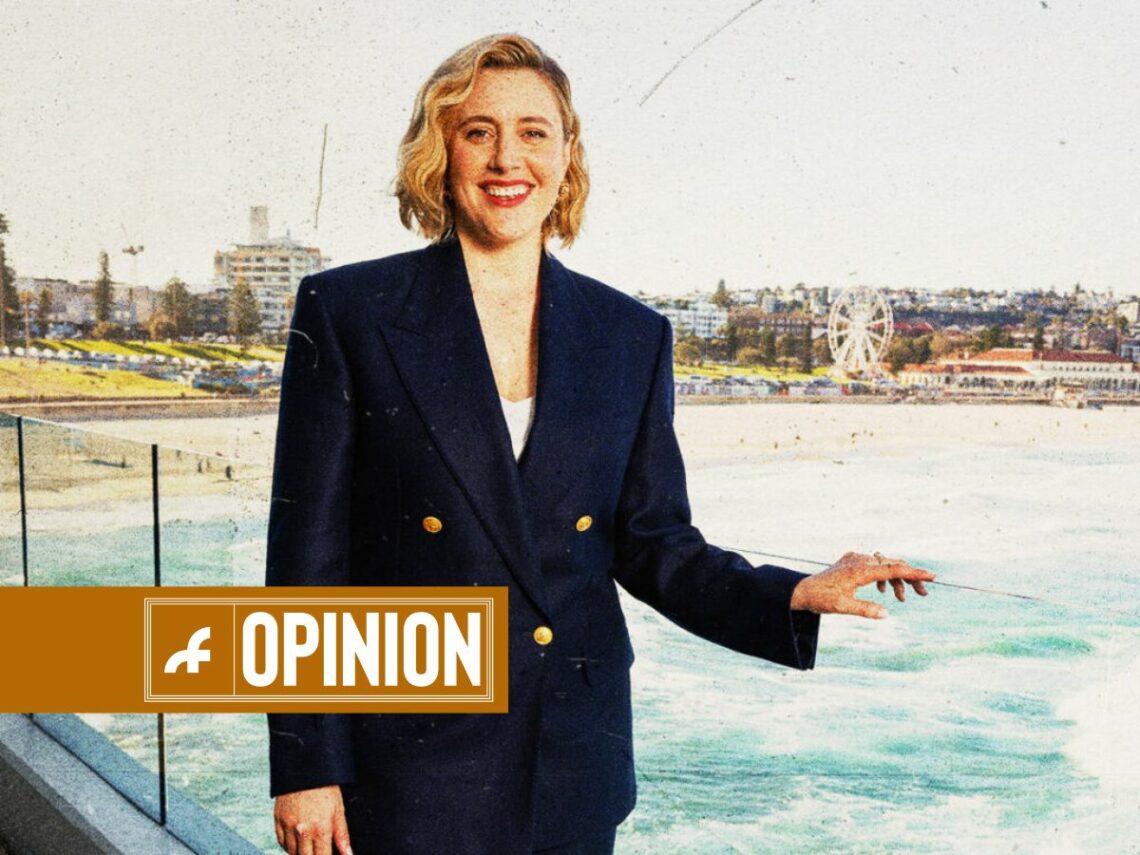
Is Greta Gerwig severing her indie roots with ‘Barbie’?

2023 is shaping up to be an exciting year for cinema, with releases still to come from filmmakers like Martin Scorsese and Christopher Nolan. However, there’s one movie on absolutely everyone’s lips: Greta Gerwig’s blockbuster version of Barbie. The film is due for release on July 21st, with Margot Robbie playing the world-famous Mattel doll alongside Ryan Gosling as her bronzed boyfriend, Ken.
Although there are still a few weeks to go before Barbie hits the big screen, the hype surrounding the movie has been enormous. Barbie isn’t just a movie – it’s an event, a whole world of its own, practically inviting audiences of all ages to show up at the cinema dressed in pink. Since the first behind-the-scenes images were shared online, fans across the world have been theorising and obsessing over the movie, cementing it as the most highly-anticipated film of the year.
The movie has been commodified to the nth degree, with brand deals arising from toothbrushes and alcohol to Barbie Dream House Airbnbs. Of course, fast-fashion chains such as Primark and H&M have cashed in on the franchise, offering a range of pink, girly clothing with the words ‘BARBIE’ emblazoned on the front. Items for both children and adults have been manufactured in conjunction with the movie release, promising its success before it has even hit cinema screens. Barbie has undoubtedly garnered so much attention because of the decadent, in-your-face nature of it all; the movie is brightly coloured, star-studded, and unabashedly feminine.
Naturally, lots of women and girls have been drawn to the project, which revels in the nostalgia of childhood and all things pink, sparkly and fun. The colour pink, and anything associated with extreme femininity, is so often slammed as infantile and connotated with stupidity and fluffiness. Essentially, it is seen as the opposite of sophistication, intelligence and maturity. But Barbie, painted in bright raspberries, fuchsias and magentas, delights in this girly palette and celebrates overt femininity that is so rarely seen on screen.
Whether Barbie lives up to the hype will be calculated on July 21st, yet, with Gerwig in charge of direction, the movie is sure to be worth watching. The director began her career as an actor, starring in a variety of independent movies during the 2000s and 2010s, leading her to be crowned queen of the ‘mumblecore’ genre. She launched into mainstream consciousness with Frances Ha in 2012, directed by her future husband and collaborator Noah Baumbach, playing a quirky, directionless 20-something dancer. Gerwig cut her teeth in the industry by starring in small-budget movies, which prioritised dialogue and character studies, on-location shooting and often used non-professional actors. Essentially, mumblecore movies are the complete opposite of the big-budget Barbie – a movie so large it caused a temporary world shortage of pink paint.
Barbie is Gerwig’s third solo outing as a director, following her charming indie coming-of-age movie Lady Bird and the alternative take on Louisa May Alcott’s classic novel, Little Women. These films were both fantastic, highlighting Gerwig as one of the most prominent filmmakers of the past decade, as well as one of the most successful female directors of the 21st century.
While Lady Bird was created on a budget of $10million and Little Women received an increase to $40m, for Barbie, Gerwig was given a whopping $100m to work with. With a price tag ten times the size of her 2017 debut, Barbie suggests a departure from Gerwig’s indie roots. This welcomes an interesting debate as to whether the director’s move to the mainstream is a good thing. It’s easy to see why people might criticise Gerwig for abandoning her independent movie origins in favour of the shininess of Hollywood, where films often lose their authenticity and prioritise profit.
While, in some respects, it’s a shame that Gerwig is seemingly taking a different path for Barbie, given the artistic honesty that is associated with indie cinema. However, her step into the mainstream is a promising sign that female filmmakers are beginning to be taken more seriously by the industry. Not only is Gerwig a female director, but Barbie is an unashamedly female delight based on the most popular girl’s toy. Thus, Barbie’s success will surely send a message to film executives, highlighting that female-directed, female-centric movies have mass appeal.
Women want to see themselves on screen; we want to see femininity depicted with admiration, celebration and seriousness. Hopefully, Gerwig’s movie, which will undoubtedly be one of the year’s highest-grossing releases, will pave the way for more female directors to receive filmmaking opportunities. In turn, independent female directors may find it easier to enter the industry, helping to minimise the gender disparity in the directing world.
Of course, Gerwig is not the first mainstream female director, but the buzz around Barbie has been insanely huge. Paired with the film’s girly aesthetic, Barbie marks a new landmark for women in cinema. For the first time, a film so unapologetically female is the most anticipated of the year, more so than its release date buddy, Oppenheimer.
For Gerwig, creating a big-budget movie hasn’t meant sacrificing the personal elements of making smaller indie films. She told The Gentlewoman: “Barbie is not so dissimilar from the process of adapting Little Women – I had such a clear sense of what this thing was that I loved and how I wanted to come at it and change it. Barbie obviously exists bigger than me, but it also exists inside of me because I remember going to Toys R Us and looking at Barbies when I was a little girl.”
Gerwig also added: “I never really set out to be specifically either independent or experimental or in one area versus another. It was always that I loved films, and I wanted to tell stories, and I’m pretty ecumenical as far as my taste goes. I like big movies, just like everyone, and I like tiny movies, just like a lot of people I know.”
While Barbie is this year’s most talked-about movie, it doesn’t mean the end of Gerwig’s indie roots. “I want to play in lots of different worlds. That’s the goal,” she explained to Rolling Stone. However, while Gerwig is open to returning to small-budget works, she is also open to the idea of directing a superhero movie: “It would have to be something I had a feeling for and a relationship to.” We can only hope that Barbie’s success will help propel more female directors into the limelight, both in independent and mainstream cinematic realms.
