


‘Peter Hujar’s Day’ movie review: a laidback experiment in preservation

I walked past Ben Whishaw in the streets of London a few months ago, and my first thought was, ‘Paddington!’ But then I remembered all of his other astounding performances – he’s played John Keats, starred in several James Bond movies, and even made an early career appearance in Nathan Barley.
Whishaw is a man of great range, and in his most recent outing, Peter Hujar’s Day (you might recognise the titular photographer’s most famous image as the one that adorns the cover of A Little Life), the actor steps into one of his most impressive performances to date.
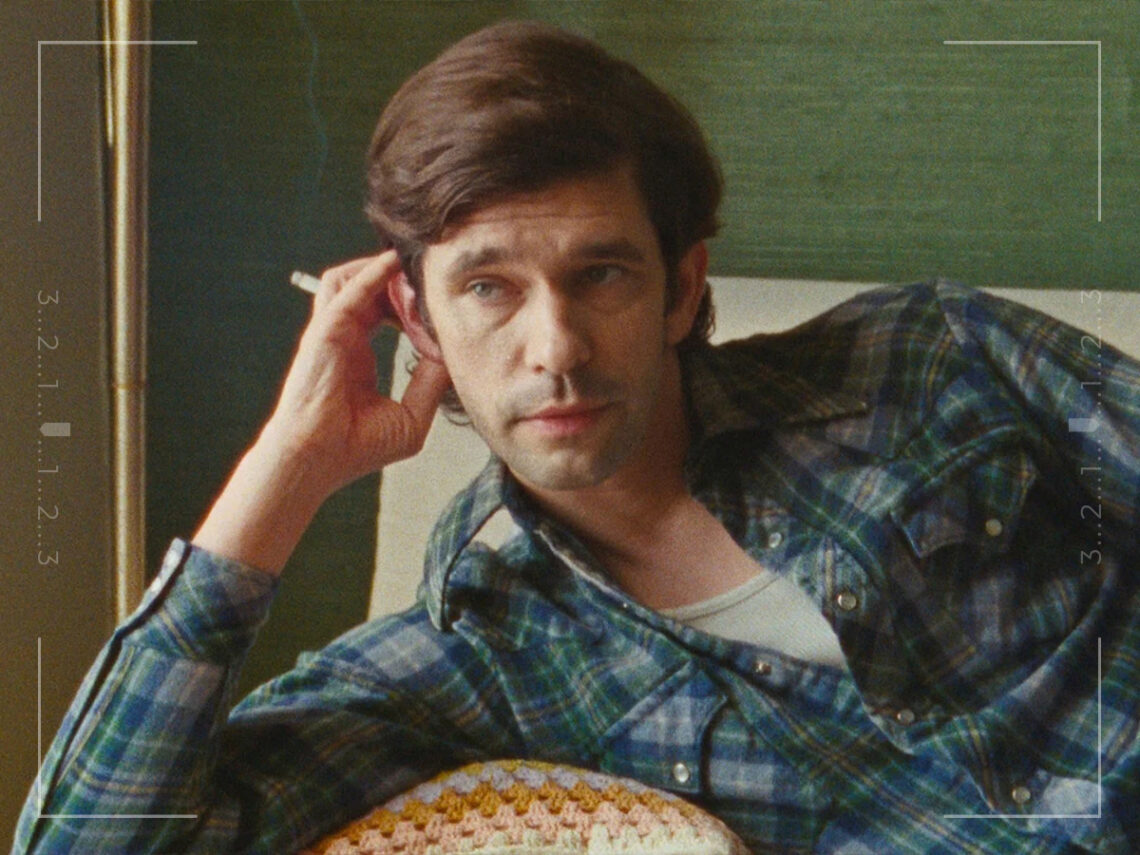
Playing a real person is never going to be easy, but here, Whishaw embodies Hujar as though he were someone he knew, casually sinking back into the sofa as he converses with his friend Linda Rosenkrantz, portrayed by Rebecca Hall.
It’s just the two of them who carry the film, their conversation spanning the 76-minute run-time with little more than a few changes of positions – the balcony, the bed, the sofa – to keep audiences visually stimulated. That doesn’t really matter, though, because it’s the pair’s conversation that forms the core of the film.
Hujar never received the acclaim he deserved in his lifetime, but he photographed many icons of the 1970s and ‘80s, particularly those who were a part of New York’s artistic milieu. Only now, decades later, is his work being more widely celebrated, and Ira Sachs’ film allows us to take a better look at the inner workings of the artist’s mind.
Based on Rosenkrantz’s project of the same name, Sachs brings to life a conversation between the pair, which the writer had initially taped back in 1974. After she published it a few years ago, Sachs decided to transform it into a film, and the result is a rhythmic, flowing piece of cinema that sometimes breaks the fourth wall.
It’s like we’re a fly on Rosenkrantz’s wall as she invites Hujar to describe his previous 24 hours, which involves interactions between him and the likes of icons such as Allen Ginsberg and Susan Sontag. Whishaw is cool and nonchalant as he describes his day with a cigarette in hand, sometimes lazing back as Rosenkrantz watches him, not quite psychoanalysing him like a therapist, but certainly taking an interest in the way he views his interactions with others, and what he considers worthy of being discussed.
This isn’t something that will appeal to everyone, and you’re probably going to need a previous understanding of who Hujar was and the world he existed within if you want to get anything out of it. Peter Hujar’s Day is conflicting in this respect, because the question stands – should you have to go into a film with pre-existing knowledge of its subject, or will a good film tell you everything you need to know?
This is an exercise in preservation and memory, of reflecting on a time that has been mythologised yet remains somewhat of an enigma to those who didn’t experience it. Peeling back the curtain on the names we so often idolise, this is an unflinching portrait, although it’s one that admittedly fills a specific niche that only a small handful of viewers are likely to get anything significant out of.
