


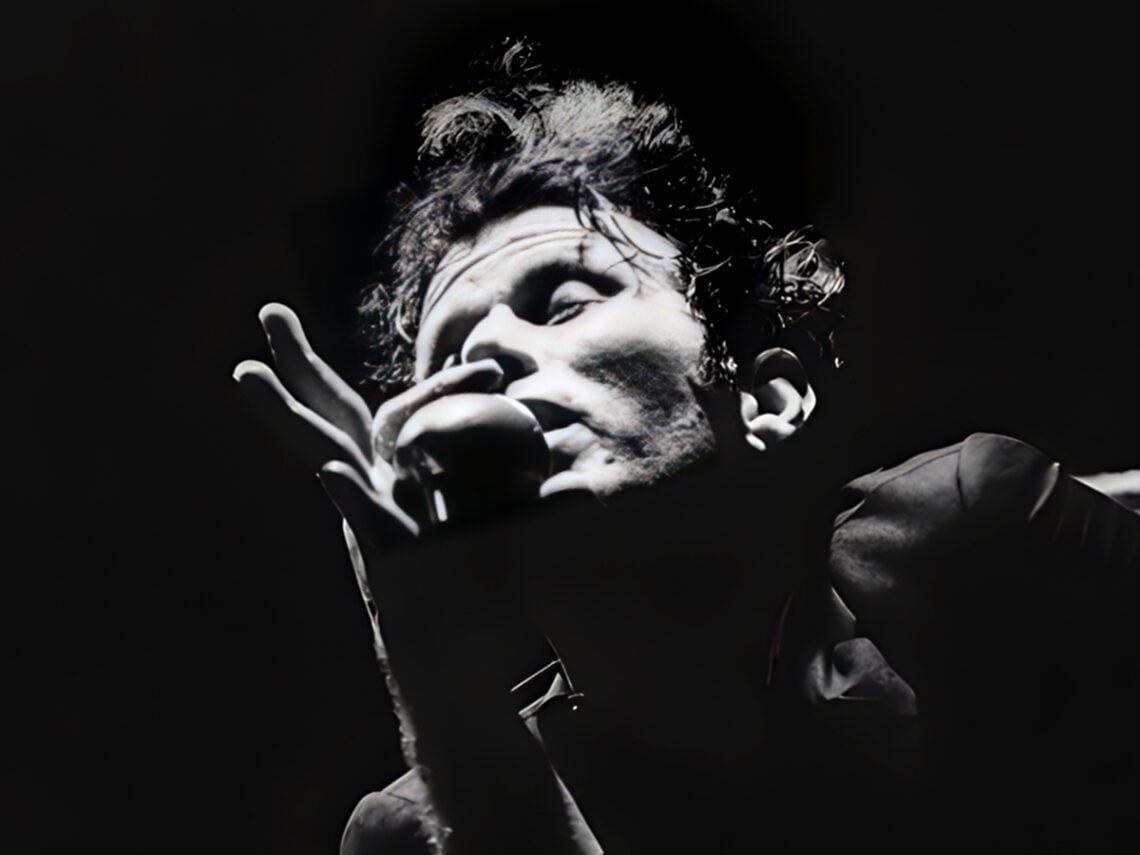
“The coolest”: Inside Tom Waits’ beginnings at the Troubadour

Tom Waits first began performing live in San Diego, while working as a sometimes-doorman at the Heritage coffeehouse in Los Angeles that hosted regular performances for folk musicians.
It was here that he would first cut his teeth on-stage, often performing sets of Bob Dylan covers and country music singer Red Sovine’s minor 1967 hit, ‘Phantom 309’. He began to incorporate his original songs, as well, with early iterations of ‘Ol’ 55’ and ‘I Hope That I Don’t Fall In Love With You’ – the first two songs on his 1973 debut album, Closing Time – making their way into his sets, inspired by one of his nights spent working at the Heritage.
“One night I saw a local guy on stage playing his own material,” Waits remembered, quoted in Record Collector. “I don’t know why, but at that moment I knew that I wanted to live or die on the strength of my own music.”
Performing in various venues across San Diego, opening for the likes of Sonny Terry, Brownie McGhee, Tim Buckley and Jack Tempchin, Waits eventually wished to expand further and travelled, as many musicians did, to Los Angeles. Here, in the early 1970s, he acquired a slot performing every Monday night at the famous Troubadour music venue on Santa Monica Boulevard in West Hollywood.
Adjacent to the infamous heady environs of the Sunset Strip, the Troubadour was centred in folk music, packed with artists following in the footsteps of the genre’s tradition. At the time, the nightclub had been open for roughly 12 years, founded by Doug Weston as a coffee house and inspired by London’s Troubadour café. So faithful to the folk tradition, Weston had not allowed electric instruments until 1967.
Then just 22 years old, Waits stuck to his loyal covers of Dylan songs alongside the workshopping of his own original material. As he recalled to NME in 1975, he could spend days waiting around the Troubadour until his chance to play, stacked against up to a dozen fellow musicians at his weekly shows.
“When you finally get up there, you are allowed four songs,” he explained, “you can blow it all in 15 minutes. I was scared shitless.”
The audience at Waits’ Monday night performances – and the majority of the week’s gigs, for that matter – was flooded with industry professionals, from A&R representatives to managers and record label executives, eagerly searching for their next big break. “That was the big place to play,” Waits recalled to Mojo in 1999. “They’d put a big picture of you in the window. In those days, if you sold out at the Troubadour, that was it.” Dylan’s manager, Albert Grossman, could be seen looming within the crowds, while the likes of David Geffen and Lou Adler frequented the space.
“At the Troubadour, they announced your name and picked you up with a spotlight at the cigarette machine,” Waits remembered, “And they’d walk you to the stage with the light. It was the coolest. The owner, Doug Weston, would go out on-stage naked and recite ‘The Love Song of J Alfred Prufrock’… It was very thrilling, though, because you would find people who’d hitchhiked to this sport for their 20 minutes.”
Referring to TS Eliot’s stream of consciousness poem, Waits’ recollection of Weston’s eccentric (to say the least) appearances on-stage at his club offset the potential anxieties that artists like Waits surely felt, at the pressures of performing as perfectly as humanly possible, in order to catch the ear and eye of a boss who could change their lives. Jackson Browne, as well as Linda Ronstadt and the Eagles, had all gotten their start on the Troubadour’s stage, while legendary performances from the likes of Elton John and Led Zeppelin made them soon-to-be household names.
Waits loyally continued to perform every Monday night, enduring the queues of musicians that would form hours before the 6:30pm door time. Eventually, in the summer of 1971, his efforts would pay off, once he was discovered by his soon-to-be manager, Herb Cohen. Soon taken from the nightclub stage to a professional recording studio to record his first demos, Waits was on his way to becoming one of music’s most famous troubadours of his time.
