


“A key aspect of terrorism is to create fear”: The global influence of the Eras Tour in a time of terror

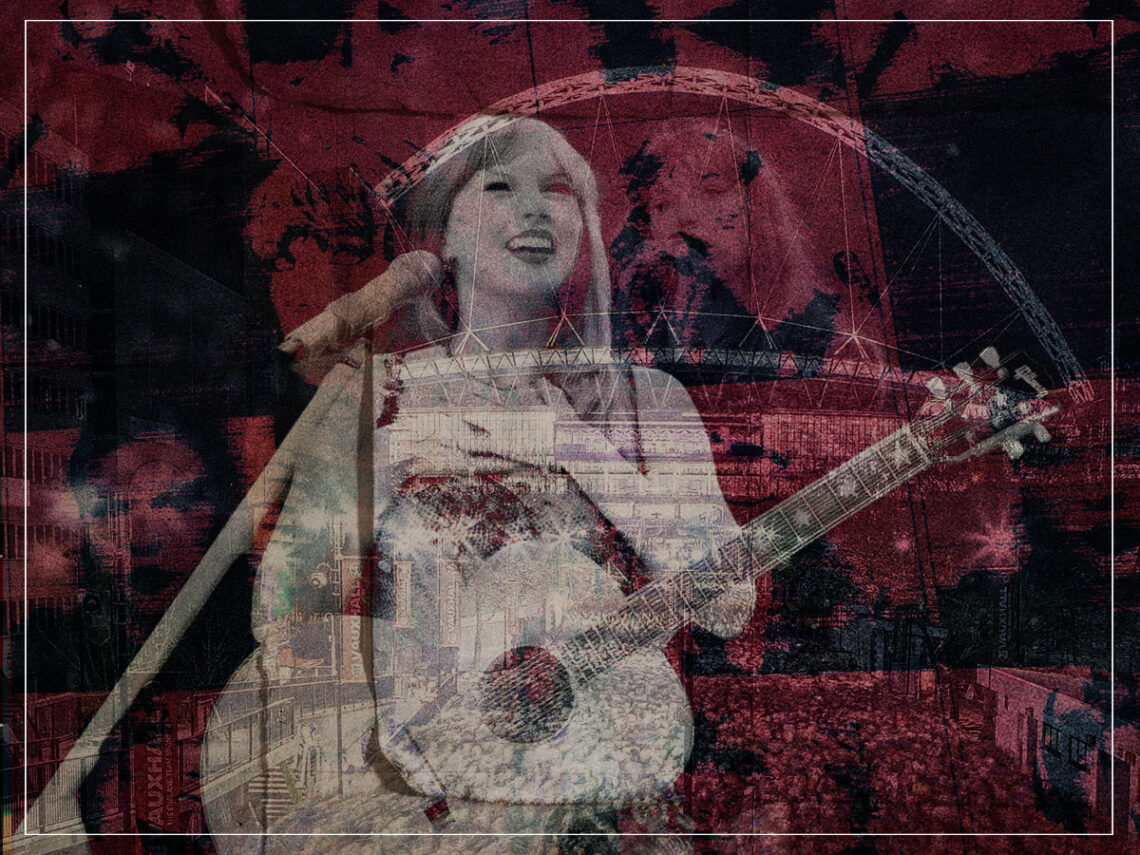
“I think the last time we saw Taylor was ten years ago. I’m pretty sure I was 16…” I’m talking to my sister to keep calm as we exit a packed tube onto an even more crowded station. The prospect of a concert on this huge stadium scale is anxiety-inducing on its own, but when you add in the news of a foiled terror plot in Vienna, an attack in Southport that saw three young girls die at a dance class and even Trap, a new horror movie where the fictional popstar at the centre of the murderous plot at a gig is essentially a carbon copy of the one you’re about to see, the prospect of being at Taylor Swift’s final UK leg of her Eras Tour is one tainted by a fear that should never be attached to a pop concert.
With every other tour date, excitement has buzzed around the prospect of Swift finally landing in town. Each string of shows has led to a genuine economic boost as fans descend on cities worldwide. There have been train stations, streets, venues and more, all renamed in her honour as her ever-growing fame has hit new peaks. But, the dangerous flipside of such iconography has been made devastatingly apparent as a string of horrific news stories have all been attached to her name, causing the Metropolitan Police to have conversations about whether the shows should even be allowed to continue.
On this latest touchdown in London, the air of excitement was undeniably impacted by anxiety and fear. Only weeks prior, a Taylor Swift dance party was attacked. Days after that, her shows in Vienna were cancelled after a terrorist plot was uncovered whereby ISIS intended to “kill as many people as possible”. The fact that the shows were cancelled at such short notice shows just how serious and perilous the situation was.
Swift famously performs in all weather, still completing her entire three-hour-long set in storms just for her fans who managed to secure these eye-wateringly priced, sought-after tickets. But with a threat this serious and the lingering climate of terror that has recently hung around Swift’s name, things were different now.
It’s no coincidence that Taylor Swift is being targeted. According to terrorism expert Dr Elizabeth Pearson, it’s not simply because she is the biggest pop star in the world right now. “Ideology also matters,” she said, “Islamic State believes in the purity of their version of fundamentalist Islam, and they believe that pop music is part of the decadent West.” To terrorist groups, the mere fact of a successful woman and the image of that woman touring the world, dancing on a stage, and basking in her achievements is a threat. “Women pop stars are a symbol of a way of life, of women’s ability to enjoy their bodies, their sexuality, to have financial independence,” she explained.

When I first read the reports of the Vienna plot featuring that spine-shivering sentence, there was a flash of pure panicked anxiety. The thought of being there reporting on the concert, in a crowd of 92,000, stuck in an enclosed space with no protection, felt terrifying for a moment. But then I thought about it again: being in a crowd of thousands of fans, with the majority being women, like me and my sister, it felt like too unifying a frontier for fear to steal.
“A key aspect of terrorism is also to create fear. You want to change people’s behaviour and make them afraid to go about their normal activities. You want to disrupt the economy of a city. So hitting a very popular concert is a means to do that,” Pearson explained. “A key and clear message to terrorists should be – if safe and possible – we will not be cowed by you. These people want to use violence to make us afraid,” she said.
The message is simple: “Terror is key to terrorism. If they fail to make us afraid, they can’t achieve their aims.”
This show, being something that fear would not take away, felt like a uniting force between fans. “While the threats are very real, I hate the idea of marrying together feelings of pure excitement to see the biggest star in the world perform with crippling anxieties of what could happen,” Natasha Rainey said, having flown over to London from Ireland with her sisters and mother to see the show.
She added: “Why is it completely rational to be frightened but also quite uncanny to consider the possibility of violence at a Taylor Swift concert? This is nirvana for little girls with glitter on their face, not a battlefield.”

When we emerged from the station onto Wembley Way, the atmosphere was palpable. We paused for a mere moment to take in the sights, and a mother with her young daughter tapped me on the shoulder, “Do you want me to take your picture?” After smiling for the camera and taking their photo in return, the young girl offered me a beaded bracelet with the word Fearless on it. By the end of the night, I have five more, each handmade with some Swiftie slogan on and each gifted in a moment of pure sweetness between strangers of all ages.
Swift herself doesn’t even need to come out to make this tour something special; such is the hubbub around her; her fans do that collectively. But when she does, beginning her tour through her 18-year-long career, Swift’s music and her enduring presence in the industry despite fearing that misogynistic ageism would step in, as she once commented, “We do exist in this society where women in entertainment are discarded in an elephant graveyard by the time they’re 35,” are all signs of exactly why these shows feel so powerful amid the current climate.
“This is a fearless, courageous, and unique story, from early years writing country music to crafting perfect pop songs across music genres,” Kate Bailey, the curator of the V&A’s new Taylor Swift Songbook Trail exhibit, explains. “Taylor’s lyrics and music are powerful, popular and relatable- her voice, her passion and her stories have changed the face of the music industry forever”.
“I’m so sick of running as fast as I can, wondering if I’d get there quicker if I was a man,” Swift sings as her show starts, with a stadium of women singing along. As the eras unfold one by one, everyone is hooked. For three straight hours, tens of thousands of people scream every single word, whether that be the bubblegum pop hooks of “can’t you see, you belong with me” or the intricate poetry of all ten minutes of ‘All Too Well’. With a stage that morphs to suit every chapter in her career, the extended show enamours her crowd, from older parents to young kids likely seeing their first-ever concert.
However, Swift routinely comes under fire for not being political enough to satiate the expectations of voices who demand her to be more than the important figure she already is to so many. But in her own way, Swift’s show is full of statements. When we reach the acoustic set, where she plays different surprise songs each night, her choices are no coincidence. “I looked around in a blood-soaked gown / And I saw something they can’t take away,” she sings during ‘You’re On Your Own Kid’, smiling as she tells us, “Make the friendship bracelets, take the moment and taste it / You’ve got no reason to be afraid”.

There’s a meta moment before ‘I Can Do It With A Broken Heart’ where she does a skit about snapping into performance mode amidst moments of personal devastation. This feels especially apt given the footage of her the night before, crying during her set as reports came out that she’d privately met with the families of the victims from the Southport attack before the show. So, while she makes no comment on these matters during the performance, they still seem to be addressed.
Defiance is a palpable part of the show as Swift refuses to be scared out of the spotlight she’s worked hard for, and her fans refuse to be afraid of enjoying the artist and the music that brings them comfort. Meanwhile, fear is all but nonexistent in a celebratory community of women.
“We are seeing reports of changing attitudes to misogyny and gender among younger men – troubling signs that they are becoming more regressive when it comes to women’s rights,” Pearson explains. As a result, women and girls, more so than ever, need spaces like this where they can engage in themes distinctly about girlhood and femininity, sung by a woman who has climbed the ladder to the top, feeling safe in their own community.
So, in reconciling how Swift has become such a monumental figure in today’s cultural landscape, Rainey‘s parting comment seems to aptly explain her appeal: ”The UK, and the world, is a scary place for women and girls right now, but there was a solidarity, and it felt safe tonight, even just for a few hours”.
