


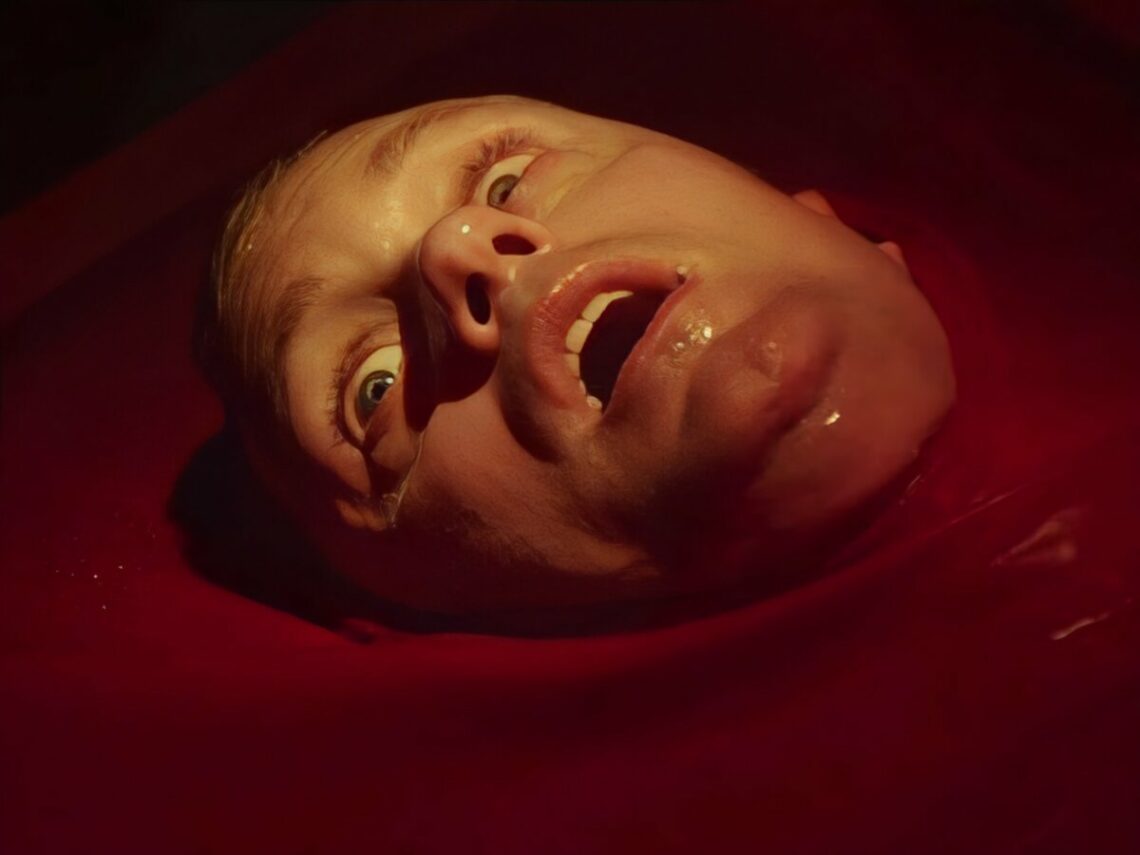
‘Infinity Pool’ review: Brandon Cronenberg’s Ballardian analysis of our times

Brandon Cronenberg’s latest offering, Infinity Pool, is his most robust yet. The movie is intensely multifaceted and contains more thought-provoking subject matter than his past offering, 2020’s Possessor, by building on the previously laid sci-fi foundations. Starring Alexander Skarsgård and Mia Goth in two of their best performances to date, with other stellar flourishes coming from Cleopatra Coleman, Jalil Lespert and Thomas Kretschmann, Infinity Pool is a movie made for current times.
The visceral plot, dextrous acting, electronic score, and stark cinematography all work together to create a profound sensory experience that leaves a genuine mark. There’s little style over substance here; almost everything is employed for a reason.
On the face of it, the movie tells the story of James (Skarsgård), a struggling writer, and his wife, Em (Coleman), who holiday at a fictional resort in the coastal country of Li Tolqa. However, their boredom and uneasy marital life – compounded by the limbo of their imaginary surroundings, complete with international restaurants operated by the same cast of locals – soon give way to pure existential dread as they are faced, after a horrific accident, with the country’s brutal side. The story is less clear-cut than the initial synopsis would have you believe. What ensues is a tale involving cloning, responsibility and death unlike any other.
In one aspect, a critique of the unsatisfactory and predetermined experience of a resort holiday; in another, a body horror taking cues from Cronenberg’s father David – the master of the genre – and elsewhere, it’s a Ballardian critique of the malaise of modernity, with a hefty dose of the sex and drugs thrown in for excitement. There’s a vivid orgy scene that occurs about two-thirds of the way in, with the multicolour visual montage about as scintillating and shocking as has been seen in mainstream modern cinema, completed by exquisite editing. In many ways, this moment encapsulates the essence of the film perfectly.
It’s easy to draw a comparison between Infinity Pool and J.G. Ballard’s novel Super-Cannes. Aside from Cronenberg being attached to direct the TV adaptation of the much-overlooked novel, similar themes are threaded throughout both works, as the hedonistic, libertine and morally depraved acts of the wealthy gang of tourists make clear connections.
Whilst the narrative is strong, it is in the performances that the film truly excels. The medal for stand-out performer has to go to Mia Goth, who is enjoying a purple patch of late. Her character, Gabi, is an unsettling modern and full-bodied take on the classic trope of the femme fatale, enticing James into her friends’ morally bankrupt games by weaponising sex, drugs and violence and preying on his evident weakness, hubris.
When we first meet her, she makes out that she is a big, big fan of his only novel that came out years before, but this facade gives way to something much more twisted. What’s her real motivation? Fun, lust, boredom, or psychopathy? It could be all of them, but we’ll never know. The role was perfect for Goth, suitably following her unhinged performance in Ti West’s Pearl. There’s also a sense that the character has a more naturalistic purpose, with a particular the blood-soaked breastfeeding scene plucked straight from humanity’s primal era.
The cinematography, editing and score are all deserving of considerable praise too. Karim Hussain’s visuals tap into the unadulterated natural beauty of Li Tolqa, which was filmed at the Amadria Park resort in Šibenik, Croatia. Cronenberg also uses them to highlight the brutality this connection to nature and pastoral life brings. The topical neo-pagan elements, exemplified by the locals’ gruesome masks and old traditions, are supplemented by graceful vistas and slow, subdued shots. However, they are also contrasted by the score and graphic sex and violence, showing both sides of this existence’s coin.
The world outside the result in Li Tolqa might be far from modern life, but this also means a return to our base form and the terrifying state of nature. Note how the resort has armed guards at the gates. Thoughts of modernity vs natural, equilibrium vs brutality and jail vs freedom all come to the fore, as do heaven and hell, with the locals’ deeply religious outlook evoking this.
Adding another dimension to the visuals is Tim Hecker’s score, utterly unnerving at points and so potent it is trance-like in others. A real highlight is a scene not long after the inception, where we see James and Em walking off, which initially seems normal. Then, the camera starts to jilt to the side and takes off into the air, revealing the extent of the area’s natural beauty, contrasted by the menace of Hecker’s unnatural electronic sounds. Together, the different elements convey that this is not to be an average or natural experience. Things as we know them or expect them are to be viciously turned on their head. This audiovisual inversion of reality and the senses is what Infinity Pool is all about.
Brandon Cronenberg has delivered a masterwork with Infinity Pool. He might have just set the bar for modern filmmakers who actually want to make us think and consider our place in the world.
