


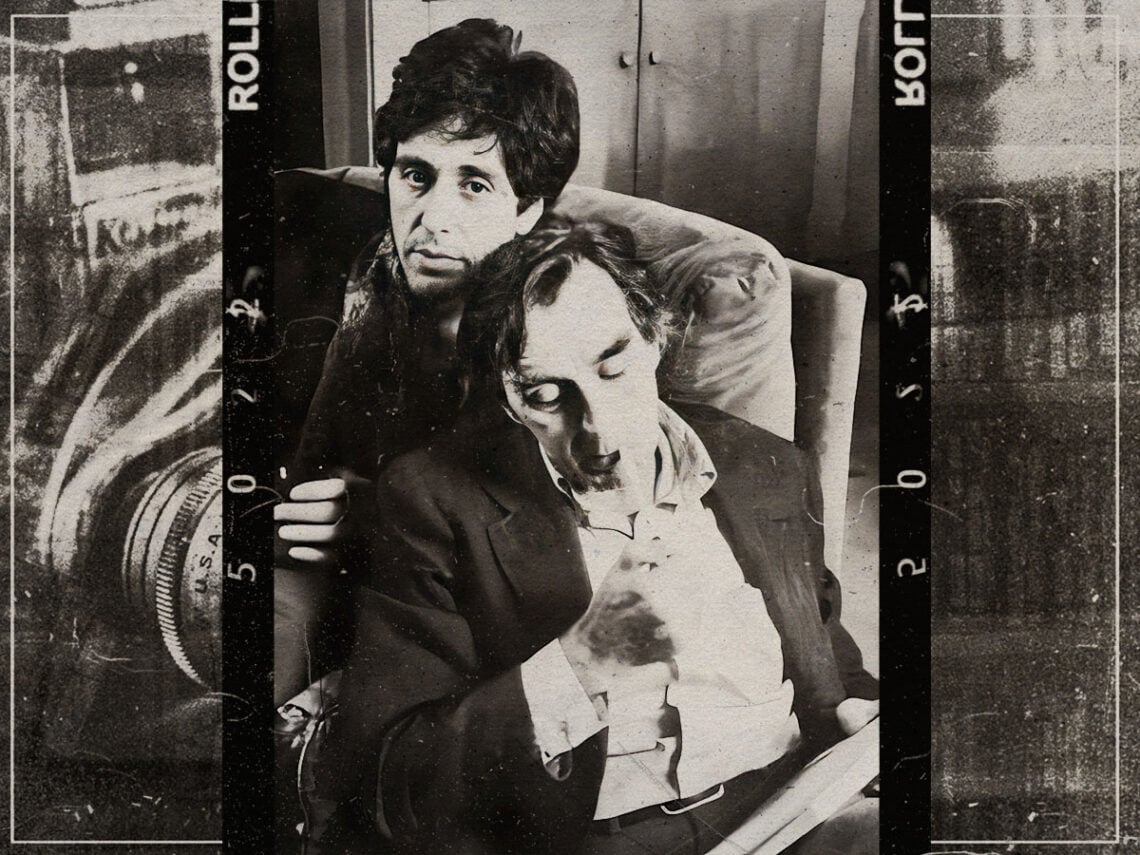
Charlie Laughton: The mentor that shaped Al Pacino: “It was a very important moment for me”

In every actor’s life, there are pivotal figures who serve as mentors and guides, shaping their creative journeys in ways that even the actor may not fully realise. In the case of Al Pacino, an icon of the American stage and screen, that mentor was Charlie Laughton. Far more than a mere instructor, Laughton was a sidekick, dramaturge, business partner, and emotional bulwark for Pacino.
He was the compass that guided him through the highs and lows of his early career, establishing the foundations for the thespian we know and celebrate today. Not to be confused with the old British dramatist Charlie Laughton, a frequent collaborator of David Lean and director of The Night of the Hunter, this Laughton was a staple of the New York acting scene in the late 1950s and 1960s – both a teacher and director, as well as an actor himself.
He taught at a modest Greenwich Village-based acting studio, which would later go on to boast such alumni as Whoopi Goldberg and William H. Macy – and, of course, Pacino. Speaking to The New York Times in 2014, Pacino revealed to what extent Laughton shaped his career and life. When they first met in a Village bar, Pacino was just seventeen.
Laughton, already an established actor turned teacher at the Herbert Berghof Studio, immediately recognised the young Pacino’s innate talent, as well as the adversities he was navigating in his life. They formed an instant connection, one that, over time, would be enriched by Laughton introducing Pacino to literary heavyweights like Irish writer James Joyce and French poet Arthur Rimbaud. As Pacino himself recalled, “I dealt with whatever was bothering me through reading. You could not find me without a book.”
A pivotal moment in their mentor-mentee relationship occurred during the Off-Off Broadway production of August Strindberg’s 1965 play Creditors. This play, described by Pacino as the moment “when I knew that nothing mattered except that I became at one with the play,” was directed by Laughton. Yet, in those early rehearsals, surrounded by classically trained actors, Pacino was gripped by panic. He wanted to quit. Laughton’s role then transcended that of a mere director; he sat Pacino down, delving into the script until the young actor gained clarity and could go on.
Laughton was Pacino’s rock in more ways than one. During his Off-off-Broadway debut in Hello Out There, Pacino broke into tears during intermission, confused by the audience’s reaction to his first line. Once again, Laughton talked him through, transforming what could have been a crippling incident into a learning experience. “It was a very important moment for me,” said Pacino. “I went back in there and finished the run.” Sadly, Laughton, who suffered from multiple sclerosis, died in 2013. Yet his influence endures, and when Pacino landed his first major role in 1971’s The Panic in Needle Park, Laughton was there to support him.
In his last days, Laughton and Pacino reminisced about an incident at the Berghof Studio when Pacino performed a scene from Crime in the Streets. The explosive reaction from Berghof had baffled the young actor. When asked what was going on, Laughton simply replied, “A new era.” Indeed, under the watchful eyes and wise counsel of Laughton, a new era in acting was born — an era that would showcase talents like Al Pacino, who remain forever etched in the annals of film and theatre history.
