


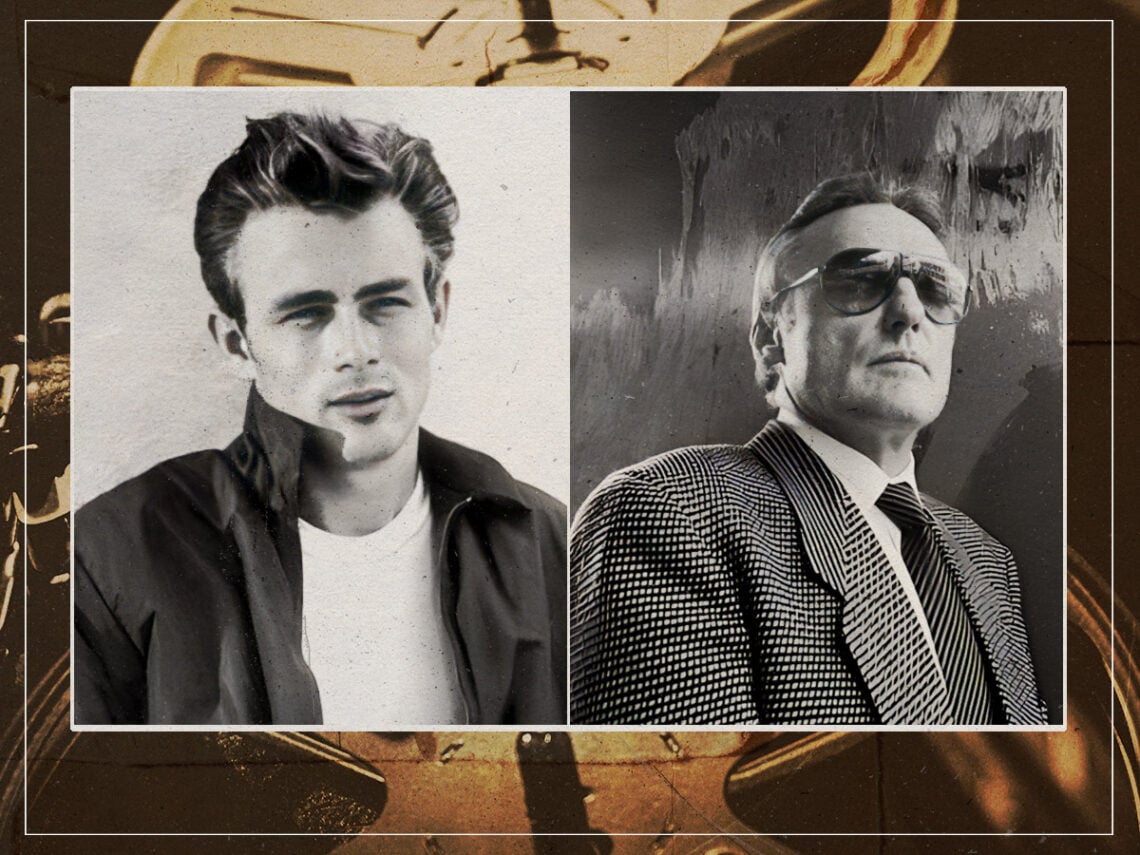
“The best”: The lasting impact James Dean had on Dennis Hopper

Live fast, die young, and leave a good-looking corpse. The mythology of James Dean has held popular culture in a chokehold ever since his untimely passing from a car accident at the age of 24 in 1955. Many actors cite him as an inspiration, but not all of them had the good fortune to work with him.
For a time, Dennis Hopper was an up-and-coming young actor, a contract player for Warner Bros, only 18 years old when he starred in Rebel Without a Cause in 1955. It was only his second movie, and James Dean was already a pin-up, a teen idol, having made East of Eden earlier that same year, revolutionising cinema in the process.
Nicholas Ray’s landmark film ushered in the new era of the coming-of-age genre onscreen, with Dean as a disaffected youth with the heart of gold. His parents just don’t understand him and the world wants to tear him apart. Up until that point, teens had simply been told to sit quietly in the corner of culture.
Hopper’s role may be minor, playing the character of ‘Goon’, but the intense blue-eyed gaze was already present, as well as his aura of determination. More importantly, he matched the proto-punk ethos of the film. His steely guise helping to make it clear that there was a new type of presence in Hollywood.
The film significantly impacted the wider society, particularly teenage culture, leading young people to question and reject the traditional beliefs taught by their parents. Talking to the Hollywood Interview, Hopper said that the meeting was eye-opening, “I thought I was the best young actor around, and then I saw him”.
Dean taught him the art of improvisation. He recalls Dean telling him, “live in moment-to-moment reality. Instead of playing drinking your coffee, just drink your coffee. Just smoke your cigar, don’t play smoking the cigar. You’ll find the simplest things become very difficult the first time you get onstage or in front of the camera, but eventually you’ll get through all that. Just live in the moment”.
The pair went on to reunite in George Stevens’ epic western, Giant, released posthumously in 1956. The relationship between Dean and Hopper was more professional than anything else, though, there were no boozy all-nighters or sentimental heart-to-hearts on set. “We weren’t great buddies who went out drinking or anything like that,” he said. “He was five years older than me. That was quite an age difference at that point. Also, we thought of him as a kid because he’d done Rebel, but in point of fact, he was older than Elizabeth Taylor, who was considered an adult”.
Despite the differences, Dean may also be to thank for Hopper’s illustrious career behind the camera as a director. One day, Dean saw him taking photographs and told him not to crop them. Why, you ask? Hopper continues with Dean’s response: “Because you’re probably going to want to direct films someday, and you can’t crop film, so learn how to frame full-frame, full negative.’ So from that day on, I didn’t crop my photographs”.
So thank you, James Dean, without you there may never have been 1971’s The Last Movie or 1980’s Out of the Blue. In fact, there might never have been the youthful counterculture revolution for that matter.
