


The $2 billion role Matt Damon almost walked out on: “The exact kind of movie I would pass on”

When an actor becomes synonymous with a role, it can be difficult to imagine any other star playing the part.
Similarly, it’s also almost impossible to remember a time before the movie was released, so it’s extremely hard to put yourself in the shoes of the people making it. Back then, you see, they likely had no idea they were making something that would become an indelible part of culture – they were just trying to make a film, which is gruelling at the best of times.
In truth, this perfectly describes a movie Matt Damon made that would come to define him, yet he almost quit before cameras even rolled on the notoriously troubled production.
In the early 2000s, Damon’s career was at a crossroads. He burst onto the scene with Good Will Hunting in 1997 and then enjoyed his first hit as a leading man in 1999’s The Talented Mr Ripley. However, he also made some questionable pictures in that period, including flops like All the Pretty Horses, The Legend of Bagger Vance, and Dogma. His bona fides as a movie star were already in question only a couple of years after his breakthrough, and he needed his next film to hit in a big way.
The stakes could hardly have been higher. While Damon had already established himself as a gifted actor, he had yet to prove he could anchor a major action franchise, making The Bourne Identity a pivotal moment in determining the direction of his career.
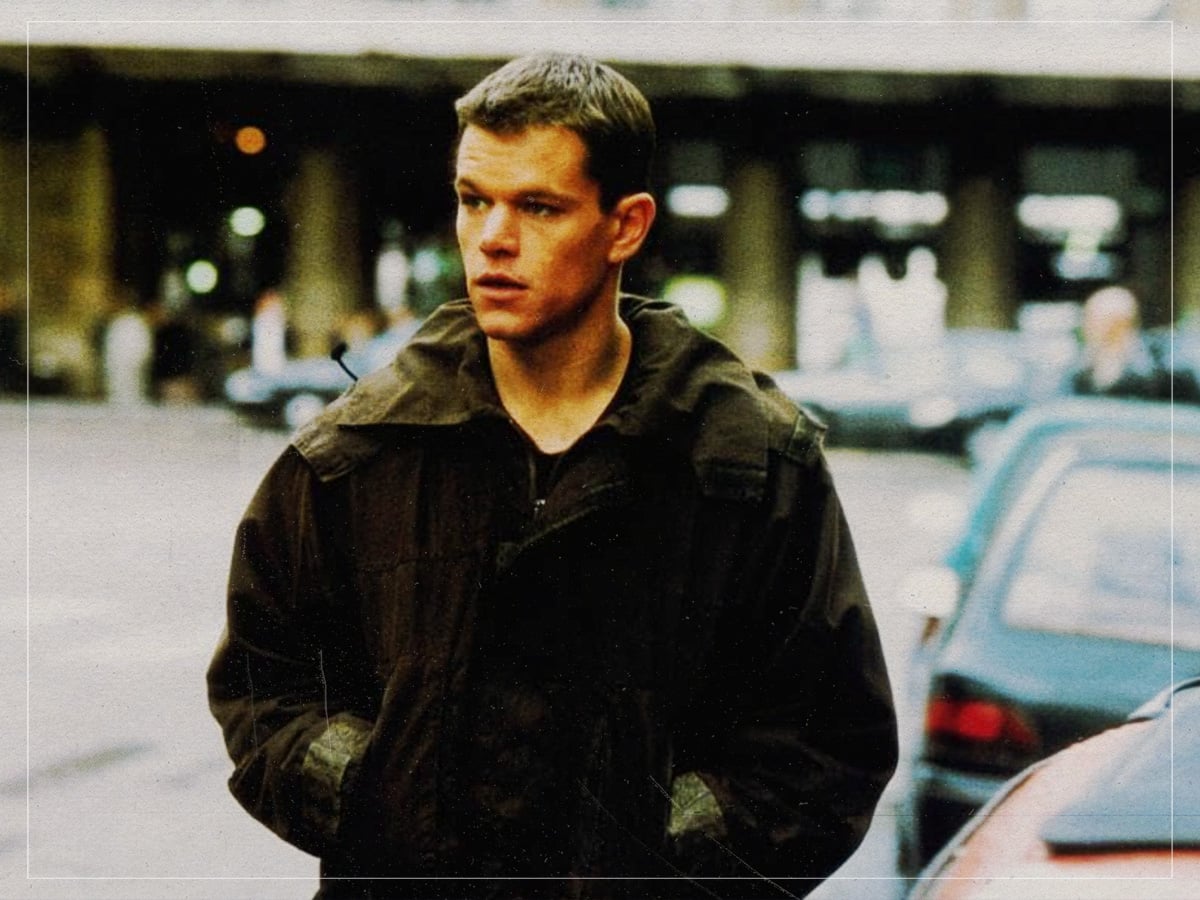
So, Damon signed up for two movies: Steven Soderbergh’s Ocean’s Eleven, a star-studded remake of the classic ’60s Rat Pack heist movie, and The Bourne Identity, a spy thriller based on an old Robert Ludlum novel. Bourne, in particular, would rest entirely on Damon’s shoulders and would require him to change his body and learn extensive fight choreography. It was a gamble, but one he was willing to take – as long as the script was right.
Unfortunately, the screenplay turned out to be a much tougher nut to crack than anyone anticipated. The third act proved problematic, but screenwriter Tony Gilroy was unavailable to make the necessary changes, so William Blake Herron was brought in to punch things up. However, by the time Damon touched down in France to start shooting, the script he was handed was “unrecognisable” from the Gilroy draft he had loved.
“The writer who got hired to come in went back to the book and did a page one re-write of Tony’s stuff,” Damon explained to Movie Habit. The problem with this was that neither Damon, Gilroy, nor director Doug Liman actually liked Ludlum’s book. In fact, they considered it so retrograde and passe that Liman told Gilroy to simply write an entirely new script around the very basic concept of a man with amnesia, discovering the only thing he knows how to do is kill people.
Herron’s rewrite, to Damon’s dismay, “became the exact kind of movie I would pass on, that I don’t want to do and that I avoided doing because there was the perfect number of explosions and everything.” While he admitted that it was a good action script, and Herron likely accomplished what he was told to do by the studio, it simply wasn’t the movie any of the three main creatives envisioned making.
Suddenly, the production was in deep trouble because the cast and crew were already on location, and nobody knew what script they’d be shooting. This was in October 2000, and Damon had a hard-out looming in February when he would need to leave to shoot Ocean’s Eleven. “We were under the gun,” Damon confessed before admitting that a strike was also looming over the production. “If it hit, we wouldn’t have time to finish Ocean’s Eleven,” he explained.
It looked for a while like Damon might need to walk away from The Bourne Identity, but Gilroy saved the day by agreeing to rewrite the script again. He wound up faxing new pages to Liman and Damon almost daily throughout production, and reshoots were needed to bring the movie past the finish line. However, Damon claimed the process wasn’t as much of a nightmare as the press claimed. He admitted it was a struggle, but no more than on most high-pressure productions.
He shrugged, “We just eventually went back and finished Tony’s script because that was the script we had all wanted to make and that the studio signed off on.”
Their perseverance proved worthwhile. The Bourne Identity not only revitalised the spy genre but also transformed Damon into one of Hollywood’s most bankable leading men, spawning one of cinema’s most acclaimed action franchises, netting over $2billion over the years. Given how close the project came to falling apart before filming had properly begun, its eventual success stands as a reminder that some of the industry’s greatest achievements emerge from its most troubled productions.
