


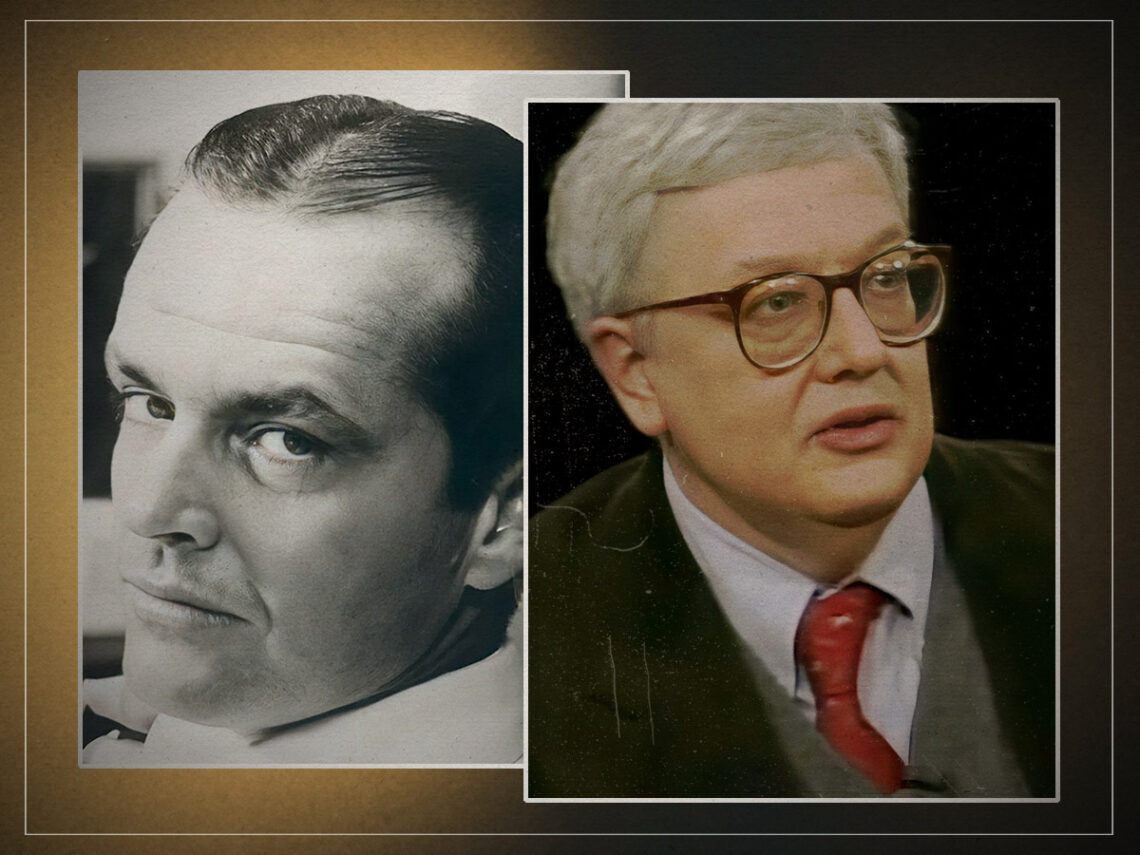
The iconic Jack Nicholson movie that made Roger Ebert miserable: “It’s a depressing experience”

Roger Ebert believed the unpredictable and magnetic Jack Nicholson was one of the greatest actors of his generation. This isn’t particularly surprising, because Nicholson was always a star who delighted audiences and critics alike by imbuing all his performances with an incredible lifeblood that few other actors could match. This indefinable “Jack-ness” made even a middling film worth watching, turning a great movie into something truly special.
Imagine Ebert’s surprise, then, when he watched one of Nicholson’s most popular movies and found that even the anarchic star couldn’t give it the requisite life and energy he had come to expect. It’s easy to imagine the Chicago Sun-Times critic sinking deep into his seat, a queasy feeling in the pit of his stomach as he witnessed Nicholson cavort around in a film he dubbed “a triumph of design over story, style over substance”.
That film was Tim Burton’s Batman, the 1989 phenomenon that launched ‘Batmania’ worldwide and raked in record box office numbers. While the majority of reviews at the time praised the film for its dark take on the world of Gotham City, effectively doing away with any cultural memories of the campy ’60s TV show, others weren’t quite so fond of it. Ebert wasn’t alone in criticising the movie, of course, but his damning verdict was perhaps the most high profile dissenting opinion.
“The Gotham City created in Batman is one of the most distinctive and atmospheric places I’ve seen in the movies,” Ebert wrote in his two-star review. “It’s a shame something more memorable doesn’t happen there.”
At his core, Ebert felt the film’s story and characters didn’t live up to the incredible production design. Even while his eyes marvelled at the imagery he was seeing, he admitted to not feeling invested in the battle between Batman and the Joker, and he felt the “hostile, mean-spirited movie about ugly, evil people” had an undercurrent of violence that made him uncomfortable. He didn’t feel this comic book movie was fun in the same way Richard Donner’s Superman was, musing, “No one seemed to have any fun making it, and it’s hard to have much fun watching it. It’s a depressing experience.”
Perhaps worst of all, though, Ebert felt let down by Nicholson’s performance as the ‘Clown Prince of Crime’, which he had hoped would liven up the gloomy proceedings occasionally. Instead, he witheringly noted, “Nicholson has one or two of his patented moments of inspiration, although not as many as I would have expected.”
Interestingly, the iconic pair had one of their famous disagreements when Ebert discussed Burton’s gothic superhero extravaganza with his TV partner-in-criticism Gene Siskel. While Ebert complained that the film looked great but featured a boring plot and thin caricatures instead of three-dimensional characters, Siskel pushed back. He appreciated the “refreshingly adult” approach Nicholson, Michael Keaton, and Kim Basinger brought to their roles, and he felt the film created a more fully realised “psychological world” than Ebert gave it credit for.
Ultimately, it would take another 16 years for Ebert to finally watch, as he put it, “the Batman movie I’ve been waiting for.” That film was Christopher Nolan’s Batman Begins. This franchise reboot spoke to Ebert’s sensibilities with its heightened reality and a proper focus on the psychology of Bruce Wayne and his war on crime. “The movie works dramatically in addition to being an entertainment,” Ebert noted, sticking the knife into Burton’s 1989 film one last time. “There’s something to it”.
