


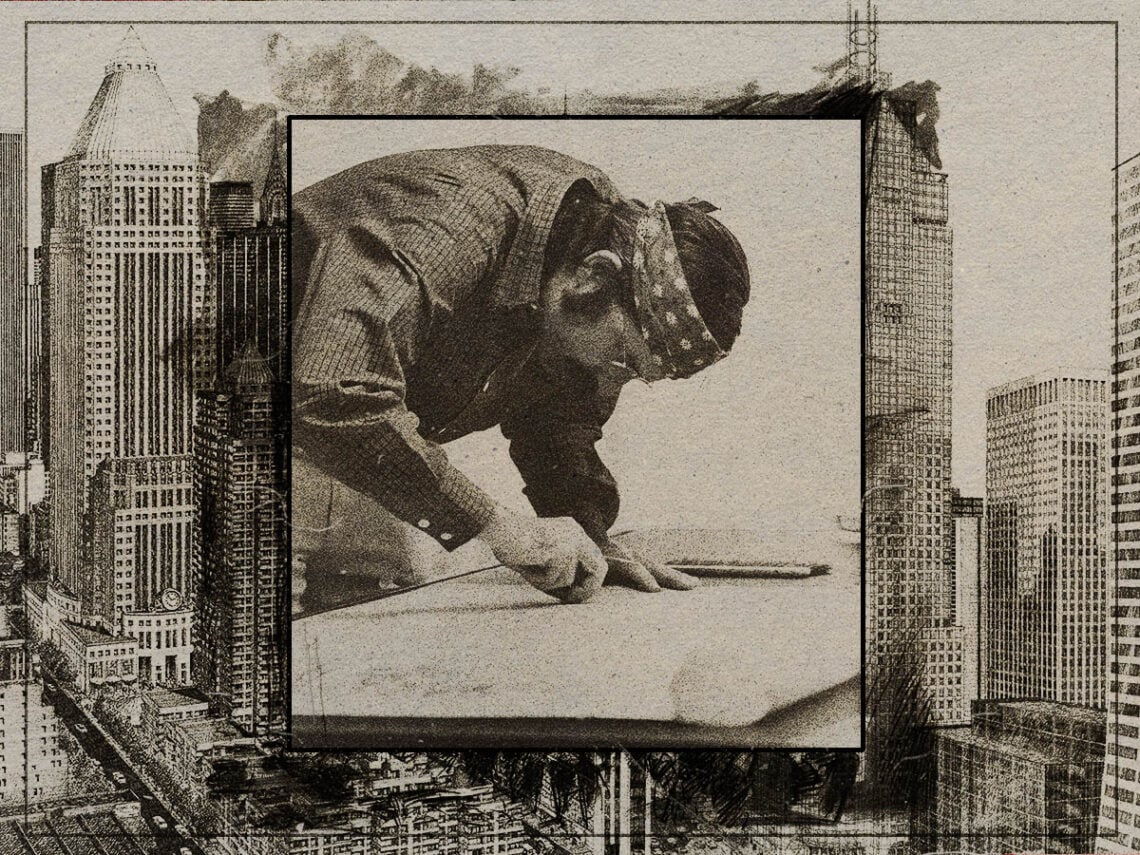
The iconic architectural sketches of Carlos Diniz

You’d be forgiven for asking, “Who’s Carlos Diniz?” if you’re unfamiliar with the architectural industry. Still, I’ll wager you’ve seen several of the buildings he helped design and have perhaps even set foot in one or two. Diniz was arguably the biggest name in the architectural illustration game throughout the 20th century, and although he passed away in 2001, his legacy lives on in breathtaking skylines across the globe.
Born during a family relocation in Phoenix, Arizona, Diniz’s early years were clouded by his parents’ separation when he was just four years old. Diniz subsequently moved with his mother and sister to the glamorous city of Beverly Hills, California. It was here, amidst Hollywood’s famous faces and artistic vibrancy, that Diniz’s creative spirit was ignited.
Even during his high school years at Beverly Hills High, Diniz began to gain local recognition for his talent in designing and constructing intricate miniatures and models. In particular, his miniature guns, so meticulously detailed that they could be fired, graced the pages of the Los Angeles Times and featured in a short film by Paramount Studios.
After enlisting in the Army in 1946, Diniz found himself stationed in Italy, and it was here that the unique buildings of Venice, especially, drew his heart and hand to architectural illustration. What began with leisurely sketches would ultimately shape a lifelong career.
Upon his honourable discharge, Diniz intended to pursue a rampant fascination with automotive design. With this dream in mind, he embarked on a week-long trip to Frank Lloyd Wright’s Taliesin Architecture School. Here, fate intervened, as an instructor commissioned him to produce illustrations of a Case Study House for publication in Arts & Architecture. Diniz’s career was set on a serendipitous tangent.
After graduating from the Art Center College of Design in 1950 with a degree in Specialised Design, Diniz entered various architectural offices, but his heart was set on more. His pivotal moment came when he joined the newly established office of Viennese architect Victor Gruen in 1952. This marked the beginning of a prolific career in architecture that would contribute to some of the most iconic urban transformations of the century.
In 1957, Diniz opened his own studio, Carlos Diniz Associates Visual Communications. Here, Diniz and his team devoted themselves to all facets of architectural presentation, from drawings and paintings to logos, presentations, brochures, and marketing tools.
Diniz’s relentless pursuit of innovative ways to depict architectural wonders led to a fruitful collaboration with serigraph expert Art Krebs. Together, these innovative designers devised a way of creating bold, colourful architectural serigraph prints at a time when technology limited such exploits.
Through the late 20th century, Carlos Diniz Associates played a central role in developing several Californian communities, including Laguna Niguel, the City of Orange, Irvine, Westlake, and Simi Valley. Diniz’s portfolio would become instrumental in inspiring future projects and offering “story-telling” snapshots of yet-to-be-constructed environments.
For decades, Diniz’s expertise was sought after on a global scale for the visualization of high-profile projects, including New York’s World Trade Center, Canary Wharf in London, Washington, DC’s Union Station, the Walt Disney Concert Hall in Los Angeles and the New Orleans Waterfront.
Over the 1980s and into the ’90s, a shift toward computer-aided drawing saw a decline in Diniz’s craft. In 1996, following the loss of his wife, Colleen ‘Sundae’ Diniz, Carlos retired to devote more of his time to painting, most memorably, a series of Venitian scapes. Meanwhile, he passed Carlos Diniz Associates down to his stepson, Ian Espinoza.
Diniz passed away aged 72 on July 18th, 2001, from heart failure. The following year, he was posthumously honoured with the Pacific Design Center Design Stars of Design Award.
See some of Carlos Diniz’s most iconic architectural illustrations below. You can explore more of his work on the A Gallery website.


