


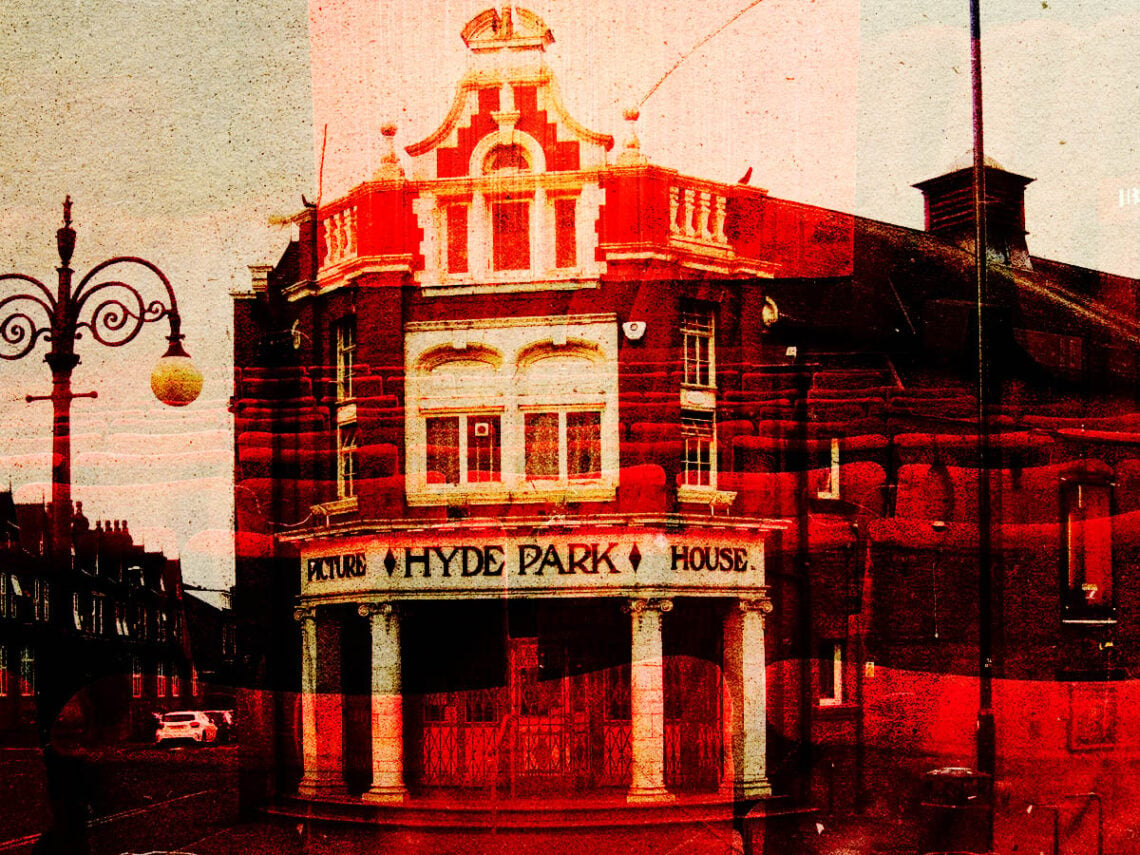
The reopening of Hyde Park Picture House and the importance of indie cinemas

At the centre of an inner city Leeds student suburb lies Hyde Park Picture House, a charming independent cinema that opened its doors over 100 years ago in 1914. Born out of the war, the cinema’s original programming included patriotic morale-boosting screenings and news. Since then, the picture house moved from early talkies to summer blockbusters and arthouse indies, remaining a cultural staple in the community for over a century.
Just before the pandemic hit, Hyde Park Picture House gained funding from the Leeds City Council and The National Lottery Heritage Fund to redevelop the venue. The cinema closed its doors to the public in March 2020, with a focus on retaining and restoring the historic venue while making it more accessible to the community.
The £4million renovation has included the building of a new accessible entrance, an extra screen, a new bar and café and the restoration of the iconic lamp post. The venue has now reopened with a new programme featuring accessible ‘Bring Your Own Baby’ screenings and captioned screenings of the new Wes Anderson film, blockbuster Barbie, and a range of oldies.
Anticipation in the community surrounding the cinema has been building for months as people excitedly awaited the reopening. Helen Featherstone, who directs England North at the National Lottery Heritage Fund, told the BBC: “I can’t wait for the doors to reopen for the community to enjoy this special place once more and continue to build on that important heritage for future generations.”
While the residents of the surrounding Leeds suburbs have been waiting for months with bated breath and open wallets ready to support the reopening, many other independent cinemas across the UK are struggling. Few indie cinemas receive the funding and support that has thankfully been afforded to Hyde Park Picture House, and many are floundering amidst rising costs and wavering audiences.
From 2010-2020, indie cinema saw a boom – the UK Cinema Association reported that the number of cinemas grew by 15%. A revived interest in indie films and a desire to support smaller cinemas rather than bigger chains promoted growth in the sector. But, with the pandemic and the rising cost of living, many indie venues are now struggling to stay afloat.
Director of Film Programming at Tyneside Cinema, Andrew Simpson, told Sky News that there’s been a 300% rise in utility costs this year, “and we’re still in a position where we’re on a sort of about a 40% shortfall of audiences versus pre-pandemic.”
Trips to the cinema had already gone out of fashion – why spend a tenner to sit in a dark room amongst strangers rustling their sweet wrappers when you could stream a film from the comfort of your own living room? The increasing popularisation of this attitude amidst previous consumers, followed by the introduction of social distancing measures and the increasing cost of living for audiences, has reduced audience numbers hugely.
Chain cinemas also work against their indie counterparts, often providing more convenience for those few who do still count themselves as cinema-goers. Smaller cinemas generally only have one or two screens, which can limit their programming. Meanwhile, chain venues often have up to ten screens at their disposal.
But independent cinemas are important cultural hubs which should be supported by audiences and cultural funding the way that Hyde Park Picture House has. Where the bigger chains focus on profit, indie cinemas prioritise visitor experience and thoughtful, innovative programming of important films.
Picture House’s upcoming programming already includes family screenings, a series called ‘Cinema Africa!’, which features the best new films from Africa, ‘Tuesday Wonders’, showing new documentaries each week, and ‘Hyde Park Film School’, screenings accompanied by special guest speakers. The venue has also formed collaborative partnerships with Leeds International African Arts Festival and the Yorkshire Film Archive.
The team’s redevelopment has really emphasised making the venue a cultural and communal hub for the area – aside from their programming, their development of a community space offers a new hub for seasoned film lovers and newcomers alike. With a focus on preserving and diversifying cinema while also making it more accessible and collaborative, indie cinemas deserve and need our backing.
Cinema-going doesn’t need to be a Tango Ice Blast-fuelled IMAX experience, nor must it replicate the noiseless comfort of watching a film on your sofa. Instead, we should rethink cinema trips as a communal experience, an opportunity to learn and enter a different world for a couple of hours in a historic venue, and a way to support indie cinema and the venues uplifting it.
