


The tragedy of Hunter S Thompson’s final written word: What did it mean?

A dusk the colour of a week-old bruise is descending on Owl Farm, Hunter S Thompson’s fortified compound stowed away in the hills of Woody Creek, Colorado. Inside, he cuts a fevered and lonely figure. It’s February 20th, 2005, and the world outside his window is crisp and cold.
At 17:42, the famed writer picks up the phone and dials his wife, Anita Thompson. He asks her to come home. He says he needs help writing an ESPN column he has come unstuck with. He’s been needing greater assistance with each new piece for a while now.
In truth, he hasn’t started this one. He then sets the phone to the side with her still on the line, audibly cocks his pistol, and departs this realm. It’s a tragic and confusing end to a writer who shaped our view of the 20th century, perhaps more than any other.
His family are sitting in the next room, visiting for a weekend. Bangs are commonplace in his house, so his room goes unchecked. He sits passed and undisturbed at his desk. When his wife does return to the sorry scene, she finds a single word tapped out on his typewriter: “Counselor”.
The whys and wherefores of this single word have often been mused over without a solid conclusion. There’s no real context that would give it greater depth.
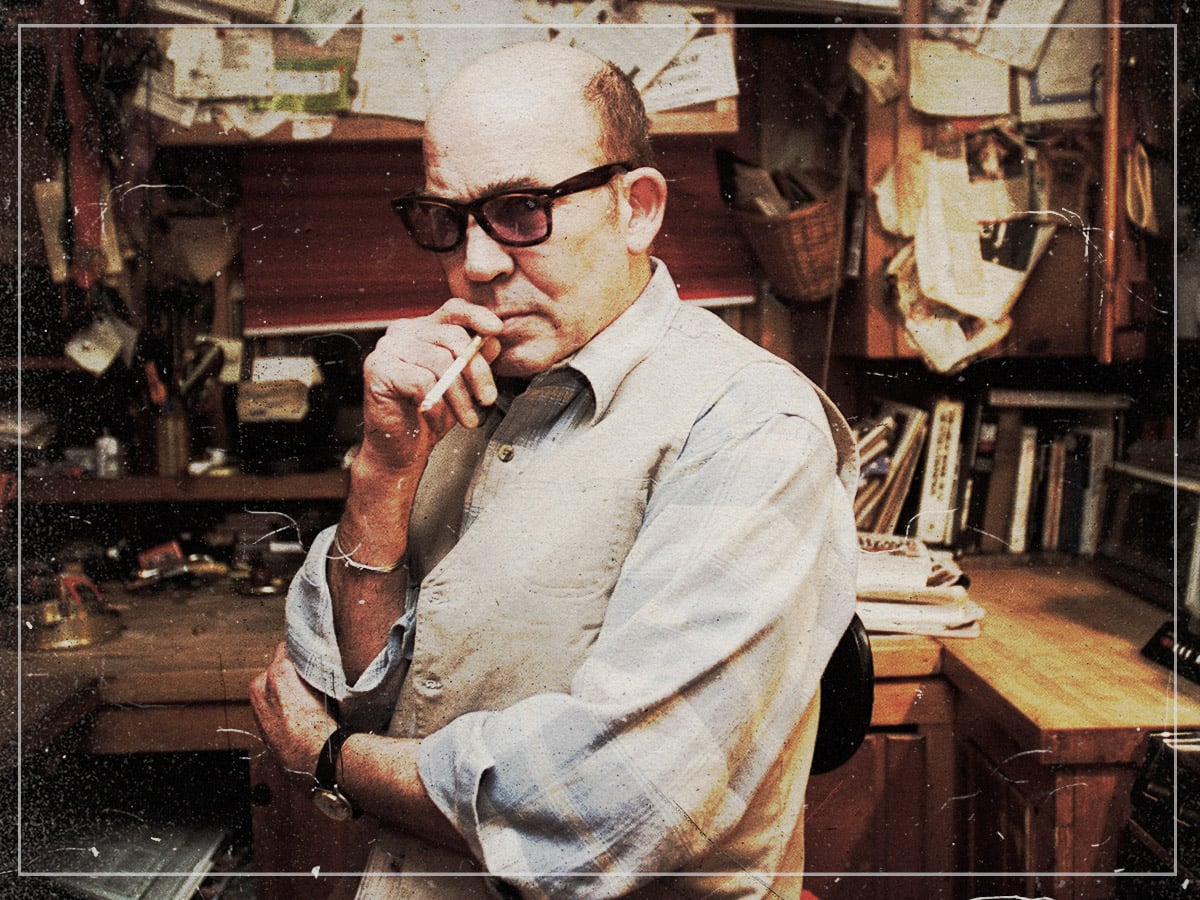
While ‘Counselor’ is an affectionate nickname that he would sometimes use to refer to Anita, along with quips like Doctor and Colonel – a continuation of the mock-legal ways he would often begin his letters to people whom he was firmly familiar with – there is very little we can glean about what he was hoping to convey if this was the case.
There’s a school of thought that perhaps it was his own iteration of “Rosebud” from Citizen Kane. It was a movie that the manic writer greatly admired, and the simple word, Rosebud, ties the very end of the film back to the very start. In the opening scenes, it is etched upon a sledge that Kane used in the halcyon days of youth.
It becomes clear that he barely dared to notice these halcyons before they were gone. This vignette is something that Thomspon saw as the perfect symbol for the rise and corruption of American ambition. But the fact that his own ambition to change the world saw him run for County Sheriff rather than any sort of counsellor somewhat derails this train of thought.
However, the rather more tragic reality of a writer running out of words and failing to finish a headline alone is far more likely to be true. His health was beginning to decline, and his decree that life was a “skid in broadside in a cloud of smoke” was evidently edging him towards a ditch. Anita says he had felt he was at his “peak” and perhaps he wanted his previous pieces to remain his parting works.
In fact, he had already signposted that sorry end himself. His final published piece in Rolling Stone offers far more indication of his mindset than the wholly inadequate ‘Counselor’, with many calling it the late author’s suicide note.
In a piece titled ‘Football Season Is Over’, which he had presented to his wife earlier in the “gloomy” month of February, Thompson wrote: “No More Games. No More Bombs. No More Walking. No More Fun. No More Swimming. 67. That is 17 years past 50. 17 more than I needed or wanted. Boring. I am always bitchy. No Fun – for anybody. 67. You are getting Greedy. Act your old age. Relax – This won’t hurt.”
As his friend and illustrator, Ralph Steadman writes in his own memoir: “He told me 25 years ago that he would feel real trapped if he didn’t know that he could commit suicide at any moment. I don’t know if that is brave or stupid or what, but it was inevitable.”
Concluding that wherever his pal went from here, it would have to be fun: “He could never stand being bored. But there must be Football too”.
