

Down and out in George Orwell’s Paris: A guide to the secret Paname
Read More


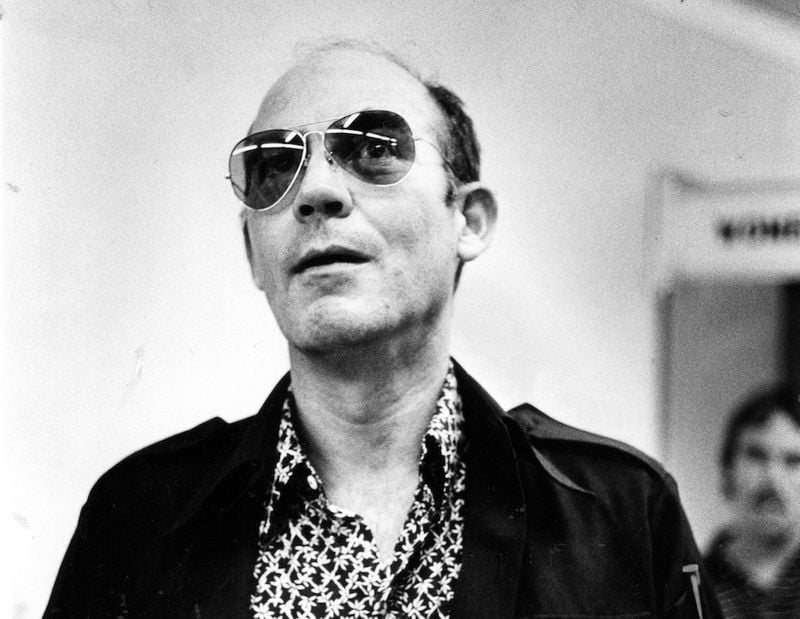
In 1964, Tom Wolfe boarded a bus called Furthur and changed the world of culture. He later said, “The problem with fiction, it has to be plausible. That’s not true with non-fiction.” This decree meant that culture was caught on the wing and art became inseparable from the wider world. Suddenly the novel found its place in pop culture, and Wolfe would proclaim, “You’re either on the bus or off the bus.” Hunter S. Thompson clambered aboard and put his foot on the accelerator.
In due time, Thompson would recommend George Orwell’s seminal debut Down and Out in Paris and London to Knopf editor Angus Cameron, and opine: “Fiction is a bridge to the truth that journalism can’t reach.” And according to Hunter S. Thompson, when it comes to encapsulating the fabled American Dream, one speculative work defined this more than any other.
So, what is this mystic expression: the Great American Novel? Well, it is a term touted by Henry James in 1880 to define a “canonical novel that is thought to embody the essence of America, generally written by an American and dealing in some way with the question of America’s national character.”
Naturally, that is an ever-changing beast when it comes to nuance. In the same sense that David Bowie said, “People look to me to see what the spirit of the Seventies is,” it could be argued that Wolfe captured America’s counterculture revolution with his 1960s works, but isn’t that a mere blip in the spirit of Uncle Sam?
As for Thompson, he had given up on placing the tortuous ways of America in the amber of his prose and instead focused his fiction on The Rum Diary, a book he would dub, “the Great Puerto Rican Novel”. In his opinion, the American equivalent had already been written—he should know, he once typed it out word for word to acquaint himself with it.
As he told his pal Cameron when recommending F. Scott Fitzgerald’s classic, The Great Gatsby: “If history professors in this country had any sense they would tout the book as a capsule cram course in the American Dream. I think it is the most American novel ever written.”
He went on to give his own personal corroboration, stating: “I remember coming across it in a bookstore in Rio de Janeiro; the title in Portuguese was O Grande Gatsby, and it was a fantastic thing to read it in that weird language and know that futility of the translation. If Fitzgerald had been a Brazilian he’d have had that country dancing to words instead of music.” There is no record that Thompson could read any foreign languages, but you can’t let that get in the way of great fiction.
In Gatsby, there is one brief passage that sort of explains Thompson’s future wayfaring. It reads: “I like large parties. They’re so intimate. At small parties there isn’t any privacy.” Thompson was a mad man, eternally staggering through the demimonde of America with a cattle prod in one hand, and an addled mind wandering towards a fevered penchant for two female iguanas. Nevertheless, America is a mad place, and in that massive orgy of atavistic decadence, he was able to remain an enigma. Just one outlaw of many, clinging to the futile American Dream, buoyed by his beloved Gatsby and all the great folly, farce and hope therein.
