


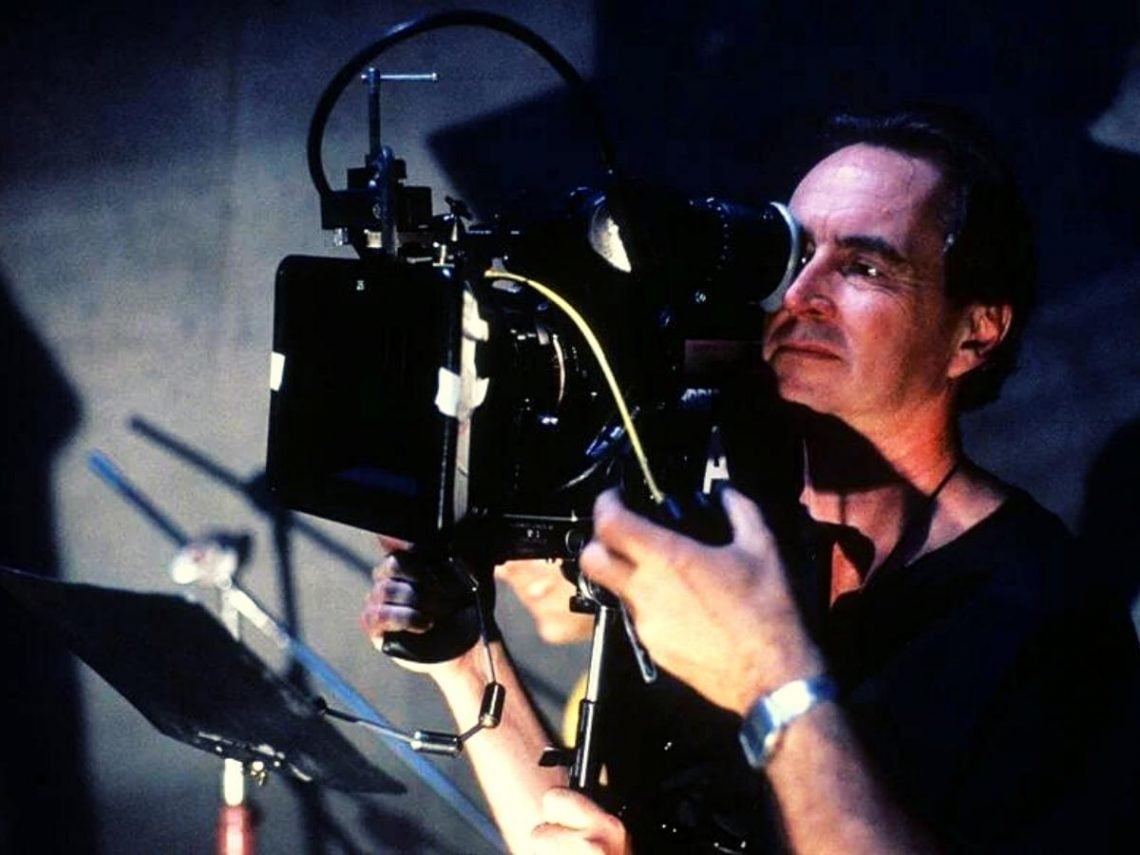
“They’ll stab you in the back”: How Wes Craven’s worst movie almost broke him completely

Few directors are as closely associated with a single genre as Wes Craven, who is so inextricably linked to horror that you have to be more specific.
Slasher movies were his gig for the majority of his career, and although some high-minded cinephiles might not want to admit it, his influence is as prevalent in modern-day filmmaking as Stanley Kubrick’s or Akira Kurosawa’s.
His most famous contributions are the Nightmare on Elm Street and the never-ending Scream franchises, both of which have been rehashed, satirised, referenced, and reinvented by countless filmmakers over the decades. Like most artists, however, Craven wasn’t always happy with being associated with just one genre, and he did his fair share of dabbling, the most unlikely being the 1999 melodrama Music of the Heart, which starred Meryl Streep as violinist Roberta Guaspari.
Streep earned an Oscar nomination for her work, but Craven believed that his name and all of its connotations kept audiences out of cinemas. He was all too aware of the box he’d found himself in, and as far as he was concerned, it kept getting smaller the longer his career went on. Case in point was the 2010 supernatural slasher film My Soul to Take, which follows a group of teens who are stalked by a serial killer whose supposed date of death coincides with their birthdays.
It was an interesting enough concept, but it bombed at the box office and earned the worst reviews of the director’s career. You could argue that the reception had more to do with the quality of the filmmaking than the very slight deviations from Craven’s more memorable slasher movies, but he seemed to think otherwise. In a 2011 interview with MovieMaker, the director explained that this taught him “a very hard lesson that if you go too far from your audience’s expectations, they’ll stab you in the back”.
He put the criticism down to a general lack of depth in certain parts of the horror community, bemoaning the fact that people weren’t looking for anything more complex than blood and scares, but he didn’t miss the point of the criticism entirely, though.
In fact, he revealed that the process of making the film, which was his first in five years, had been utterly disastrous. The production coincided with several strikes, the original cast dropped out at the last minute, and the top brass they were working with at the studios changed multiple times.
When the reviews came out, and the audience rejected the film outright, Craven was devastated, describing himself as a wounded animal that buries itself as deep in the ground as possible, waiting to see if it was alive or dead. “It was shocking to me,” he said.
Craven died in 2015, long before My Soul to Take had earned a modest cult following. It’s safe to say that it will never be regarded as his greatest cinematic achievement, nor his most adventurous, but he would no doubt take comfort in the knowledge that it found its audience in the end, no matter how small it turned out to be.
