


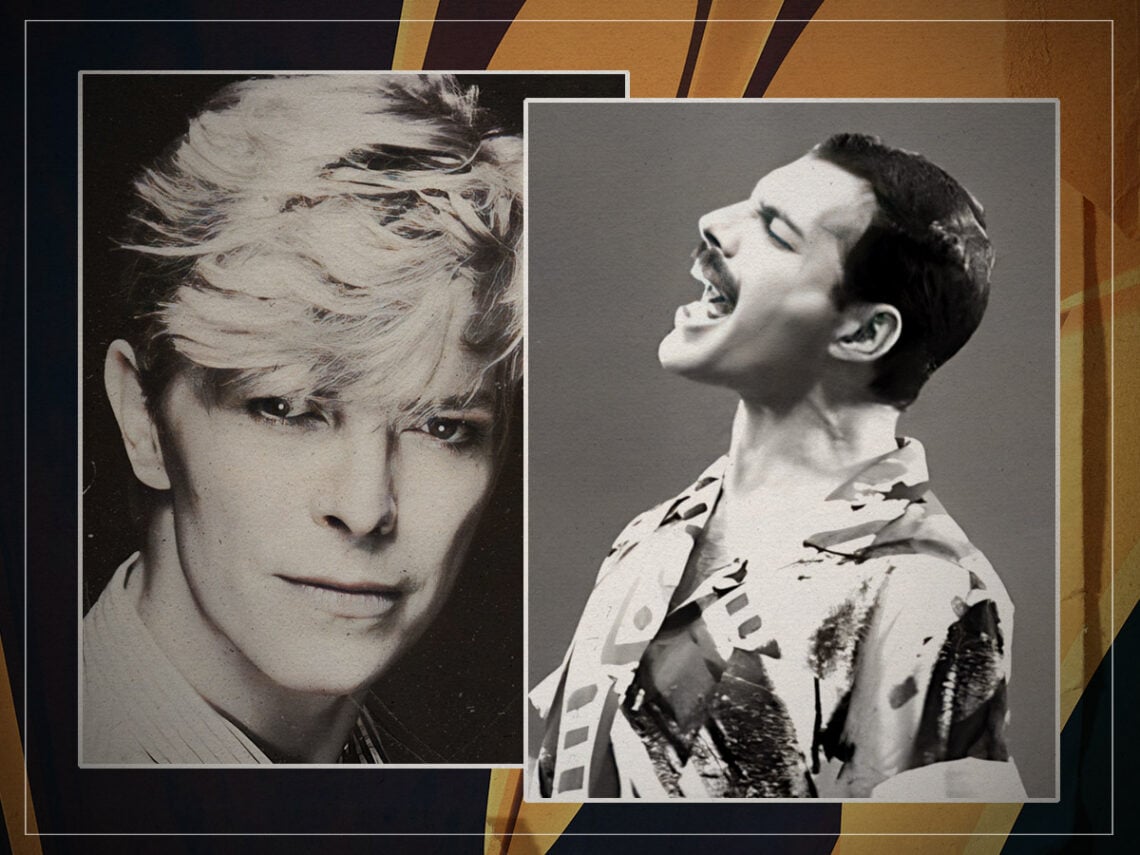
“Passions ran very high”: how ‘Under Pressure’ strained David Bowie and Queen

Any good collaboration can only come from one’s ability to adapt. As much as they might have a vision for what a song is going to be, it’s important to give everyone a chance to shine, even if their version of the tune worked out a lot differently from what you had in mind. Although Queen were cordial amongst each other when talking about the ins and outs of their own song, things were bound to get a bit more interesting when they added David Bowie to the mix on ‘Under Pressure’.
But, really, Queen and Bowie were both kindred spirits in many ways when entering the 1980s. Both of them had already conquered the 1970s scene with eye-popping theatrics whenever they were onstage, and since both of them had material like ‘Another One Bites the Dust’ and ‘Ashes to Ashes’ under their belt, respectively, they were never ones to back down from a challenge when working together.
Then again, the biggest arguments were usually easier to handle among the four members of Queen. Mercury had always sworn that the writer of the song was normally the boss behind the arrangement, so there was no point in them arguing over what should be in the song if it wasn’t what the writer wanted. But when starting from scratch in the studio, it was bound to be a bit more testy than usual.
The band had come in with nothing except half-baked ideas, but it was clear that John Deacon’s bassline was what would tie everything together. Outside of that, though, the entire performance feels like a little bit of a competition between Mercury and Bowie as to who can create the better hooks, from Mercury slipping into falsetto and hitting that manic scream in the bridge, or Bowie adding his signature vibrato to some of the verses.
If Queen were already a bit feisty amongst each other, though, it was going to be a tight fit trying to add in a fifth member for a tune, especially one that was known as the grand overseer over all of his own music. And while the results did work out nicely, Brian May recalled that there were many instances where things got incredibly tense when working in the studio.
According to May, everyone knew what they wanted for the song, and yet some of them had to watch their pieces of the arrangement get thrown in the trash, saying, “It was very hard because you already had four precocious boys and David, who was precocious enough for all of us. Passions ran very high. I found it very hard because I got so little of my own way. But David had a real vision, and he took over the song lyrically.”
Considering May’s guitar pedigree, though, it’s easy to see why he would be frustrated. A lot of what he does is nothing but arpeggios and booming power chords, but when it’s done in service to a song about helping people, it makes more sense for them to follow Bowie’s lead rather than get in the way of whatever else they were trying to shoehorn into the mix.
When you look at how little Queen was concerned with making political statements with their music, this is the perfect middle ground, as Mercury and Bowie are calling for universal love among the human race rather than any rallying cry for a certain cause. The main focus may have been love, but sometimes it takes a little bit of pain to be able to write something this joyous.
