


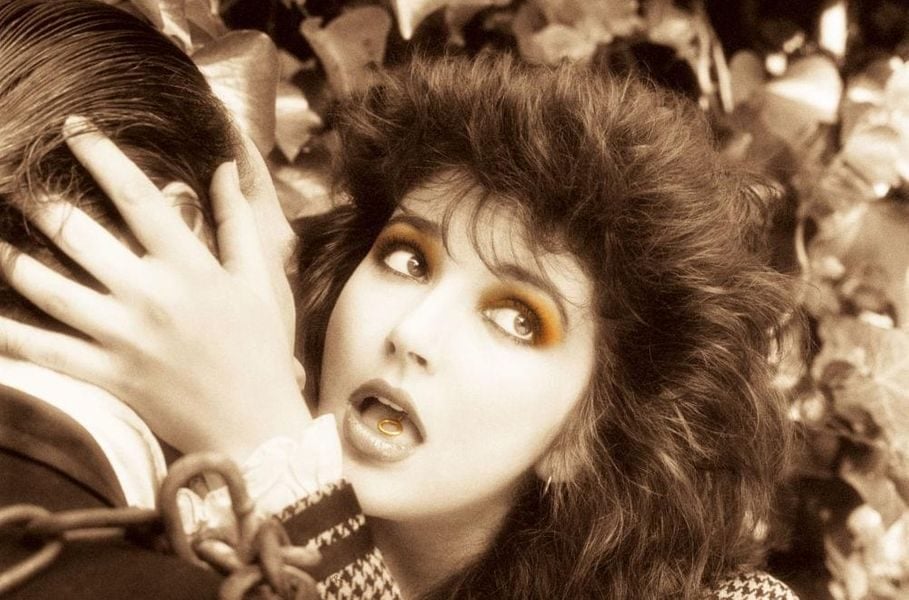
How ‘Ulysses’ inspired a classic Kate Bush song

Flick through the pages of the Kate Bush canon and you’ll find a heap of records that make reference to works of literature. Hamlet, Othello, Wuthering Heights, The Shining and The Red Shoes have all cropped up at one time or another. But perhaps the most erudite work to catch Bush’s attention was James Joyce’s epoch-defining novel Ulysses, which helped inspire one of her most beloved tracks.
Joyce’s masterwork – which chronicles a single day in the life of Dubliner Leopold Bloom – was published by the bookshop Shakespeare and Company in 1922. For some, it was a work of utter nonsense, but for others, it was felt to be one of the most revolutionary works of the day. Indeed, one of Joyce’s earliest advocates was the English occultist Aleister Crowley, who wrote a rave review of Ulysses, in which named Joyce “a writer who, in time, will demand recognition from the whole civilised world.” And, for once, he was right.
Ulysses is in a sense the archetypal modernist work. Like a lot of artists, writers and thinkers in the early 20th century, James Joyce held no reverence for cohesion or the tastes of the bourgeoisie. In crafting a book that regarded language not as a means to an end but as an end in itself, he completely revolutionised the novel. It’s a tactile, explosive and elemental piece of work, which is perhaps why Bush found it so inspiring when she was writing her sixth studio album, The Sensual World. Bush originally wanted to use Molly Bloom’s soliloquy from the final chapter of Joyce’s novel as the lyrics for the album’s title track, If she’d been successful, it may have featured lines like: “I love flowers I’d love to have the whole place swimming in roses God of heaven there’s nothing like nature…”
The soliloquy, a completely unpunctuated rendering of Molly Bloom’s thoughts as she lies in bed beside Leopold, would have made for a frenetic and possibly ungovernable piece of music; that is if Bush hadn’t failed to secure permission to use the passage.
In the end, though, it all worked out for the best. As Bush told NME: “Because I couldn’t get permission to use a piece of Joyce it gradually turned into the songs about Molly Bloom the character stepping out of the book, into the real world and the impressions of sensuality. Rather than being in this two-dimensional world, she’s free, let loose to touch things, feel the ground under her feet, the sunsets, just how incredibly sensual a world it is.”
You can revisit ‘The Sensual World’ and hear Siobhan McKenna’s reading of the soliloquy of Molly Bloom – the one Bush herself heard – below.
