


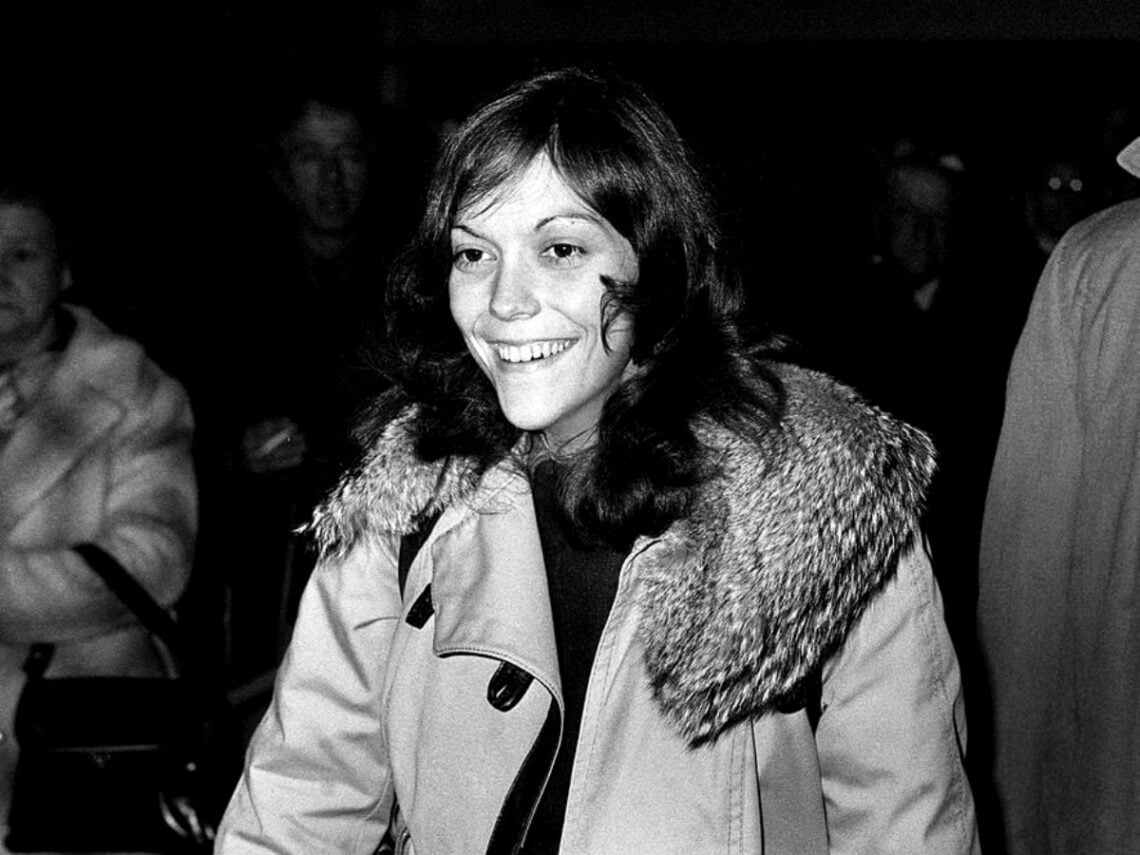
How to play the drums like Karen Carpenter

“Lead Sister”. That’s the phrase that appeared on the shirts that Karen Carpenter often wore during concerts. It wasn’t just a cheeky reference to her role as both the band’s lead singer and the sister to her bandmate, Richard Carpenter. It was also an admission that Karen provided the drive and power behind everything that the Carpenters did, even if Richard was composing the music and leading the way in terms of musical direction. It would have all been for not if it wasn’t for Karen’s “Lead Sister” style.
There are a few aspects of Karen Carpenter’s tragically short career that have become endearing cornerstones of her legacy. First and foremost is her voice – a gentle yet strangely stirring instrument that had the power to move listeners emotionally with its seemingly impossible mix of fragility and power. That voice seemed weirdly incongruous within the milk-toast music of the Carpenters. No matter how schlocky Richard’s arrangements got over the years, or how groan-worthy images of moondust and starlight could become, Karen could always sell it.
Of course, that fragile nature of her voice was even more startling when Karen herself took the stage. Rail thin and pale, Karen looked as though she might float away at any moment. The controlling personalities in her life, namely her brother and her parents, left Karen in charge of one thing: her body. The understanding of eating disorders and body dysmorphia was in its infancy in the 1970s, and Karen was largely left to struggle on her own as the pressures of being a popular musician swirled around her. Her death at the age of 32 was tragic, but it also made listeners who shrugged off the Carpenters’ middle-of-the-road approach dig deeper to try and find the pain that was surrounding Karen. Ultimately, it would be the contrast between the band’s cheery tone and the darker realities that gave the Carpenters’ a strangely haunting legacy.
But the world lost more than a great singer and a tragic figure when Karen Carpenter died in 1983. They also lost one hell of a talented drummer. It mostly got saved for television specials and promotional appearances instead of appearing on the band’s records, but make no mistake: Karen Carpenter was an insanely talented percussionist.
Like a lot of aspects of her life, Carpenter was advised not to do the thing that she loved. Karen was more valuable as a frontwoman and centre-stage presence, at least in the eyes of her family. But during her adolescence, the Carpenters were encouraging Karen’s love of the drums. After baulking at playing the glockenspiel for her high school marching band, Karen managed to convince her parents to buy her a Ludwig drum kit similar to the one that Ringo Starr used with The Beatles. From there, a fascination turned into an obsession.
Anyone who caught a drum solo from Karen while watching a TV special or seeing a Carpenters concert knew that she wasn’t just good “for a girl”. She wasn’t just good “for a singer” either: Karen Carpenter was a drummer first. In fact, she only learned to sing once she had already enrolled as a music major at California State University, Long Beach. She got in thanks to her monster chops as a drummer and percussionist, only joining the choir at the behest of her brother.
Karen’s style of drumming was eclectic. Although she loved the stylings of rock drummers like Starr and Hal Blaine, it was a mixture of jazz and marching band rudiments that informed most of Karen’s playing. She switched between matched grip and traditional grip frequently, depending on what style of music she was playing. Multi-stroke rolls, paradiddles, and other traditional rhythms were deeply engrained in her playing style, so much so that rock music almost seemed like it was too easy for Carpenter.
If you want to play like Karen Carpenter, there’s no easy way around it: you have to practice the boring stuff. Single-stroke rolls, multi-stroke rolls, paradiddles, flams, and swiss army triplets are part of the foundation that all marching band drummers have to master in order to play at the level that Carpenter played at. It’s the equivalent of practising scales on other instruments. While it might sound basic, Carpenter’s mind-bending rhythms are firmly rooted in rudiments that most non-traditional drummers try to avoid like the plague. Carpenter was known to practice daily, so get out your practice pas and start mastering those alternate sticking patterns.
When you’ve become a master at that, it’s time to take a crash course in jazz solos. Carpenter was an admirer of Buddy Rich and Joe Morello – the former is perhaps the fastest and greatest drum soloist of all time, and the latter helped expose Carpenter to alternate time signatures that occasionally popped up in her more complex solos. Jazz gave Carpenter an improvisational outlet that the traditional marching band technique did not. By combining the skills she learned from rudiments with the freeform expression of jazz, Carpenter was able to conjure up highly complicated solos that showed off her mastery of old-school sticking techniques.
Even though she would get a spotlight to show off her most impressive rhythms in a live setting, Carpenter’s skills were rarely captured on record. The music that Richard wrote for the group was often quiet and pop-focused, leaving Karen to either play simple beats or not play at all. After playing the drums on the band’s 1969 debut, Hal Blaine was brought in to augment, then replace, Karen’s playing. By 1976’s A Kind of Hush, Carpenter had completely ceded her drumming duties to session musicians. It was yet another sacrifice that she made at the behest of the band.
Carpenter’s final drumming on record was for the 1981 album Made in America, which featured Karen playing the drums on just one song, ‘When It’s Gone (It’s Just Gone)’. It’s hardly a proper indication of Karen’s ferocious power and undeniable skill, but it’s the perfect illustration of what she had to do in order to please the people around her. Too often, Karen Carpenter gets painted as a helpless soul at the centre of a world she had no control over. While some of that might be true, all you have to do is look at the vibrancy and joy that comes across her whenever she gets behind the drums to see that Karen Carpenter was at her most free when she was playing.
