


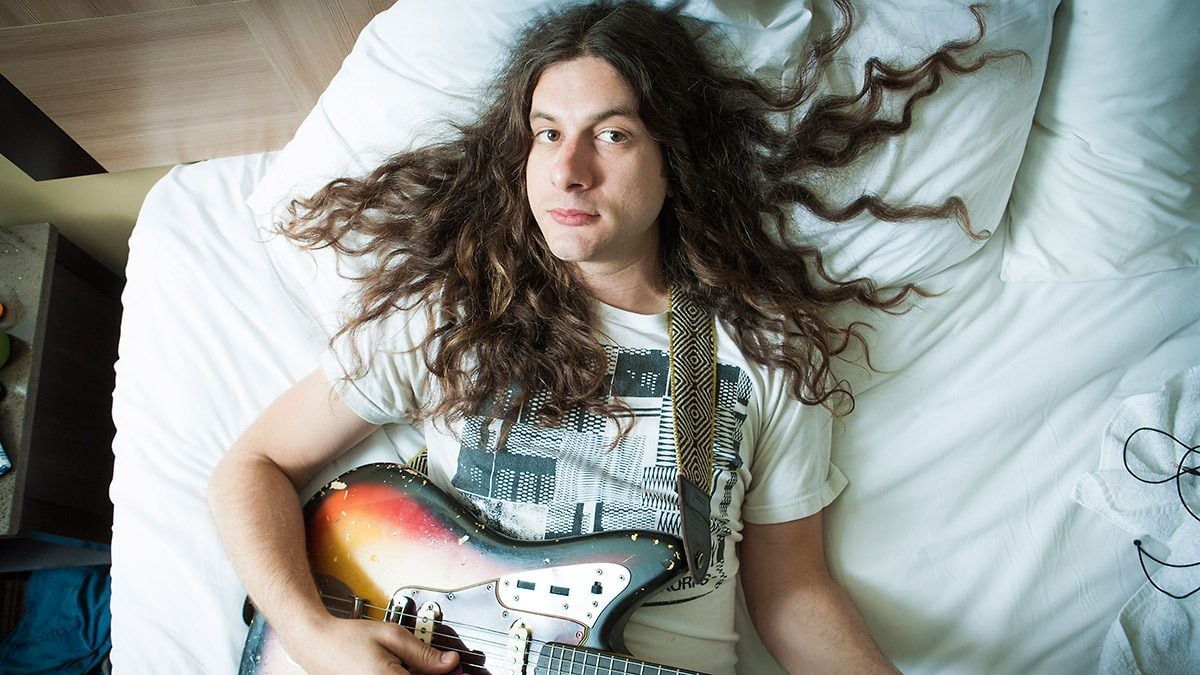
How to play guitar like Kurt Vile

Somewhere between the blissed-out stoner gaze of indie rock and the heartfelt picking styles of folk music sits Kurt Vile. The Philadelphia-born singer-songwriter has become a hero of the modern indie world, taking his fuzzy riffs and hazy songs into the minds of millions of fans. Whether he’s taking a laid-back approach to music or firing off distorted solos like a gunslinger in the old west, Vile has crafted a full discography of albums that hold their own against anyone in the indie world.
While his voice and unique songwriting approach have become two of his most obvious signatures, Vile’s guitar playing is equally recognisable. Threading the needle between precise tonality and lethargic near-chaos, Vile’s approach can sound informal, unprepared, of even lazy to the untrained ear. But Vile isn’t just some hack bashing away at the guitar. In fact, his proficiency at his first instrument, the banjo, shows the patience and training that is buried deep under the layers of his style.
“The thing people don’t know is that you’ve gotta worry about the thumb first,” Vile explained to Matt Sweeney in 2014. “People want to be able and do it all, but really you [need to] just sit and do the thumb. You gotta do that forever, and then you can add a finger.”
Vile’s banjo playing gave him a unique approach to the guitar. Instead of focusing on traditional guitar techniques, Vile was exposed to open tunings, intricate fingerings, and speedy picking style from the get-go. “I wasn’t stuck in the box,” Vile explained. “If guitar was my first instrument, I’d go probably take some lessons, and then they’d be like, ‘Here are the barre chords.'”
That freedom from traditional guitar technique opened up Vile’s playing. With the likes of Doc Watson and John Fahey giving Vile a way of translating country and bluegrass music to guitar, Vile began to fingerpick his way to his own unique style. When the likes of Bob Dylan, Neil Young, and Pavement entered his world, the slippery-yet-striking guitar style of Kurt Vile was born.
When it comes to equipment, Vile has largely stuck with Fender offsets. Most listeners or casual fans would immediately assume that Vile preferred the Fender Jazzmaster, the same axe that friends and colleagues like J Mascis and Courtney Barnett use. But for Vile, everything tends to come back to the Fender Jaguar, specifically the 1964 model that remains his number one stage and recording guitar.
“I copped the Fender Jaguar off my bandmate, Rob Laasko. A beat-up sunburst Jaguar from the 1960s. You can’t really mess with that at all. I have ones that aren’t even beat up like the first one I got. Sometimes when I look at a Jaguar – like a Sunburst or something – that isn’t beat-up, it looks weird to me,” Vile told Fender. “I think it is like the ultimate rock and roll guitar for my era. I know I definitely look up to people like Sonic Youth and Dinosaur Jr., and they often have a Jazzmaster, which looks cool, but this is just a little more … it’s almost it’s like you could spike the notes a lot. It’s just a little tighter. I feel like it cuts through better.”
But the brand or model of the instrument doesn’t matter as much as what you can get out of it. On songs like ‘Kidding Around’ and ‘Girl Called Alice’, Vile shows off the classic fingerpicking styles that formed the basis of his musical education. Meanwhile, tracks like ‘Bassackwards’ and ‘Like Exploding Stones’ barely feature guitars used in traditional ways, with backwards recordings and heady effects loops allowing Vile to escape from the comfort of being too proficient and showy.
“For me, when I’m playing any instrument, it’s fun to not be bothered about theory or traditional technique,” Vile explained to Premiere Guitar in 2015. “There’s all these obvious things you know anyway, even if you don’t know them by name. I mean, I’ll capo something and put it in a different tuning, and I’ll intentionally not think about the notes. I like the idea of not knowing too much about music, but just trying to be musical. You can pick up anything—a banjo, a guitar, a piano—and just find the notes. That’s the beauty of it. It’s sort of punk rock, but it’s more of a melodic, musical thing—like utilizing the two and figuring it out for yourself, and just keeping at it. By default, you’re gonna develop your own style.”
If you want to perfect the open-tuning style of playing that Vile frequently trots out, put on ‘That’s Life, Tho’ or ‘Slow Talkers’. If you want to hear him channelling the fingerpicking styles of his youth, try out ‘Can’t Come’ or ‘Peeping Tomboy’. For the fuzzier rock riffs, ‘Puppet to the Man’ and ‘Freak Train’ are more the way to go. But whatever way you approach it, make sure not to get too caught up in it – that’s probably not how Kurt Vile would have wanted it.
“I think it’s all about the subconscious domino effect,” Vile added. “Everything just influences the next thing, and without giving it a name, it all starts to blend together. If you don’t ask questions, the riffs, the songs, the sounds all develop on their own, you know? Don’t try to analyze it too much. I’ve been playing long enough to know that if I don’t think too hard about what I’m doing, it just keeps coming.”
