


Rhythmic genius: How to play guitar like Bob Weir

In the annals of rock and roll, few roles are as underappreciated as the rhythm guitar player. Often demeaned as the “less talented” part of a two-guitar set-up, the rhythm guitar is normally looked at in a somewhat derogatory way. When a singer wants to prove that they’re a “real musician”, they often get a few songs on rhythm guitar to show off their chops.
That being said, quite a few guitarists have made a name for themselves by sticking almost solely to rhythm. John Lennon carved out a unique place and set a precedent for every rock rhythm guitarist who came after him. Malcolm Young was the anchor that kept AC/DC moving a grooving for four decades. Ed O’Brien managed to find new sonic realms that helped elevate Radiohead beyond the realm of alternative rock.
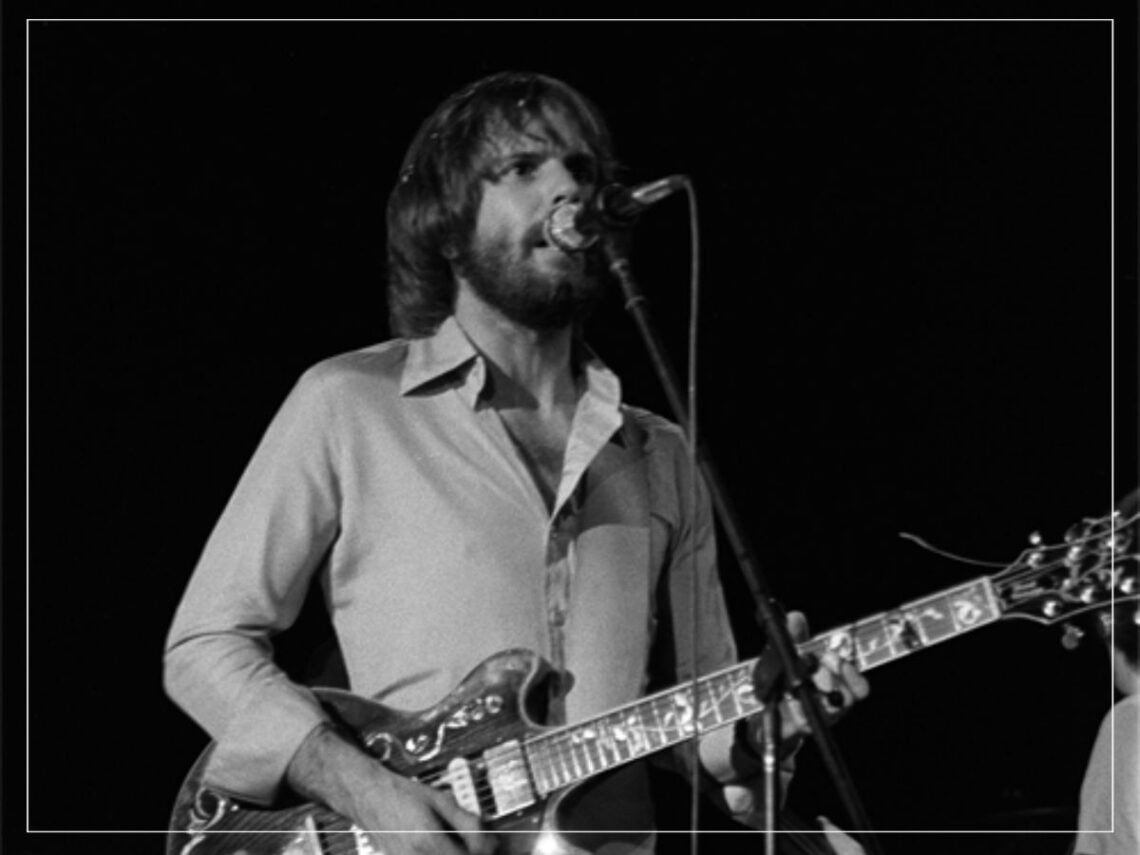
But if you’re talking about revolutionary rhythm guitarists, no conversation is complete without mentioning Bob Weir. Throughout his three decades playing in the Grateful Dead, Weir created a backup guitar style that perfectly infused itself within the busy lead lines that his bandmates were cranking out. While listeners were enthralled with the lead work being spun by Jerry Garcia, Weir’s rhythm parts were quietly just as interesting.
Weir came about his unique style slowly. Initially, a folk-influenced picker, Weir’s naturally rambunctious attitude and dyslexia made it difficult for him to stay dedicated to any interest for a long period of time. He first picked up the guitar at age 13, and by the time Weir joined the Grateful Dead at the age of 17, he had only marginally progressed as a player. Weir’s initial disinterest in getting more skilled at the instrument was a cause of friction within the band.
“There were times when, every now and again, [Garcia would] intimate that I ought to practice more,” Weir shared in the documentary Long Strange Trip. “And generally speaking, I’d pick up my guitar and go sit in the corner and practice a little bit until I got frustrated and put it down. It’s frustrating playing an instrument when the guy over here can just play anything that you can play and then play rings around that.”
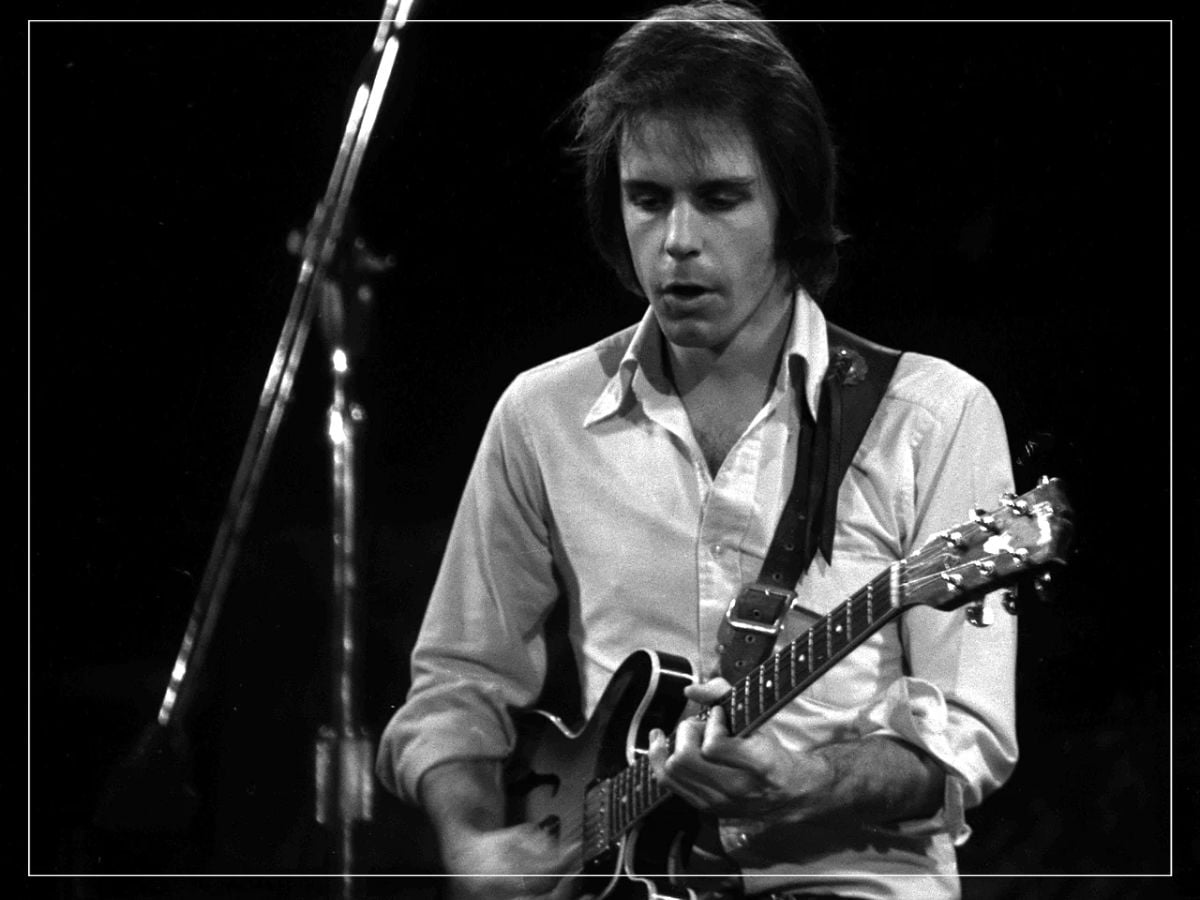
In fact, Weir’s skills were criticised so much by Garcia and bassist Phil Lesh that he and keyboardist Ron ‘Pigpen’ McKernan were briefly fired from the band in 1968. The event caused Weir to re-evaluate his dedication to the guitar. After he and Pigpen returned to the band, there was a notable improvement in Weir’s playing. Even better, Weir was beginning to adopt his own style that emphasised alternative chord voicings, unique harmonic pairings, and contrapuntal lines that occasionally put him in the role of co-lead guitarist.
According to Weir, jazz was a major influence on his new style of playing. “I learned by trying to imitate a piano, specifically the work of McCoy Tyner in the John Coltrane Quartet,” Weir claimed. “I just loved what he did underneath Coltrane, so I sat with it for a long time and really tried to absorb it. Of course, Jerry was very influenced by horn players, including Coltrane, but I never really explicitly thought about that relationship; because I didn’t really ever decide to pattern myself after McCoy Tyner’s piano, it just grabbed me.
“Another big reason for me not being repetitive is the influence of Jerry and, even more so, Phil, who never repeats anything. If no one else is repeating anything, I’ll be damned if I’m going to play the same thing over and over,” Weir added. “I always played a lot of counterpoint in support of Jerry’s guitar or vocal melody… The concept of the band was always group improvisation, not merely playing behind Jerry’s solos. The Grateful Dead’s goal was to play together in a seamless mesh. We coined the term ‘rock & roll Dixieland’…”
After the second drummer, Mickey Hart, left the Dead in 1971, Lesh was astounded by being able to hear Weir clearly for the first time and the evolution he had experienced on the guitar. “I found myself astonished, delighted and excited beyond measure at what Bobby was doing,” Lesh explained in his book Searching for the Sound. “Bob’s guitar playing, like his sense of humour and attitude toward life in general, is quirky, whimsical, goofy – and rich in nuance and allusion. Harmonically, he grasps and extends the implications of what he hears in a unique and provocative manner, enhanced by his prestidigitorial ability to play on guitar (with only four fingers) chord voicings that one would normally hear from a keyboard (with up to ten fingers).”
As Lesh later put it in the documentary The Other One: The Long Strange Trip of Bob Weir: “Bob arguably has the most unique guitar style of anybody playing in music, and I’ve loved it forever.” The fractured voicings and unique fingerings that Weir chose became his signature playing style. As friend and occasional jam partner Sammy Hagar put it in The Other One, “First time I ever played with Bob, we started playing straight-up 12-bar blues, and I noticing that in one key of E, he’s played about 12 freaking inversions.” Hagar observed that Weir “knows so many inversions of a chord that it blew my mind.”
Garcia also took notice. “With Weir, he’s an extraordinarily original player in a world of people who sound like each other,” Garcia extolled. “I mean, he has really got a style that’s totally unique as far as I know. I don’t know anybody else that plays the guitar the way that he does.”
Weir’s influence even made it onto the next generation of players who picked up tips and tricks from the Grateful Dead, from new wave pioneers to no wave originators. “I spent a bunch of years trying to emulate the kind of way he would voice chords,” Sonic Youth guitarist Lee Ranaldo shared in Long Strange Trip. “I just felt it was so unusual. He was super creative in this way that nobody else was doing.”
Jerry Harrison, guitarist and keyboardist for Talking Heads and The Modern Lovers, had a similar observation. “An awful lot of attention went to Jerry, and yet, to me, it was more really the interplay between Bob and the band. That was what I found the most exciting.”
“Recently, I’ve been moving my whole conception of what I should be doing as rhythm guitarist higher and higher up the neck, just to get out of the way of the never-ending confusion between the bass and the keyboard left hand,” Weir told Jon Sievert in 1981. “I try to move into the upper registers, and once you do that, you have a fairly well-defined sense of harmonic development. Once you get in the upper registers, you’re almost always dealing with leading tones, instead of roots and fundamentals. Leading tones do come up in the bass, but not as often as in the treble register.”
When describing his role, Weir baulked at the traditional description of “rhythm guitarist.” “If Jerry had the line with the most energy, the most life to it, we’d fall in behind him,” Weir said. “If I was that guy, then they’d fall in behind me. That was what the band was all about: supporting whoever was moving the story furthest, fastest.” However, Weir still saw his role as mainly being in connection with Garcia.
“We developed a sort of intertwined sense of intuition,” Weir recalled. “I could intuit where Jerry was going with a line, for instance, on stage and try to hustle up, get the full drift of that, and then be there when he got there with a little surprise for him.”

Despite their roles being relatively rigid, Garcia and Weir’s intuitive sense of intertwining guitar parts became essential to the Dead’s sound. On songs like ‘China Cat Sunflower’, ‘Shakedown Street’, and ‘Tennessee Jed’, the lines between lead and rhythm were remarkably blurry. In complicated compositions like ‘Terrapin Station’ and ‘Help on the Way’>’Slipknot!’, Weir took a step back into the more traditional rhythm role to keep the songs achored, but often threw in additional riffs and melodic lines to keep his restrained parts from being strictly rhythm guitar.
When the band entered their improvisational jams, Weir was as sensitive to the changes going on within the songs as anyone onstage. During the extended sections of ‘Dark Star’ and ‘Playin’ in the Band’, Weir was an equal voice in choosing whatever direction the band played in. Especially within ‘Dark Star’, Weir’s recurring motifs provided the basis for legendary jams like the ‘Feelin’ Groovy Jam’ and the ‘Spanish Jam’.
Throughout his time in the Dead, Weir’s equipment set-up evolved as much as his playing style did, often working in tandem to improve his sound. Thanks to the forward-thinking push of the in-house Alembic team, all of the band’s members got custom-modified instruments. Garcia and Lesh were the major benefactors of these sonic experiments, but Weir’s guitars and amps were also subject to the process of “Alembicizing.”
Throughout the 1960s, Weir constantly rotated through different guitars, picking up everything from a Rickenbacker 365 to a Fender Telecaster to a Gibson SG. But Weir’s most famous and reliable instrument was a cherry red Gibson ES-335, which he used religiously on his solo album Ace and throughout the tour that would eventually produce the legendary live album Europe ’72.
In the mid-1970s, Weir worked with Ibanez to produce his own custom-made “Cowboy Fancy” guitar, which Weir played almost exclusively between 1975 and 1985. From the mid-80s onward, Weir was constantly switching new guitars with different configurations in an attempt to diversify his sound. During the late 1970s, Weir also picked up a brass slide and incorporated it into his sound, often during first-set blues numbers like ‘Walkin’ Blues’ or ‘Little Red Rooster’.
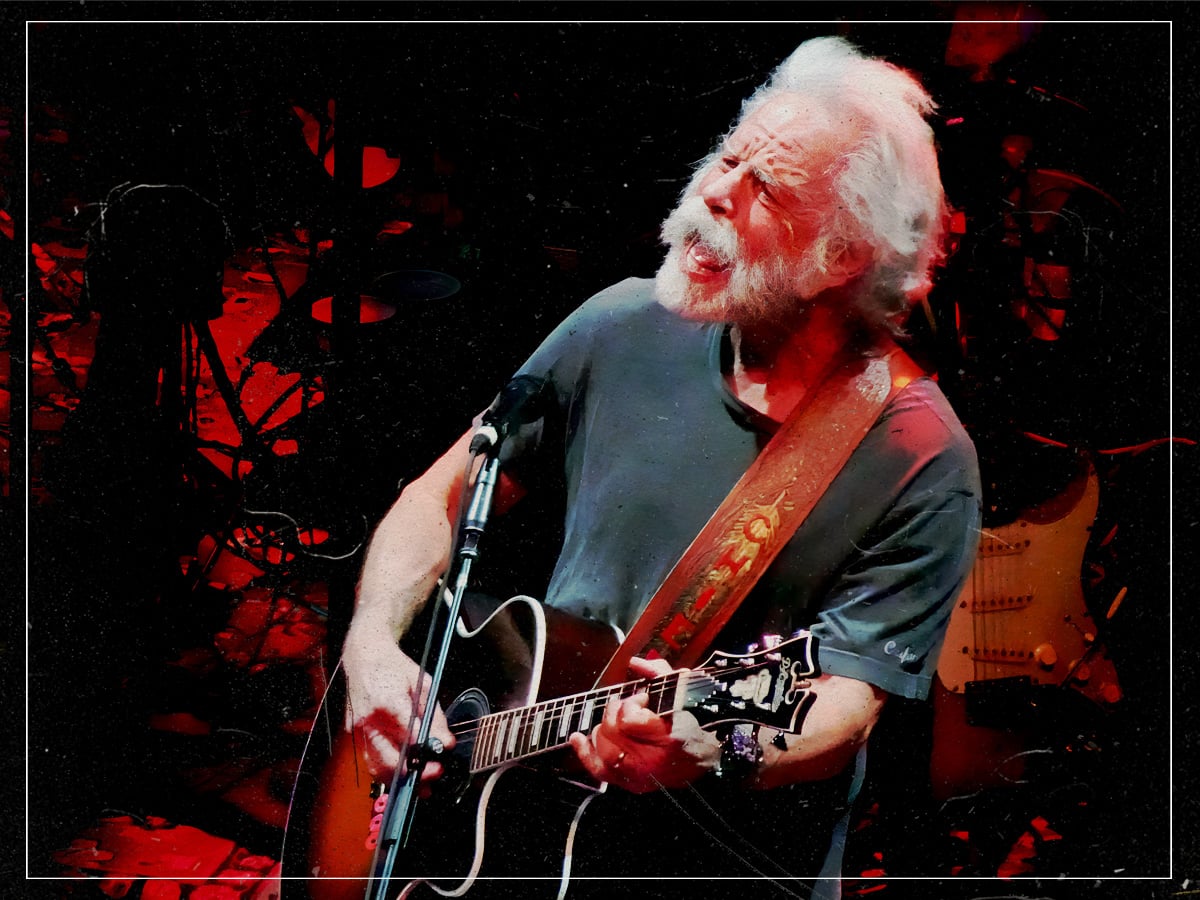
In the modern age, D’Angelico guitars were Weir’s go-tos, although you could find him messing around with Fender Stratocasters and Gibson Les Pauls every once in a while. No matter what guitar he picked up, however, Weir had a clearly defined tone that was impossible to miss. Perhaps due to age and likely due to the large stages he played on, Weir relied on a guitar tone that was incredibly trebly and cut through any mix. It’s been described as everything from wet to glassy, but once you hear it, the tone was unmistakably Weir.
Ultimately, Weir’s role in any band was as a first responder. His guitar style was built on anticipation and unconventionally, where standard chords are given wild inversions, and rhythm parts sound like lead parts. More than anything else, Weir’s guitar style was about playing off the musicians around him, and he’s built up an arsenal of equipment and techniques that have allowed him to explore the outer reaches of music for over 60 years.
