


The permission of a place: How the Vancouver scene shaped Piss

Ontological contextualism – two big words I can just about remember from my English degree. Essentially, they give a name to the theory that no matter what, art cannot escape its context. Even if the artist tries everything possible not to make work about themselves, their home, or their life, they will never manage it.
Say, for example, it is impossible to make music without some degree of influence of your local scene and grassroots venues floating in.
In some cases, that influence is stark and obvious. Just look towards Manchester for that, as we’re in our third decade of Oasis copycats, and our fourth decade of Morrissey soundalikes. In London, it all seems to come in waves, as all at once, the city becomes a sea of post-punk acts, then it only takes one new band to turn the tide to something new.
People are naturally inspired by the people around them, which is why, often, whole cities can become painted in the same shades, or how particular venues end up being vital clubhouses for bands who all love the same bands and play the same sort of music.
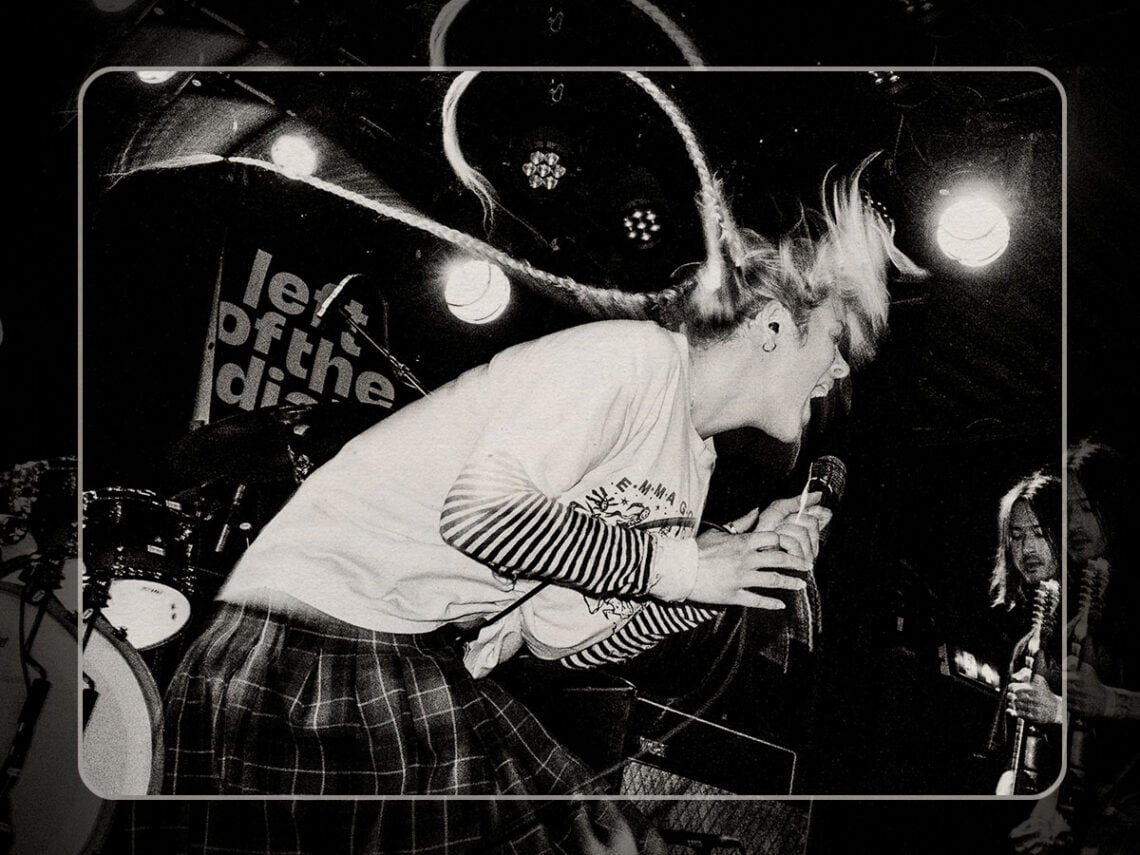
Right now, if you ask around a lot of those bands to see which act they’re obsessed with, Piss come up quickly. When Far Out were in Rotterdam for Left Of The Dial, their name was being spread around quickly as their sets at the festival were staggering, so powerful in fact that the event put out a warning about them.
They were a long way from home, proving that while context is inescapable, you can do beyond it. But still, while Piss’ influence is going global, the band themselves admit that they perhaps wouldn’t exist at all if it weren’t for the impact of their local scene back in Vancouver, Canada.
Part of that comes down to the music. In a literal sense, it was a mutual love of local gigs that first tethered the band and sparked their friendship, leading to guitarist Tyler Paterson inviting vocalist Tay Zantingh to move in with him, keeping her within the sphere and keeping her from moving back home to Ontario.
In being so embedded in such a thriving scene, especially when it comes to the world of heavier rock, hardcore and punk that they exist in, certain bands stand out as favourites and inspirations to them. The band shared their love for Computer, telling me about vocalist Ben Locke, stating, “He’s just kind of like an artist when it comes to live shows. He just really knows how to lead a show and captivate you in a way that very few people can.”
Given Piss’ own growing reputation for their own captivating live shows, perhaps their hometown crowd is to thank for that skill. Zantingh also shouted out Emma Goldman, saying, “They just released an amazing record. All you are is we very cool stuff. Highly recommend.”
But overwhelmingly, the impact of the Vancouver scene on Piss doesn’t come from musical inspiration as much as it comes from simply permission.
Zantingh was an outsider to the scene and needed that. “I grew up in a different part of Canada, and the music is about my experience, like very vulnerable music,” she explained as the band write viscerally about sexual violence. For the singer, the unfamiliarity and the protection that somewhat anonymity afforded her cannot be understated.
“I don’t know if I would have been able to share, like from the beginning, like from the bottom, where nobody knew us, share the music in Toronto, where I grew up,” she said, suggesting that without Vancouver, as a place a way from home, Piss wouldn’t exist. Allowing her to be removed from the places where many of the things she sings about happened, and take her away from people she perhaps knew in a different chapter of her life, Zantingh found a new place where she felt comfortable to share.
So the scene is to thank, yet perhaps not in the typical way, though still, context cannot be escaped.
